Navigating the rising costs of fuel can feel like a constant challenge, putting a significant strain on your household budget. ⛽ But did you know that a few strategic adjustments to your driving habits, vehicle maintenance, and even your daily routines can lead to substantial savings on your gas bill? At SmartSave.top, we believe that smart choices empower you to take control of your finances. Let’s explore 19 practical, actionable ways you can significantly cut down on your fuel expenses and pocket the difference. 💸
Saving money on fuel doesn’t necessarily require investing in a new vehicle or overhauling your entire lifestyle. Often, the most impactful changes stem from mindful decisions you make before, during, and after each trip. From the gentle art of acceleration to how you organize your errands and care for your car, small, consistent habits can make a world of difference. 🌟
💡 The Core Principle: Optimize Your Fuel Consumption 💡
Our central aim is straightforward: spend less on fuel by minimizing waste, adopting a smoother driving style, planning ahead intelligently, and ensuring your vehicle is in optimal condition. Think of it as a holistic approach to fuel economy that benefits both your wallet and the environment. 🌍
🚗 Driving Habits That Drive Savings 🚗
1. Embrace Smooth Acceleration and Braking 💨
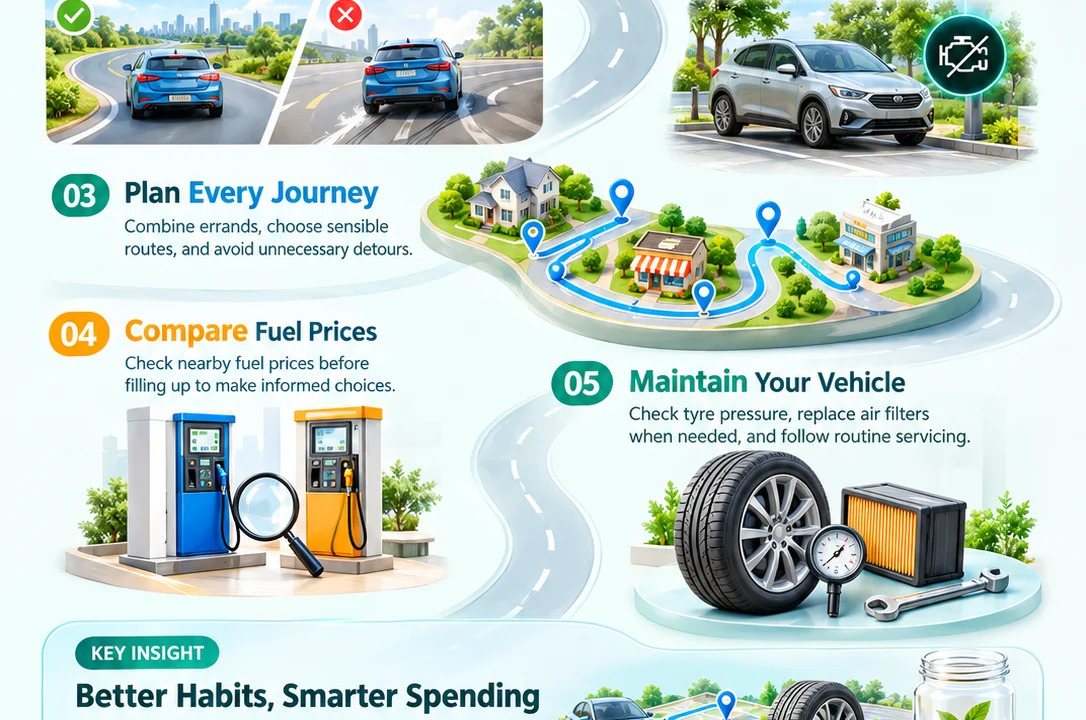
Aggressive driving—rapid acceleration and sudden braking—is a major fuel guzzler. By applying the accelerator gradually and anticipating traffic flow, you can significantly improve your vehicle’s efficiency. Look ahead on the road to anticipate stops and slow down smoothly. This not only conserves fuel but also makes your journeys more relaxed and less stressful. 🧘 Leaving ample space between your vehicle and the one ahead gives you more time to react, reducing the need for abrupt braking.
2. Minimize Unnecessary Engine Idling 🚦
An engine that’s running while your vehicle is stationary is burning fuel without taking you anywhere closer to your destination. Where it’s safe and appropriate, make a conscious effort to turn off your engine during extended waits. 💡 Consult your vehicle’s manual for manufacturer recommendations and be mindful of local regulations. Safety always comes first, so ensure you can restart your engine quickly if needed to rejoin traffic.
3. Master the Art of Route Planning 🗺️
Before you even turn the key, take a moment to plan your route. Consider your destination, potential traffic congestion, and the most efficient order for your stops. A little foresight can help you bypass unnecessary detours and avoid backtracking over the same roads. 📈 When choosing a route, don’t just pick the shortest distance on a map; consider a balance of distance, road conditions, and anticipated traffic to find the most fuel-efficient path.
⭐ A Simple Principle: Rethink Every Journey ⭐
Every trip presents an opportunity to optimize. Before embarking, ask yourself if the journey is truly necessary or if it can be combined or rerouted for greater efficiency.
4. Become a Savvy Fuel Price Shopper ⛽
Fuel prices can fluctuate significantly between different stations. Take advantage of convenient options along your usual routes by comparing prices before you fill up. 📱 However, avoid making lengthy detours to chase a few cents per gallon. The extra distance driven and fuel consumed might negate any potential savings. Strategic comparison, not drastic detours, is key.
5. Maintain Sensible Highway Speeds 🛣️
Driving at excessive speeds dramatically increases fuel consumption. Where road conditions and speed limits allow, maintaining a steady, moderate speed is far more efficient than frequent acceleration and deceleration. 🚀 Always prioritize safety and adhere to posted speed limits; fuel saving should never compromise road safety.
6. Use Air Conditioning Wisely ❄️
While air conditioning can impact fuel consumption, its effect varies depending on your vehicle and driving conditions. Use the AC system judiciously to maintain a comfortable cabin temperature without running it constantly or at excessively high settings. 🌬️ Consider the outside temperature, your vehicle’s recommendations, and what’s practical for safe and comfortable driving.
7. Consolidate Your Errands 🛍️
Multiple short trips can often be streamlined into a single, well-planned journey. Group your shopping, appointments, and other necessary stops together, especially if their locations and schedules align conveniently. 🗓️ This reduces repeated driving, saves time, and makes it easier to monitor your daily mileage.
🧩 Three Habits That Work Synergistically 🧩
- 01 · PREPARE: Plan your journeys strategically. Choose efficient routes and combine stops whenever practical.
- 02 · DRIVE: Maintain consistent driving. Accelerate smoothly, avoid unnecessary idling, and anticipate traffic.
- 03 · MAINTAIN: Keep your vehicle in top condition. Check tyre pressure, adhere to servicing schedules, and remove unnecessary weight.
8. Time Your Trips Strategically ⏰
Heavy traffic, frequent stops, and challenging road conditions all contribute to increased fuel usage. If your schedule allows, consider adjusting the timing of non-urgent journeys to avoid peak hours. 🚦 A well-timed trip can be smoother, more direct, and ultimately, more fuel-efficient. Balance time, safety, distance, and convenience when making these decisions.
🛠️ Vehicle Maintenance for Maximum Efficiency 🛠️
9. Declutter Your Vehicle 📦
Unnecessary weight in your vehicle directly impacts fuel economy. Remove any items from your boot or cargo area that you don’t need for your journeys, especially heavy objects. 🧹 While keeping essential safety equipment, emergency supplies, and items needed for work or accessibility, aim to lighten the load whenever possible.
10. Maintain Optimal Tyre Pressure ✔️
Underinflated tyres increase rolling resistance, forcing your engine to work harder and consume more fuel. Regularly check your tyre pressure and ensure it matches the manufacturer’s recommended levels, usually found in your owner’s manual or on a sticker inside the driver’s door jamb. 📏 Do not rely solely on the maximum pressure indicated on the tyre sidewall.
11. Stay on Top of Air Filter Maintenance 💨
A clean air filter is crucial for efficient engine performance. Follow your vehicle manufacturer’s recommended inspection and replacement schedule, particularly if you frequently drive in dusty environments. bụi A clogged filter can restrict airflow, potentially reducing fuel economy. Keep in mind that the impact of filter replacement on fuel savings can vary by vehicle.
12. Adhere to Regular Servicing Schedules 🔧
Proactive maintenance is key to a fuel-efficient vehicle. Following your car’s recommended service schedule helps identify and address potential issues before they escalate. 🛠️ Pay attention to warning lights, unusual noises, or any changes in your vehicle’s performance. A well-maintained car runs more smoothly and efficiently, preventing avoidable problems and fuel waste.
⚖️ A Small Shift in Approach ⚖️
- INSTEAD OF: Making separate trips for each errand, accelerating hard, or carrying unneeded items.
- TRY: Combining errands into one outing, driving smoothly and progressively, and removing unnecessary weight before you depart.
💡 Smart Choices for Everyday Savings 💡
13. Strategic Parking Choices 🅿️
When you arrive at your destination, consider where you park. Choosing a spot that makes your next leg of the journey easier can reduce unnecessary driving. Think about proximity to your next stop, traffic flow, and whether you can safely walk between nearby locations. 🚶 The best parking choice saves you movement without compromising safety or convenience.
14. Consider Shade and Cabin Comfort While Parking ☀️
Parking in the shade, when available, can help keep your vehicle cooler, making it more comfortable to get back into, especially during hot weather. 🌳 While shade alone might not directly save fuel, a cooler cabin might reduce the initial need for aggressive air conditioning use once you start driving.
15. Minimize Repeated Short Journeys 🏃
Many vehicles are less fuel-efficient when the engine hasn’t reached its optimal operating temperature. Look for opportunities to combine nearby errands instead of making multiple short trips that require frequent cold starts. 🔋 However, don’t invent journeys solely for the sake of combining them; integrate this strategy with your existing needs.
16. Explore Fuel Rewards Programs 💳
Many fuel stations and payment providers offer rewards programs that can offer savings. Carefully review the terms and conditions, including eligibility requirements, restrictions, and any associated fees. 🏷️ A reward is truly beneficial only if the overall cost makes sense for your typical driving and spending patterns.
17. Avoid Unnecessary Detours ↩️
While a familiar route might seem like the default choice, it’s not always the most fuel-efficient. Before setting out, consider the locations of all your stops and the likely road conditions. A more direct, sensible route can significantly reduce your travel distance and fuel consumption. 📍 Always factor in road safety and changing conditions.
18. Track Your Fuel Spending Over Time 📊
Keeping a simple log of your refuelling costs, distance travelled, and the types of journeys you undertake can provide valuable insights. 📈 Reviewing this data helps you understand your spending habits and identify any changes in your vehicle’s fuel economy. Comparing similar journeys can highlight the impact of traffic, weather, passengers, and cargo on fuel use.
19. Make Informed Choices Based on What Works for You 🤔
Not every fuel-saving tip will be equally effective for every driver or vehicle. Start by adopting the changes that are easiest for you to implement, such as planning your errands, checking tyre pressure, and avoiding unnecessary idling. 🎯 Track your progress, and gradually adjust your routine based on what proves practical and beneficial for your specific situation. Consistency in a few good habits is more impactful than attempting too many changes at once.
🗝️ Key Takeaways for Lower Fuel Spending 🗝️
- Drive smoothly, minimizing rapid acceleration, braking, and prolonged idling.
- Plan your routes and consolidate errands whenever convenient and practical.
- Compare fuel prices at nearby stations without incurring costly detours.
- Maintain optimal tyre pressure and follow your vehicle’s recommended maintenance schedule.
- Remove unnecessary weight from your vehicle while retaining essential safety equipment.
- Monitor your fuel spending and analyze your habits to identify what yields the best results for your circumstances.
🌟 Final Thoughts: Integrate Fuel Savings into Your Routine 🌟
Reducing your fuel expenditure is fundamentally about making conscious, everyday decisions. The way you steer, the journeys you combine, the upkeep of your vehicle, and the places you choose to refuel all play a part in your overall expenses. 💰 There isn’t one magic habit that guarantees immense savings; results will naturally vary based on your vehicle, driving style, and environmental conditions. The best approach is to start with a few manageable changes, diligently track your fuel consumption, and focus on building routines that seamlessly integrate into your life. The ultimate goal is simple: trim unnecessary costs, make smarter, more informed choices, and adopt a more deliberate and efficient approach to every journey you take. Happy saving! ✨
Frequently Asked Questions (FAQ) ❓
How can I reduce my fuel spending?
You can work toward lower fuel spending by driving smoothly, avoiding unnecessary idling, planning routes, combining errands, maintaining proper tyre pressure, and monitoring your fuel use.
Does smooth driving help save fuel?
Yes. Gradual acceleration, smooth braking, and looking ahead for traffic changes can help avoid unnecessary fuel use and make driving less stressful.
Does leaving a car engine running use fuel?
Yes. An engine uses fuel while running, even when the vehicle is stationary. Avoid unnecessary idling when it is safe and appropriate, and follow your vehicle manufacturer’s guidance.
Can planning routes reduce fuel costs?
Planning your route can help avoid unnecessary detours and repeated driving. Consider distance, traffic, road conditions, and the locations of your planned stops.
Should I compare fuel prices before refuelling?
Comparing prices at convenient fuel stations may help you choose a lower-cost option. Avoid long detours because the additional distance and fuel used may cancel out the saving.
Does driving at high speeds use more fuel?
Higher speeds can increase fuel consumption. Where conditions permit, maintaining a steady and sensible speed can help avoid unnecessary acceleration and deceleration. Always follow speed limits and drive safely.
Can air conditioning affect fuel consumption?
Air conditioning can affect fuel consumption, although the effect varies by vehicle and driving conditions. Use it thoughtfully while maintaining a safe and comfortable cabin.
How does combining errands help save fuel?
Combining nearby errands into one planned journey can reduce repeated trips and unnecessary driving. Group stops when their locations and schedules make doing so practical.
Can carrying extra weight affect fuel efficiency?
Unnecessary weight can affect a vehicle’s fuel use. Remove heavy items you do not need, but keep essential safety equipment and other necessary belongings.
Why should I check my tyre pressure regularly?
Underinflated tyres can increase rolling resistance and affect fuel efficiency. Check pressure regularly and use the recommended pressure listed in your vehicle owner’s manual or tyre-information label.
Can replacing an air filter improve fuel economy?
An air filter is part of your vehicle’s maintenance system. Follow the manufacturer’s inspection and replacement schedule, but remember that the effect on fuel economy depends on the vehicle and its condition.
How does regular vehicle maintenance help with fuel savings?
Following the recommended maintenance schedule can help identify mechanical problems and keep the vehicle in appropriate working condition. Pay attention to warning lights, unusual sounds, and changes in performance.
Can fuel rewards programmes help reduce costs?
Fuel rewards may offer savings, depending on their terms and conditions. Check eligibility, restrictions, fees, and any additional spending or travel required before deciding whether a programme is worthwhile.
Why should I track fuel spending and mileage?
Recording refuelling costs, distance travelled, and journey types can help you understand your spending and notice changes in fuel economy. Compare similar journeys because traffic, weather, cargo, and driving conditions can affect results.
What are the easiest habits to start saving fuel?
Start by driving smoothly, planning errands, avoiding unnecessary idling, checking tyre pressure, removing unnecessary weight, and tracking fuel use. Introduce practical changes gradually and focus on habits that suit your vehicle and routine.