🎓 For years, classrooms filled our minds with history, science, and complex equations, yet many of us graduated with a glaring void: the practical knowledge of managing our own money. 🤷♂️ Stepping into the real world, armed with a paycheck but lacking the tools to navigate income, taxes, loans, and investments, can feel like being adrift without a compass. 🧭 The path to true financial independence isn’t a secret reserved for Wall Street wizards; it’s a journey paved with learnable, actionable skills. Let’s illuminate the essential financial competencies that school often overlooks, empowering you to build lasting wealth and secure your financial future with SmartSave.top. 🚀
The Crucial Financial Competencies Often Missing from Education 📚
The curriculum of life rarely includes understanding your payslip, mastering the ebb and flow of cash, navigating the yearly cycle of bills, building a robust safety net, deciphering borrowing costs, confidently negotiating your salary, demystifying investment fees, or meticulously tracking your net worth. These are not advanced financial concepts; they are the foundational pillars of personal economic well-being. Fortunately, building wealth is an accessible pursuit, built upon a series of straightforward, practical skills. By breaking down financial management into manageable steps, you can transform your relationship with money and take decisive control of your destiny. ✨ Let’s dive into the 15 fundamental money skills that unlock lifelong financial freedom. 👇
1. Mastering Your Budget and Daily Cash Flow 📊
Understanding where your money goes each month is the absolute cornerstone of financial security. 🏛️ Without a crystal-clear picture of your income and expenses, even a substantial salary can evaporate, leaving you wondering where it all went. 📉
- Craft a Realistic Spending Plan: Develop a practical budget that aligns your lifestyle choices with your actual income. 📝
- Decipher Your Payslip: Learn to distinguish between gross income, tax deductions, retirement contributions, and your actual take-home pay. 🧐
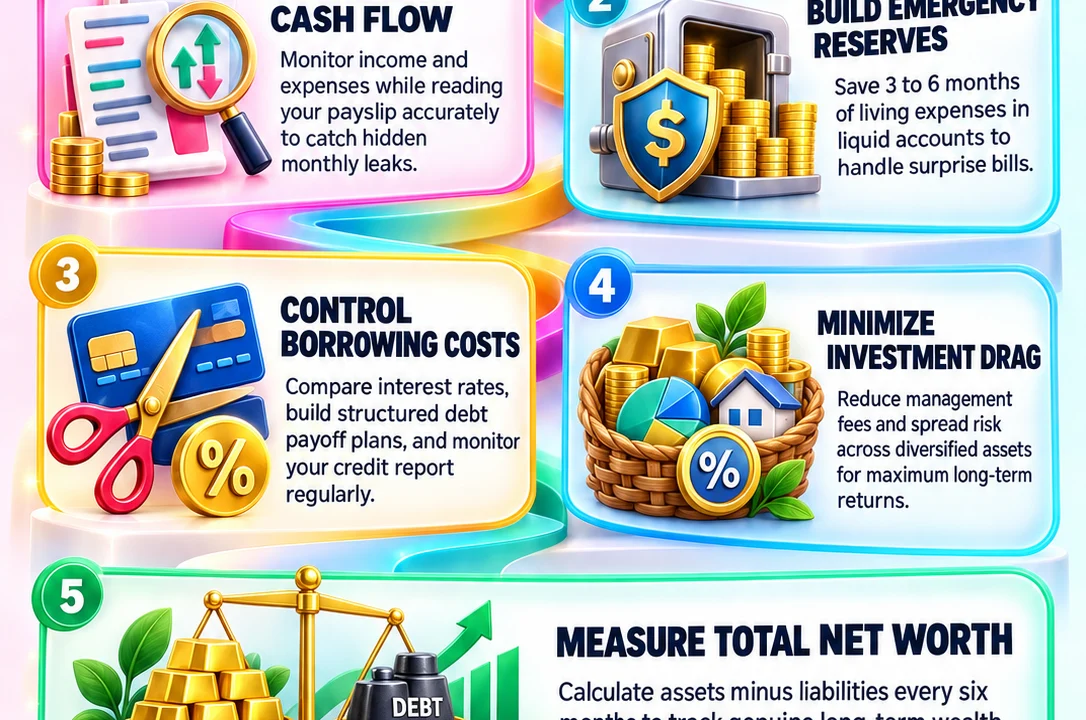
- Monitor Your Cash Flow Diligently: Continuously track all incoming funds against all outgoing spending to prevent hidden deficits from silently draining your accounts. 🔍
💡 Payslip Precision: Regularly reviewing your payslip ensures you’re not overpaying taxes or missing out on valuable employer-matched retirement contributions. It’s a simple check that can save you significant money over time.
When you have full visibility into your financial movements, you replace anxiety with clarity and confidence. 🧘♀️
2. Strategic Expense Management and Income Enhancement 💳
Navigating the world of debt, credit scores, and unexpected expenses requires foresight and proactive strategies, not just reactive panic. 🛒 Learning to borrow wisely and to strategically increase your earning potential are key to safeguarding your long-term financial health. 🛡️
Shielding Against Expenses 📅
Prepare for bills that don’t arrive every month and build dedicated savings for unforeseen costs. This proactive approach prevents financial emergencies from derailing your progress.
- Anticipate Annual Bills: Budget for expenses like insurance premiums, property taxes, or holiday gifts throughout the year. 🗓️
- Build a Robust Emergency Fund: Aim to save 3 to 6 months’ worth of essential living expenses. This safety net is crucial for unexpected job loss, medical emergencies, or major repairs. 🏦
Savvy Credit & Debt Tactics ⚡
Understand the true cost of borrowing and develop systematic plans to eliminate debt, while actively monitoring your overall credit health.
- Compare Borrowing Costs: Always shop around for the best interest rates and terms before taking out any loan or credit card. 🧮
- Develop Debt Payoff Strategies: Implement methods like the debt snowball or debt avalanche to systematically reduce and eliminate high-interest debt. ⛓️
- Understand Credit Reports: Regularly review your credit history to identify any errors and ensure you qualify for the best possible interest rates on future loans. 📄
- Negotiate Your Salary Effectively: Learn to articulate your value and confidently negotiate your compensation during job offers or performance reviews. Your earning potential is a critical asset. 💼
By combining disciplined debt reduction with proactive income negotiation, you significantly accelerate your capacity to save and invest. 📈
💡 Editorial Insight: Financial self-defense is just as crucial as wealth creation. Understanding how to avoid high borrowing fees, recognize and sidestep predatory scams, and minimize unnecessary investment costs can protect years of hard-earned savings and significantly boost your wealth-building potential.
3. Safeguarding Assets and Cultivating Long-Term Wealth Growth 🌲
Transitioning from mere saving to achieving genuine financial independence involves not only accumulating wealth but also protecting it and harnessing the power of compound interest. ⚙️ A solid understanding of asset management is vital for preventing costly missteps that can undermine your financial future. 💎
| Skill Pillar 🛠️ | Core Objective 🎯 | Long-Term Benefit 🏆 |
|---|---|---|
| Risk Defense 🛡️ | Compare insurance & spot scams | Prevents catastrophic wealth destruction |
| Smart Investing 📈 | Minimize fees & diversify risk | Maximizes compound portfolio expansion |
| Future Blueprint 🎯 | Plan retirement & track net worth | Ensures lasting financial independence |
- Compare Insurance Policies: Regularly review and shop around for insurance coverage (home, auto, life, health) to ensure you have adequate protection at the best possible price. ☂️
- Recognize Financial Scams: Develop a keen eye for red flags, high-pressure sales tactics, and unrealistic return promises that often characterize fraudulent schemes. 🚩
- Understand Investment Fees: Be aware of management fees, expense ratios, and other costs associated with investments. Lower fees mean more of your money is working for you through compounding. 📉
- Diversify Your Investments: Spread your capital across various asset classes (stocks, bonds, real estate, etc.) to mitigate risk and protect your portfolio from downturns in any single market. 🧺
- Plan for Retirement Early: Start contributing to tax-advantaged retirement accounts (like 401(k)s or IRAs) as early as possible to take full advantage of compounding growth over decades. ⏳
- Track Your Net Worth Consistently: Regularly calculate your total assets minus your total liabilities. This provides an accurate measure of your overall financial progress and wealth accumulation. 📊
🏆 Best Practice: Calculate your net worth every six months. Observing your assets grow while your liabilities shrink is a powerful, tangible indicator that your financial discipline is yielding results.
Frequently Asked Questions About Essential Money Skills 💬
Q: Which of these 15 skills should I prioritize mastering first?
A: Begin by focusing on mastering cash flow tracking and building a basic emergency safety fund. These two skills provide the fundamental understanding and security needed to effectively implement the other 13 skills. 🚀
Q: Why is tracking net worth more insightful than just checking my bank balance?
A: Your bank balance only shows your liquid cash reserves. Net worth, however, provides a comprehensive picture by accounting for all your assets (savings, investments, property) minus all your liabilities (debts, loans). It’s the true measure of your financial health and progress over time. 📈
Q: How does building a realistic budget help achieve financial independence?
A: Drafting a realistic budget creates a practical spending roadmap that aligns daily lifestyle choices with actual income limits, preventing overspending and ensuring funds are available for savings and investment goals. 📝
Q: Why is it important to understand how to read your payslip?
A: Reading your payslip helps you differentiate gross income from tax withholdings, retirement deductions, and net take-home pay, ensuring you’re not overpaying taxes or missing out on valuable employer benefits. 🧐
Q: What is the primary benefit of tracking daily cash flow?
A: Tracking cash flow monitors total incoming money against outgoing spending, preventing silent monthly deficits and identifying hidden financial leaks before they become major problems. 🔍
Q: How should you plan for annual or irregular bills?
A: Preparing for non-monthly expenses like insurance premiums or annual subscriptions requires budgeting throughout the year so these bills do not cause unexpected financial strain or debt. 🗓️
Q: Why is an emergency safety fund necessary for expense management?
A: Maintaining a 3 to 6-month cash safety net provides a dedicated buffer for unexpected costs like medical bills or car repairs, preventing you from resorting to high-interest credit cards during financial emergencies. 🏦
Q: Why should you compare borrowing costs before taking out a loan?
A: Comparing interest rates, fees, and loan terms from multiple lenders before borrowing ensures you secure the most affordable option and avoid costly debt traps that can hinder your financial progress. 🧮
Q: How do structured debt payoff plans assist in reaching financial freedom?
A: Developing and following a structured debt payoff plan helps eliminate high-interest liabilities efficiently, freeing up significant monthly cash flow that can then be redirected towards savings and long-term investments. ⛓️
Q: Why are credit reports important to check regularly?
A: Understanding your credit report helps you monitor factors that affect your borrowing power, identify potential errors or fraudulent activity, and ensure you qualify for the best interest rates when applying for major financial products like mortgages or car loans. 📄
Q: How does negotiating your salary contribute to long-term wealth?
A: Advocating for your professional worth and earning a fair market salary directly increases your primary earning power. This provides more surplus income that can be allocated toward savings, investments, and achieving your financial goals faster. 💼
Q: Why should you compare insurance coverage before buying a policy?
A: Comparing insurance policies ensures you secure adequate financial protection against potential risks and emergencies at the best value, preventing you from overpaying for coverage or being underinsured when you need it most. ☂️
Q: How do investment fees affect long-term portfolio growth?
A: High management fees and expense ratios significantly erode your total compounding returns over decades. Opting for low-cost investment vehicles is crucial for preserving more of your capital and maximizing long-term wealth growth. 📉
Q: Why is spreading investment risk through diversification essential?
A: Diversification involves spreading your capital across different asset classes and investment types. This strategy protects your overall investment portfolio from severe losses during downturns in any single market sector or asset class. 🧺
Q: Which of the 15 money skills should a beginner focus on first?
A: Beginners should concentrate initially on mastering cash flow tracking and establishing a foundational emergency safety fund. Once these are in place, it’s much easier to progress to debt payoff strategies and more advanced investment concepts. 🚀
Q: Why is tracking net worth better than checking a bank balance?
A: Checking a bank balance only shows your liquid cash available in the short term. Tracking net worth, however, calculates all your assets minus all your liabilities to provide an accurate, comprehensive measure of your true overall financial health and progress towards long-term wealth. 📈
📌 Key Takeaways for Your Financial Journey 🎯
- Master Your Cash Flow: Diligently track all incoming income and outgoing expenses, and thoroughly understand your payslip. 📑
- Plan for Expenses & Debt: Build essential emergency cash reserves and systematically eliminate high-interest financial liabilities. 🛡️
- Invest Wisely for Growth: Strive to minimize investment management fees, actively spread market risks through diversification, and begin your retirement savings early. 📈
- Measure Your Progress: Regularly calculate and track your total net worth (assets minus debts) to accurately gauge your genuine personal financial advancement. 📊
🏁 Take Command of Your Financial Future Today! 🏁
Financial literacy is not an abstract academic subject; it’s a practical, lifelong skillset that empowers everyone to achieve greater stability and prosperity. ✨ You don’t need a formal finance degree to make smart money decisions. The key is focusing on small, consistent improvements that build lasting financial resilience. 🌲
Commit to improving just two or three skills from this list starting today. Perhaps it’s creating a new, detailed budget, calculating your net worth for the first time, or reviewing the borrowing fees on your current loans. 🚀 Every small step forward builds momentum.
Ready to accelerate your journey to financial mastery? Explore the comprehensive budgeting tools, insightful net worth trackers, and beginner-friendly investing guides available right here on SmartSave.top. Let’s build your wealth together! 💪👇