Credit cards 💳 can be incredible tools for managing finances, offering convenience, protection, and even rewards. However, for many, they can transform into a source of significant financial stress. The journey into credit card debt rarely involves a single, dramatic event. Instead, it’s often a slow creep, a consequence of small, seemingly innocent daily money habits that gradually erode financial stability and foster reliance on borrowed funds. 🌱
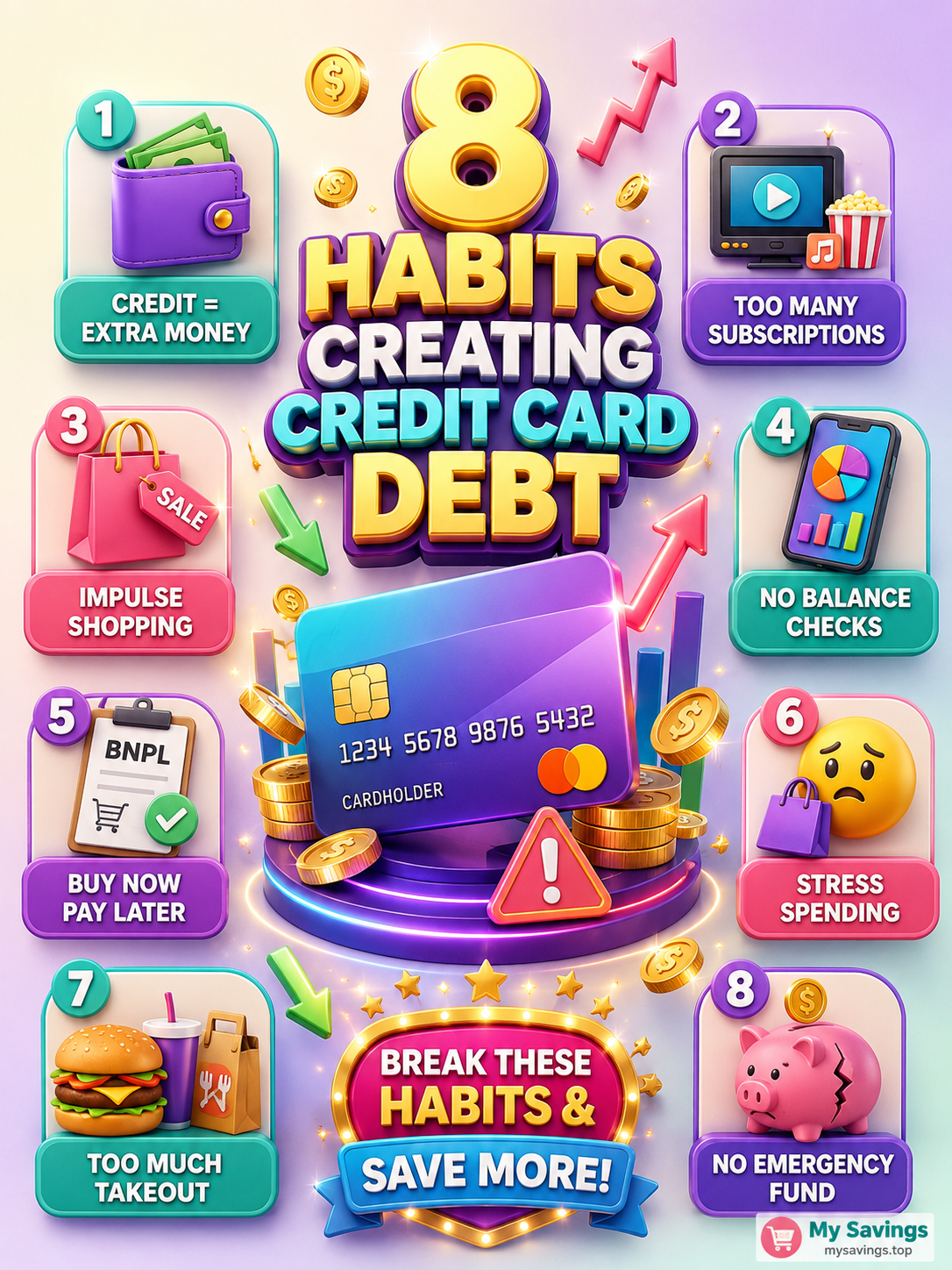
This comprehensive guide dives deep into eight prevalent reasons individuals find themselves entangled in credit card debt. We’ll explore practical, actionable strategies to help you regain command of your spending, alleviate financial anxieties, and cultivate robust, healthier money management practices. From unchecked subscriptions and frequent takeout orders to the absence of an emergency cushion and the perilous habit of ignoring statements, these everyday behaviors can quietly and persistently inflate your debt over time. 📈
Whether your aspiration is to enhance your overall financial health, accelerate your debt repayment journey, or solidify your savings strategy, understanding these critical warning signs is paramount. By recognizing these patterns, you can make more informed financial decisions, paving the way for a more secure and prosperous future. Let’s begin uncovering these hidden debt traps!
🚀The Gradual Ascent into Credit Card Debt
Credit cards offer remarkable benefits when wielded with responsibility. They simplify transactions, provide layers of fraud protection, and introduce welcome flexibility into payment schedules. Yet, when spending patterns become unmanageable, the balances on these cards can escalate at an alarming rate, leading to prolonged periods of financial strain. 😥
It’s crucial to understand that most people don’t amass significant debt due to one colossal misstep. More often, it’s the cumulative effect of daily routines that appear innocuous initially. Identifying these habits is the foundational step toward achieving financial well-being and constructing a resilient savings blueprint. 🏗️
The Insidious Nature of Interest: How Credit Card Debt Grows
The true cost of credit card debt lies in its interest charges. When balances aren’t paid in full each month, interest begins to accrue. This compounding effect means that the items you purchase end up costing considerably more than their original price tag. 💰 The insidious nature of interest can turn a small purchase into a much larger repayment burden over time.
Small, recurring expenses, spontaneous impulse buys, and poorly conceived budgeting decisions can silently inflate your credit card balances, making eventual repayment an increasingly daunting task. Below, we dissect eight common habits that frequently contribute to this escalating debt cycle. 👇
1. 🛒 The Illusion of Credit as Extra Income
A significant pitfall for many consumers is treating their available credit limit as an extension of their income, rather than what it truly is: borrowed money. 🏦 This perception can lead to a dangerous financial feedback loop.
-
- Spending Beyond Means: Basing spending decisions on the credit limit rather than your actual earned income is a recipe for disaster. Every swipe of the card signifies a future obligation.
-
- The Cycle of Borrowing: When credit is viewed as extra cash, it encourages spending that isn’t supported by your regular income, leading to increasing balances.
-
- Reduced Financial Agility: High credit card balances can severely restrict your financial flexibility, making it harder to manage unexpected expenses or pursue financial goals.
-
- Payment Tool, Not Income Source: It’s imperative to reframe how you perceive credit cards. They are payment instruments, designed to facilitate transactions, not supplements to your salary.
🎯 Your Smart Strategy: Develop a meticulous monthly budget that is firmly anchored in your actual earnings and essential expenses. When you use your credit card, mentally categorize that spending as money that has already been allocated within your budget. This mindset shift is crucial. 📊
2. 📺 The Unseen Drain: Excessive Subscriptions
Subscription services have seamlessly integrated into our modern lifestyles, becoming an almost expected part of the monthly financial landscape. From entertainment to productivity, there’s a subscription for almost everything. 🎬🎵📚💻📱
-
- Incremental Costs Add Up: Individually, these subscription fees might seem negligible. However, when you tally them up, they can represent a substantial and often overlooked monthly expenditure.
-
- Passive Accumulation: Many people sign up for services and then forget about them, allowing the charges to continue accumulating without conscious thought.
-
- Underutilized Services: Often, we pay for subscriptions we rarely, if ever, use, representing pure financial waste.
🎯 Your Smart Strategy: Implement a quarterly review of all your active subscriptions. Be ruthless in canceling services that are not being utilized regularly. Explore opportunities to consolidate entertainment expenses where feasible. The savings generated can be powerfully redirected toward debt repayment or bolstering your emergency fund. 💸➡️🛡️
3. 🏪 The “Just One More Thing” Shopping Vortex
Impulse buying stands as one of the most significant architects of unnecessary debt. Many shopping excursions begin with a clear intention but end with the addition of unplanned items that were never part of the original financial plan. 🛍️
-
- Temptation Everywhere: From enticing online recommendations and limited-time promotions to alluring seasonal sales and enticing clearance racks, the retail environment is designed to encourage spontaneous purchases.
-
- The Deceptive Smallness: Individual impulse buys might feel insignificant at the moment of purchase, but their cumulative effect on your monthly spending can be substantial and detrimental.
-
- Emotional Triggers: Sometimes, impulse purchases are driven by boredom, stress, or a desire for immediate gratification, leading to decisions that lack financial foresight.
🎯 Your Smart Strategy: Adopt the 24-hour rule for any non-essential purchase. If you still desire the item after a full day, consider making the purchase. Create a strict shopping list before you head out or go online, and commit to sticking to it. Avoid aimless browsing, especially when you’re not in a buying mood. ⏳📝
4. 📉 The Blind Spot: Neglecting Account Balances Before Spending
Financial awareness is not just beneficial; it’s an absolute cornerstone of responsible money management. Many individuals make purchases without first consulting crucial financial information.
-
- Unchecked Spending: Failing to check your bank account balance, credit card statements, monthly budget, or upcoming bill due dates before making a purchase significantly increases the risk of overspending.
-
- Lack of Real-Time Data: Without real-time access to your financial standing, it’s easy to lose track of your spending and inadvertently exceed your budget.
-
- Missed Deadlines: Not being aware of upcoming bills can lead to late payments, incurring additional fees and damaging your credit score.
🎯 Your Smart Strategy: Leverage the power of mobile banking apps to monitor your accounts regularly, ideally daily. Set up balance alerts to notify you when your funds drop below a certain threshold. Make it a habit to review your spending at least once a week. Importantly, track your progress towards your savings goals to stay motivated. 📱🔔📈
5. 🧾 Relying on Buy Now, Pay Later (BNPL) Services
Buy Now, Pay Later services have gained immense popularity by making purchases seem more manageable through installment payments. However, this convenience can mask a growing financial burden.
-
- Overlapping Payments: Managing multiple BNPL plans simultaneously can lead to a complex web of payment due dates, increasing the likelihood of missed payments.
-
- Increased Overall Spending: The perceived affordability of BNPL can encourage consumers to make more purchases than they otherwise would, leading to a higher total amount spent.
-
- Budgetary Strain: Juggling several BNPL plans can make budgeting significantly more complicated and harder to track.
-
- Hidden Fees: Missing a payment on a BNPL plan can result in late fees, interest charges, and negative impacts on your credit score, eroding the initial savings benefit.
🎯 Your Smart Strategy: Whenever possible, prioritize saving for planned purchases rather than relying on financing for discretionary spending. BNPL services can be a useful tool for genuine emergencies, but they should not become a crutch for everyday purchases. 🛒➡️💰➡️🎁
6. 😟 The Emotional Spending Cycle
Emotional spending is a pervasive financial challenge that affects many individuals. People often turn to shopping as a coping mechanism for a range of negative emotions.
-
- Coping with Negative Feelings: Shopping can provide a temporary emotional lift when individuals are experiencing stress, anxiety, boredom, frustration, or general discontent.
-
- Short-Lived Relief, Lasting Consequences: The momentary pleasure derived from a purchase quickly dissipates, leaving behind the tangible and often unwelcome financial repercussions.
-
- Reinforcing Unhealthy Habits: Relying on spending to manage emotions can create a cycle where individuals feel compelled to shop whenever they experience distress, further exacerbating debt issues.
🎯 Your Smart Strategy: Cultivate and practice non-financial stress management techniques. Engage in regular physical activity, such as walking outdoors or exercising. Immerse yourself in reading books or developing hobbies that do not require spending money. Keep your long-term financial goals at the forefront of your mind to provide perspective and motivation. 🌿🚶♀️📚🧘♂️🎯
7. 🍔 The Convenience Cost: Frequent Takeout Orders
While food delivery services offer unparalleled convenience, their frequent use can become a significant drain on your finances.
-
- Hidden Costs Beyond Food: A single takeout meal often includes not just the cost of the food but also delivery fees, service charges, tips, and sometimes even menu markups compared to dining in.
-
- Accumulated Expenses: Ordering takeout just a few times each week can easily add hundreds of dollars to your monthly expenses, significantly impacting your budget.
-
- Opportunity Cost: The money spent on frequent takeout could be allocated towards more impactful financial goals, such as debt reduction or savings.
🎯 Your Smart Strategy: Plan your meals for the week to reduce the temptation for last-minute takeout. Invest time in preparing simple, delicious meals at home. Utilize weekends for batch cooking to have ready-to-go meals throughout the week. Reserve takeout for special occasions or genuine treats, rather than a daily convenience. 🥗🍳🍲🎉
8. 🐷 The Safety Net Deficiency: Lack of an Emergency Fund
Life is inherently unpredictable, and unexpected expenses are an unavoidable part of it. Common financial surprises include car repairs, medical bills, home maintenance issues, or unexpected technology replacements. 🚗🏥🏠💻🐾
-
- Credit Cards as a Last Resort: Without an adequate emergency fund, many individuals are forced to turn to their credit cards to cover these unforeseen costs.
-
- Debt Spiral: This reliance on credit cards can quickly lead to accumulating balances that take months, or even years, to repay, often accumulating significant interest in the process.
-
- Increased Financial Stress: The burden of unexpected expenses coupled with growing credit card debt can create immense financial and emotional stress.
🎯 Your Smart Strategy: Begin building your emergency fund gradually. Start with a small, achievable goal and automate your savings contributions to ensure consistency. As your income grows, aim to increase your savings contributions. The ultimate goal is to build a fund that covers several months of essential living expenses. 💚🗓️🤖⬆️🛡️
📄 The Peril of Ignoring Statements
The act of avoiding credit card statements does not make the debt disappear; it merely delays your awareness of its magnitude. This avoidance can lead to a cascade of negative financial consequences.
-
- Unseen Costs: Failing to review your statements can result in unnoticed fees, fraudulent transactions that go unreported, and rapidly growing balances.
-
- Escalating Interest: Without monitoring, you might not realize how quickly interest charges are accumulating, significantly increasing the total amount you owe.
-
- Missed Deadlines: Ignoring statements means you might miss payment deadlines, leading to late fees and a negative impact on your credit score.
-
- Lack of Insight: Regular statement reviews provide valuable insights into your spending patterns and highlight potential financial risks early on.
🎯 Your Smart Strategy: Make it a non-negotiable habit to review every single credit card statement carefully each month. Verify all transactions, monitor your interest charges closely, and track your repayment progress. Use this information to identify spending categories that may require adjustment to better align with your financial goals. 📅✅🔍📈💡
🚀 Building a Debt-Free Future: Prevention is Key
Cultivating healthy financial habits from the outset is the most effective strategy for preventing credit card debt from accumulating in the first place. By adopting these proactive measures, you can significantly reduce your risk of carrying unnecessary debt.
-
- Craft a Realistic Budget: Develop a monthly budget that accurately reflects your income and expenses.
-
- Track Every Expense: Maintain meticulous records of all your spending, especially for major purchases.
-
- Pay in Full: Aim to pay your credit card balances in full every month whenever possible to avoid interest charges.
-
- Prioritize Emergency Savings: Consistently contribute to your emergency fund.
-
- Curb Impulse Buying: Implement strategies to limit spontaneous purchases.
-
- Optimize Subscriptions: Regularly review and reduce unnecessary subscription services.
-
- Regular Financial Check-ins: Make it a habit to review your financial accounts and statements frequently.
-
- Set Clear Goals: Define specific, achievable savings goals to stay motivated and focused.
By embracing these principles, you create a strong foundation for financial stability and long-term success. ✨
💰 Final Thoughts: Credit card debt is rarely the outcome of a single financial misstep. More often, it’s the insidious consequence of repeated, seemingly minor habits that snowball over time. Treating credit as an unlimited income source, indulging in excessive subscriptions, succumbing to emotional spending, ordering takeout too frequently, and neglecting diligent financial monitoring can collectively create a debt burden that becomes overwhelmingly difficult to manage. By diligently recognizing these common warning signs and consciously replacing them with more constructive and healthier money habits, individuals can significantly bolster their financial stability, diminish unnecessary debt, and construct a more robust and secure future built on sound savings principles and lasting financial success. Your journey to financial freedom starts with awareness and consistent action! 💪🌟