
Feeling overwhelmed by bills, expenses, and the constant juggle of making ends meet? 😩 You’re not alone. Many dream of financial peace, but the path to true independence can seem unclear, leading to unnecessary stress and anxiety. 🧘♀️ At SmartSave.top, we believe that taking charge of your money is entirely achievable. It doesn’t require a finance degree or a massive salary. 🎓 It starts with understanding and implementing key principles of personal financial responsibility. Let’s embark on a journey to transform your hard-earned income into enduring financial stability, step by step. 👣
🧱 Laying the Foundation: What is Financial Responsibility?
At its core, personal financial responsibility means actively taking ownership of your financial life. It’s about making conscious decisions that align with your long-term goals, rather than reacting to immediate desires or external pressures. This involves a commitment to living within your means, building a safety net for unexpected events, strategically tackling debt, and consistently investing for the future. 🌱 It’s a proactive approach, cultivated through daily habits, mindful spending, and a clear vision for where you want your money to take you. 🎯
The Pillars of Financial Ownership:
-
- Self-Reliance: This is the bedrock. It means empowering yourself by relying on your income and savings, rather than high-interest loans or external help, to navigate financial challenges. It’s about building your own security fortress. 🛡️
-
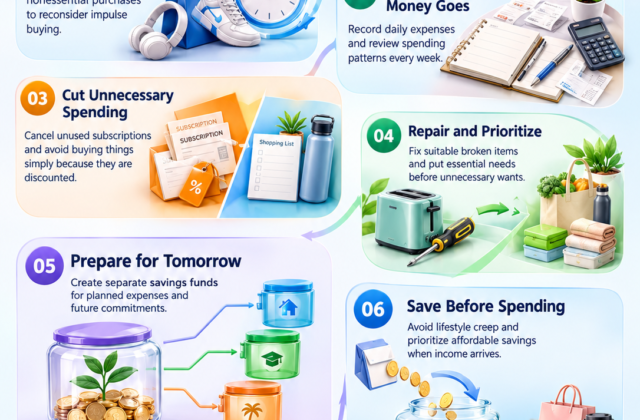
- Mindful Spending: It’s crucial to differentiate between needs and wants. Before making a purchase, pause and ask yourself if it’s essential or simply a temporary indulgence. Tracking your spending can reveal surprising patterns. 🔍
When you shift away from relying on credit to cover monthly shortfalls, you immediately release a significant burden of emotional stress. 😌 Every dollar you consciously save and allocate becomes a brick in the foundation of your financial freedom. 💎
🛡️ The Unshakeable Safety Net: Your Emergency Fund
Life, as they say, is unpredictable. 🎢 From sudden car breakdowns 🚗 to unexpected medical bills 🏥 or a temporary job loss 💔, unforeseen circumstances can derail even the best-laid plans. Without a dedicated cash buffer, these events can quickly plunge households into the costly spiral of high-interest credit card debt. 📉
Building Your Financial Shield:
-
- The Target: Aim to squirrel away enough to cover 3 to 6 months of your essential living expenses. This is your financial shock absorber. 🎯
-
- The Location: Keep this money in a high-yield savings account. It needs to be easily accessible (liquid) while still earning a modest return. 🏦
-
- The Automation: Make saving effortless. Set up automatic transfers from your checking account to your savings account every payday. Small, consistent contributions add up significantly over time. 🚀
Having this financial cushion fundamentally alters your response to life’s curveballs. What might have once been a major crisis becomes a manageable inconvenience. It provides invaluable peace of mind and protects your long-term financial progress. ✨
💡 EXPERT INSIGHT: Treat your emergency fund contributions as a non-negotiable bill. “Pay yourself first” by allocating funds to savings before anything else. This ensures your security grows consistently, shielding you from impulse spending temptations. 🧠
⚖️ Navigating Debt: Responsibility vs. Ruin
Not all debt is created equal, and understanding this distinction is paramount for long-term financial health. 🧮 While some loans can be strategic tools for building wealth (like a mortgage for a home 🏡 or a student loan for education 📚), high-interest consumer debt acts as a relentless drain on your resources. 😩
Debt Categories & Their Impact:
| Debt Type | Common Examples | Impact on Your Wealth |
|---|---|---|
| Strategic Debt 🛠️ | Mortgages, Student Loans, Business Loans | Can build equity, increase earning potential, or generate income. Interest rates are typically lower. |
| High-Cost Debt Traps ⚠️ | Credit Card Balances, Payday Loans, Title Loans | High-interest rates compound rapidly, eroding your income and hindering your ability to save or invest. Often leads to a debt cycle. |
Prioritizing the elimination of high-interest debt, especially credit card balances, is one of the most impactful steps you can take. Every dollar freed from interest payments can be redirected towards building assets and achieving your financial goals. Think of it as a guaranteed return on investment equal to the interest rate you were paying! 💰
🌲 Harnessing the Power of Compounding for Wealth Growth
Once your emergency fund is solid and high-interest debt is on the path to extinction, it’s time to put your money to work for you. 💪 This is where the magic of long-term investing and compound interest truly shines. 🌟 Compound interest is often called the eighth wonder of the world because it allows your earnings to generate their own earnings, creating a snowball effect over time. ☃️
Key Strategies for Investment Success:
-
- Start Early: Time is your most powerful ally in investing. Even small amounts invested consistently in your 20s or 30s can significantly outperform larger sums invested later in life. ⏳
-
- Embrace Index Funds: For most investors, low-cost index funds offer a simple, effective way to achieve broad diversification across numerous companies. They’re a smart, hands-off approach to market participation. 📊
-
- Leverage Workplace Retirement Plans: If your employer offers a retirement savings plan (like a 401(k) or 403(b)), especially with a matching contribution, take full advantage! This is essentially free money. 💵
🏆 BEST PRACTICE: Automate your investments. Set up automatic, recurring contributions from your bank account to your investment accounts each month. This disciplined approach removes emotional decision-making and ensures your wealth grows steadily, regardless of market fluctuations.
❓ Frequently Asked Questions About Financial Responsibility 💬
- How can I start being financially responsible on a low income?
- Begin by diligently tracking every single expense for a month. This will reveal where your money is actually going and identify any “leaks.” Even saving a small amount, like $20 or $50 a month, helps build discipline and establishes your initial emergency fund. Small habits lead to big changes! 🤏
- Should I prioritize paying off all debt before building an emergency fund?
- It’s generally advisable to first build a small starter emergency fund (around $1,000). This minimal cushion prevents you from resorting to high-interest credit cards for unexpected expenses that may arise while you’re aggressively paying down other debts. Once you have that small buffer, then focus on tackling high-interest debt. 🏦➡️⛓️
- What is personal financial responsibility and how is it built?
- Personal financial responsibility is the commitment to owning your financial decisions. It means living within your means, creating a buffer for unexpected events, strategically managing debt, and investing consistently for the future. You build it by creating realistic budgets, automating savings, and making deliberate spending choices daily. 🧠
- What is the fundamental meaning of financial ownership?
- Financial ownership is about taking the reins of your monetary destiny. It prioritizes long-term financial security over fleeting wants, making decisions based on your actual income rather than relying on borrowed funds. 🚗💨
- How does self-reliance contribute to personal finance?
- Self-reliance in finance means living within your budget and depending on your own earnings to get through difficult times, rather than relying on high-interest loans or support from others. It fosters independence and resilience. 💪
- Why is an emergency safety net so crucial?
- An emergency safety net acts as a vital buffer against life’s inevitable surprises, such as car repairs, medical emergencies, or job loss. It prevents you from falling into costly debt when these unexpected situations arise. ☔➡️☀️
- What is the recommended size for an emergency fund?
- The general guideline is to save enough to cover your essential living expenses for a period of 3 to 6 months. This provides substantial security. 🗓️
- Where is the best place to keep emergency cash reserves?
- Your emergency funds should be held in a high-yield savings account. This ensures the money remains safe, easily accessible when needed (liquid), and earns a bit of interest. 📈
- What’s the top strategy for building savings effectively?
- Experts recommend treating your savings contributions like a mandatory bill. By “paying yourself first” on payday, you ensure your savings grow before discretionary spending occurs, making the process automatic and consistent. 💰➡️🏦
- How do strategic debts differ from debt traps?
- Strategic debts, like mortgages or student loans, are typically taken on for assets that can increase in value or improve earning potential, often with reasonable interest rates. High-cost debt traps, such as credit card balances and payday loans, come with exorbitant interest rates that quickly deplete your finances and can lead to a cycle of debt. 🏠 vs. ⛓️
- Why is tackling high-interest debt so important?
- Eliminating high-interest debt frees up significant monthly cash flow, which can then be redirected towards investments that build wealth. It also provides a guaranteed return on investment equivalent to the interest rate you were previously paying. 💸➡️🌱
- How does compounding accelerate long-term wealth creation?
- Compounding is the process where your investment earnings begin to generate their own earnings. Over time, this creates an exponential growth effect, significantly amplifying your wealth beyond simple savings. It’s money working for you! 🚀
- Why are low-cost index funds a good investment choice?
- Low-cost index funds offer an easy and efficient way to gain diversified exposure to the market. They typically track a broad market index, providing broad market returns with minimal fees, making them a solid choice for long-term growth. 🌍
- What is the advantage of automating monthly investments?
- Automating your investments removes the temptation for emotional trading or skipping contributions during market downturns. It ensures consistent growth and disciplined investing, which are key to long-term success. 🗓️➡️💯
- How can SmartSave.top help you achieve financial independence?
- SmartSave.top offers practical tools and resources, including budgeting calculators, savings planners, and educational guides on investing, all designed to empower you to take control of your cash flow and systematically build personal wealth. We’re here to support your journey! 🤝
🏁 Your Path to Financial Freedom Starts Now! 🏁
Mastering personal financial responsibility is not a destination; it’s a continuous journey of making smart, intentional choices every day. 💎 By committing to living below your means, diligently managing debt, and embracing consistent saving and investing, you pave the way for financial freedom and peace of mind for yourself and your loved ones. 👨👩👧👦🌲
Take that crucial first step today. Review your recent spending habits, set a clear savings goal, and set up those automated deposits. Your future self will thank you. 🙏
Ready to accelerate your financial growth? Explore the comprehensive budgeting tools, savings calculators, and investment guides available right here on SmartSave.top to help you scale your personal wealth and achieve your dreams! 🚀👇