We pour immense effort into earning our livelihoods, only to witness our hard-earned cash mysteriously vanish due to unseen financial blind spots. True financial prosperity isn’t solely defined by your income; it hinges entirely on your capacity to safeguard and intelligently manage what you retain. 💸
Millions find themselves perpetually treading water, caught in a cycle of living paycheck to paycheck, not due to insufficient earnings, but because they repeatedly fall prey to insidious financial pitfalls. These seemingly minor habits – from unmonitored digital subscriptions to impulsive retail therapy – quietly erode your wealth, preventing it from ever benefiting from the magic of compounding. 🛑
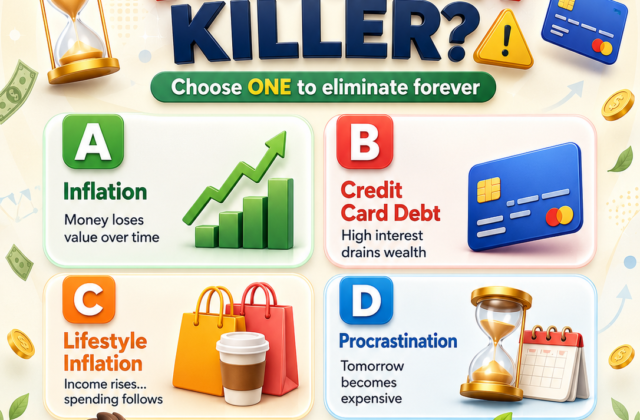
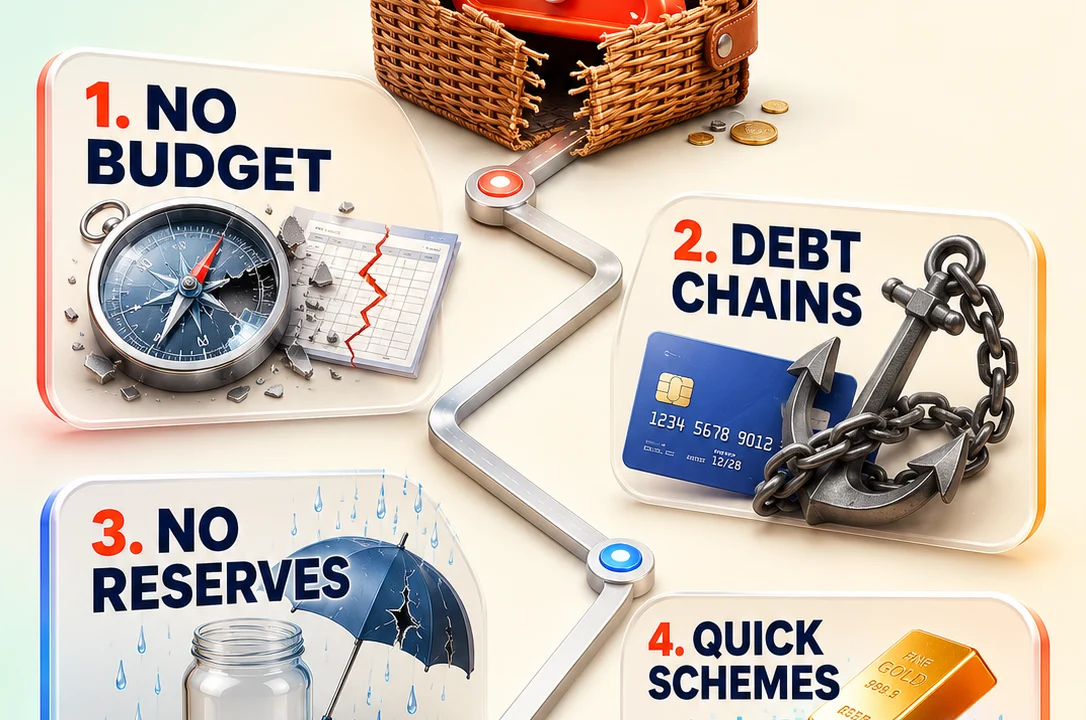
The Most Damaging Financial Mistakes Preventing Wealth Growth Include: Ignoring a structured budget, carrying high-interest debt, failing to build a dedicated emergency fund, cashing out retirement accounts prematurely, chasing speculative get-rich-quick schemes, and neglecting to implement automated systems for consistently acquiring appreciating assets over liabilities.
By diligently identifying and neutralizing these pervasive traps, you can construct an impenetrable fortress around your finances. Let’s delve into the fifteen primary obstacles that can derail your financial trajectory, empowering you to refine your habits, preserve your diligent earnings, and confidently chart your course toward financial independence. 🚀
The Perils of Poor Planning and Emotional Spending
Navigating your financial life without a definitive roadmap is akin to attempting to traverse an unfamiliar city in complete darkness without any navigation aids. Yet, countless individuals manage their daily income based on mere conjecture, relying on imprecise mental estimations that invariably lead to excessive spending. 🗺️
When you fail to meticulously track the destination of your money, ‘lifestyle creep’ inevitably insinuates itself into your bank statements. The allure of everyday comforts, spur-of-the-moment online shopping sprees, and the cycle of emotional retail spending expand to absorb every single pay raise or bonus you receive. 📉
- Living Beyond Your Means: This involves spending income you haven’t actually earned yet, often in an attempt to maintain an expensive social image or keep up with perceived peer standards.
- Ignoring a Structured Budget: Operating without clear financial boundaries leaves your monthly bills and spending habits entirely to chance, making it impossible to control where your money goes.
- Failing to Track Small Expenditures: Mindlessly swiping debit or credit cards for numerous small purchases, which, when aggregated, amount to substantial hidden financial leaks.
- Allowing Emotions to Dictate Spending: Utilizing retail shopping as an immediate, albeit temporary, coping mechanism for stress, anxiety, or even boredom.
Breaking free from these destructive behavioral patterns necessitates implementing intentional pauses or ‘speed bumps’ in your purchasing process. Confronting your actual financial figures might initially feel uncomfortable, but it is the absolute cornerstone of building enduring financial security. 💎
💡 Quick Tip: An unmonitored bank account invariably trends toward zero. View your personal budget not as a restriction on your freedom, but as a protective shield for your financial well-being.
The High-Interest Debt Vortex and Minimum Payment Cycles
Acquiring debt without a meticulously defined and disciplined strategy is one of the swiftest routes to jeopardizing your future cash flow. High-interest credit card debt functions as an expensive anchor on your financial portfolio, consuming funds that should ideally be compounding within your investment accounts. 💳
Succumbing to the temptation of making only the minimum required monthly payments drastically elongates your repayment timeline, often by years, while simultaneously inflating the total cost of the borrowed item. This systemic drain compels you to work ceaselessly simply to finance a financial institution’s profit margins, rather than actively building your own personal wealth. 🏛️
- Carrying High-Interest Balances: Allowing the accumulating interest on expensive revolving credit card debt to compound against your income, making it increasingly difficult to escape.
- Relying on Minimum Payments: Settling for the baseline statement options that ensnare you in protracted debt cycles, potentially lasting for decades.
- Financing Lifestyle Liabilities: Using credit to fund transient lifestyle wants and desires rather than strategically deploying it for assets that appreciate in value.
Have you ever taken the time to calculate the precise amount of money you surrender each month solely to finance fees? Eliminating these costly debt traps liberates the essential capital required to amplify your wealth-building engines and accelerate your overall cash flow. 🚀
⚠️ Common Mistake: Many individuals mistakenly perceive credit cards as an extension of their income. It is crucial to remember that every dollar borrowed on credit represents a direct claim against your future time and earning potential.
Neglecting Emergency Funds and Undermining Future Growth
Operating your household’s financial systems without a robust, dedicated emergency fund is an extraordinarily perilous gamble. When life inevitably presents an unexpected challenge—such as a significant medical expense or sudden, costly car repairs—the absence of readily available cash forces you into the realm of expensive, high-interest loans. 🌊
Even more detrimental is the failure to proactively plan for your long-term retirement security or, worse, withdrawing funds from compounding retirement accounts prematurely to satisfy short-term desires. Disrupting the elegant mathematical progression of compound interest fundamentally undermines your long-term financial stability, compelling you to trade away future independence for transient comfort. 🌾
- Ignoring Emergency Reserves: Jeopardizing your financial stability by failing to set aside a dedicated fund equivalent to three to six months of essential living expenses.
- Raiding Retirement Portfolios: Withdrawing funds from tax-advantaged growth vehicles before retirement age, incurring substantial penalties and taxes that significantly diminish your nest egg.
- Postponing Market Investments: Waiting indefinitely for the ‘perfect’ moment to begin investing, thereby completely squandering the immense power of time in the market.
- Relying Solely on a Single Income Stream: Neglecting to cultivate diversified secondary income streams, leaving your household vulnerable to economic fluctuations.
Establishing a substantial cash reserve fundamentally alters your psychological relationship with money. When you are adequately protected by an emergency fund and maintain consistent investment habits, unforeseen life events transform from potential catastrophic crises into manageable inconveniences. 🏰
🏆 Best Practice: Automate your contributions to your emergency fund and investment accounts immediately on your payday. If the money never reaches your primary checking account, the temptation to spend it is significantly reduced.
The Allure of Quick Riches and Stagnant Financial Literacy
The human inclination towards seeking shortcuts makes hyper-speculative ‘get-rich-quick’ schemes appear incredibly appealing. However, the pursuit of unverified hype or trend-driven digital assets almost invariably results in rapid capital depreciation. 🪐
Genuine, sustainable financial acceleration is the predictable outcome of continuous, long-term personal development and education. By neglecting to expand your understanding of fundamental tax laws, effective investment strategies, and various asset structures, you remain overwhelmingly dependent on sheer luck. 🧠
- Chasing Speculative Shortcuts: Allocating critical financial resources into highly volatile, unverified asset fads instead of focusing on proven compounding mechanisms.
- Stagnant Wealth Education: Failing to engage with personal finance literature, educational courses, or to stay informed about evolving wealth-building strategies.
- Ignoring the Mathematics of Compounding: Underestimating the profound power of consistent, small-scale investments to scale dramatically over extended multi-year horizons.
Consider the significant amount of time you dedicate each week to earning money. Doesn’t it stand to reason that dedicating even a fraction of that time to learning how to properly protect and multiply it would be a wise investment? Expanding your financial knowledge base is arguably the highest-yielding investment you will ever make. 🌟
Wealth Dynamics: Navigating Short-Term Pitfalls for Long-Term Mastery
The financial landscape often presents a stark contrast between fleeting temptations and enduring principles. Understanding this dynamic is crucial for sustainable wealth accumulation.
| Common Financial Traps | Strategic Correction Methods | Net Impact on Your Balance Sheet |
|---|---|---|
| Mindless Impulse Swiping 🛒 | Implement a 24-hour waiting period and meticulously track all transactions ⏳ | Instantly plugs minor cash leaks and prevents impulsive overspending. |
| Making Only Minimum Debt Payments 💳 | Prioritize aggressive principal overpayments and develop a debt-reduction plan 🛠️ | Halts the compounding of interest fees, saving you significant money over time. |
| Chasing Speculative Trends 🪐 | Commit to continuous financial education and invest in diversified index funds 📖 | Builds predictable, enduring net worth through sound, long-term strategies. |
The numbers clearly illuminate a fundamental truth: consistent, long-term discipline invariably triumphs over short-term speculation. By realigning your daily habits and systematically eliminating avoidable financial transaction fees, you create a highly efficient pipeline for investable capital. 🛡️
🧠 Expert Insight: True financial security is not achieved through a single, lucky breakthrough. Instead, it is cultivated by building an impenetrable system that systematically eliminates preventable errors on a month-to-month basis.
Essential Strategies for Correcting Financial Errors
Implementing these corrections is not about imposing severe lifestyle restrictions; it’s an act of profound self-respect and intentional financial optimization.
- Map Your Outflows Rigorously: Eliminate budgeting blind spots by diligently tracking every single incoming and outgoing financial transaction.
- Destroy Impulse Habits: Introduce deliberate friction into your purchasing process to cool down emotional spending decisions and safeguard your core liquidity.
- Attack High-Interest Debt Aggressively: Escape the debilitating cycle of minimum statement balances to cease wasting your hard-earned money on exorbitant interest fees.
- Insulate Your Compounding Vaults: Establish a dedicated emergency reserve fund and ensure your long-term retirement accounts remain untouched.
- Commit to Daily Financial Literacy: Steer clear of speculative trends by investing significant time and effort into enhancing your personal financial knowledge base.
Rectify Your Financial Missteps and Fund Your Future Freedom
Addressing these common financial mistakes is not a punitive exercise; it’s a strategic move towards empowering your financial future. By plugging those hidden cash leaks, dismantling interest-based debt anchors, and fortifying your compounding portfolios, you generate genuine forward momentum. 💎
Lasting financial independence is meticulously constructed, choice by choice, system by system, and habit by habit, through focused and consistent execution. Your daily actions dictate your financial velocity. Shifting away from conventional consumerist habits allows your capital to labor diligently on your behalf, transforming modest daily decisions into comprehensive lifestyle freedom. 🌿
Seize control of your personal financial roadmap today by identifying just one specific financial trap you commit to eliminating from your routine this week. Let the expert financial guidance available on SmartSave.top assist you in transitioning from a state of accidental financial leaks to one of automated, predictable compound growth. Embark on your financial optimization journey now! 🏅
What common financial mistakes stop you from growing wealth?
The most damaging financial mistakes that prevent wealth growth include ignoring a structured budget, carrying high-interest debt, failing to build a dedicated emergency fund, cashing out retirement accounts early, chasing speculative get-rich-quick schemes, and failing to use automated systems to consistently buy appreciating assets over liabilities.
Why is running a household finances without a navigation map dangerous?
Living without a clear blueprint or budget for your money is like driving through an unfamiliar city in the dark without a navigation map. It forces you to rely on vague mental estimates that lead straight to overspending and unmonitored leaks.
What happens when you do not track where your money goes?
When you do not track your money, lifestyle creep naturally takes over your bank statement. Everyday comfort checkouts, spontaneous online shopping trips, and emotional retail spending loops expand to absorb every single raise or bonus you earn.
How does emotional retail spending impact long-term wealth?
Allowing emotions to guide financial choices often leads to using retail shopping as a short-term coping tool for stress, anxiety, or boredom. This destructive habit quietly siphons away your wealth before it ever gets a chance to compound.
Why is borrowing money without an intentional plan a problem?
Borrowing without a strict plan is one of the fastest ways to compromise your future cash flow. High-interest debt acts as an expensive anchor, consuming funds that should be compounding in your investment accounts to grow your money.
What is the danger of making only minimum monthly payments?
Making only minimum payments extends your repayment timeline by years while multiplying the final cost of the item due to expensive interest accumulation. This cycle leaves you working just to fund a bank’s profit margins instead of building net worth.
Why shouldn’t you view credit cards as extra income?
Viewing credit cards as extra income is a dangerous trap because every single dollar borrowed on credit is a direct loan against your future time, energy, and financial freedom.
Why is operating without a dedicated emergency fund risky?
Operating without an emergency fund is a risky gamble because when an unexpected life event occurs—like a medical issue or sudden car damage—the lack of cash reserves forces you to take on expensive high-interest loans.
How much cash should be stored inside an emergency fund?
To build proper financial resilience and a secure cash cushion, you should aim to store away three to six months of your core survival living costs inside an isolated, dedicated reserve account.
What happens when you cash out retirement accounts early?
Withdrawing funds from tax-advantaged growth vaults early ruins your compound momentum and triggers severe penalty fees. Interrupting this brilliant math forces you to trade away early independence for temporary comfort.
Why is neglecting to build multiple income streams a mistake?
Relying entirely on a single salary leaves your household highly vulnerable to sudden economic shifts. Neglecting to establish diversified side income streams removes a vital safety net needed to grow your money safely.
Why are get-rich-quick schemes dangerous for your portfolio?
Chasing get-rich-quick schemes is dangerous because pouring critical cash into volatile, trend-driven internet assets or unverified market hype almost always results in swift capital destruction rather than sustainable wealth.
How does stagnant financial knowledge harm your net worth?
Failing to continuously improve your financial knowledge keeps you heavily dependent on sheer luck. Without understanding tax rules, investment strategies, and asset structures, you remain exposed to massive downside risks.
How does automation help eliminate budgeting blind spots?
Automating your emergency fund and investment contributions on your exact payday ensures you pay your future self first. If the money never reaches your main checking account, you won’t have the opportunity to misspend it.
How does SmartSave.top help correct these common traps?
SmartSave.top provides the essential frameworks, strategic habit corrections, and systematic tools needed to help you transition away from accidental cash leaks and toward automated, predictable compound growth.