In today’s world, it’s easy to get caught up in the outward signs of success. We often equate wealth with the shiny new car 🚗, the sprawling mansion 🏡, the designer labels 🛍️, or the lavish celebrations 🎉. However, the true foundation of financial security and long-term prosperity lies not in what we display, but in the quiet, deliberate choices we make with our money every single day. Building wealth is a marathon, not a sprint, and it’s powered by mindful spending and strategic saving, not just the appearance of affluence.
The Illusion vs. The Reality of Wealth ✨
The difference between *looking* rich and *being* rich is profound. One is about perception, the other is about substance. Visible assets can create a compelling illusion, but they don’t necessarily reflect an individual’s true financial health, their ability to manage expenses, or their capacity to navigate unexpected financial challenges. The choices that cultivate genuine wealth are often understated. They involve a conscious decision to spend with purpose, to sidestep unnecessary upgrades, and to consistently allocate more resources towards future financial security and aspirations.
The core distinction lies in the ‘why’ behind our spending. Are we purchasing something for immediate gratification, social validation, or convenience? Or are we investing in something that genuinely serves our needs, aligns with our long-term goals, and offers lasting value? The aim isn’t to live a life devoid of enjoyment or luxury; rather, it’s about discerning the difference between spending to project an image and spending to cultivate a life that truly resonates with your deepest values and aspirations. It’s about understanding that financial well-being is built when no one is watching, through consistent, smart financial decisions. 🧠
Six Pillars of Wealth-Building Spending Habits 🏗️
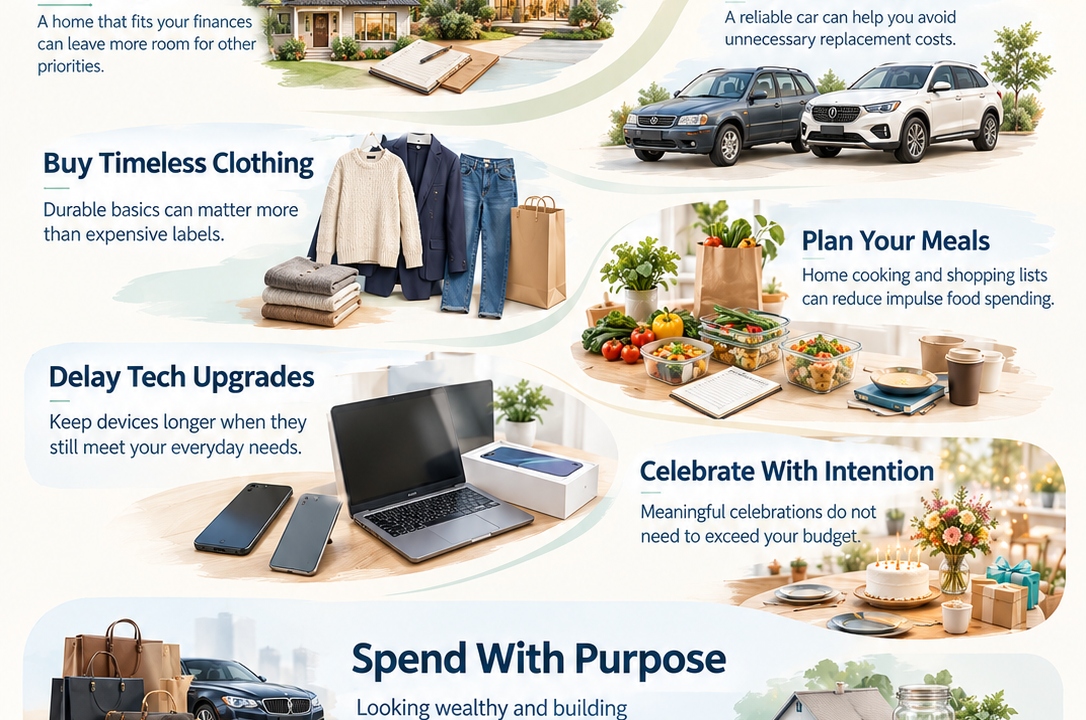
1. Housing: Your Sanctuary, Not Your Strain 🏠
A home is more than just a structure; it’s a place of comfort, stability, and a canvas for building a life. Yet, the pursuit of a grander abode, driven primarily by its size or aesthetic appeal, can lead to financial commitments that place undue pressure on your household budget. The dream home can quickly become a financial burden if the mortgage payments, property taxes, and maintenance costs consume an overwhelming portion of your income, leaving little room for other essential financial goals.
An intentional approach to housing begins with affordability. Instead of stretching your finances to their absolute limit for a larger property, ask yourself if a more practical, comfortable home could adequately meet your current and foreseeable needs. Could this more manageable option leave you with greater financial flexibility to invest, save for retirement, or pursue other life ambitions? The goal is not to live in a cramped space, but to find a dwelling that supports your lifestyle without undermining your broader financial well-being. A home should be a source of security and joy, not a constant source of financial anxiety.
- The Status-Driven Choice: Committing to a mortgage that strains your budget to afford a larger, more prestigious house. 💸
- The Wealth-Building Choice: Prioritizing a home that comfortably fits your budget, meets your essential needs, and supports your long-term financial objectives. ✅
The Takeaway: Your home should enhance your life, not dictate your financial limitations. Ensure it provides comfort and security without consuming so much of your income that other vital aspects of your financial life suffer. 💖
2. Transportation: Value Reliability Over Prestige 🚗💨
Vehicles can be essential tools for modern life, facilitating commutes, errands, and adventures. However, they can also become expensive statements of success. The allure of constantly upgrading to the latest model, or opting for a vehicle with a more prestigious brand name, often comes with recurring payments, higher insurance premiums, and increased maintenance costs. This cycle of upgrades can drain your financial resources faster than you might realize.
Choosing to keep a reliable car for longer, provided it remains safe, dependable, and economical to maintain, is a powerful wealth-building strategy. This isn’t about driving an outdated or unreliable vehicle; it’s about making a deliberate financial decision. The objective is to select transportation that reliably serves your needs without incurring the recurring expense of unnecessary upgrades. Before you commit to a new car, ask yourself a crucial question: Am I replacing this vehicle because it no longer functions adequately or safely, or because I desire the perceived status or novelty of a newer model? That introspection is key to distinguishing a practical necessity from an expense driven by appearances. A sensible vehicle choice liberates more of your budget for priorities beyond mere transportation. 🛣️
- A Practical Question: “Am I replacing this car because it no longer serves me well, or because I want people to notice something newer?” 🤔
The Distinction: Understanding this difference helps separate a wise purchase from a financially draining one driven by external validation. A well-chosen, dependable vehicle leaves more financial room for savings, investments, and other life goals. 💰
3. Personal Style: Cultivate Quality, Not Just Labels 👚✨
Clothing is another arena where spending can become intertwined with the desire for recognition. High-end brands and visible logos might appeal to individuals who wish their attire to convey social status. However, a brand name alone does not guarantee quality, durability, or suitability. Fast fashion trends and the constant pressure to acquire the latest styles can lead to a closet full of clothes that quickly go out of fashion or fall apart.
A more considered approach to personal style involves building a wardrobe around quality, timeless pieces, and versatile basics that can be mixed and matched with items you already own. By choosing carefully and focusing on durability and classic designs, you can reduce the impulse to constantly buy new outfits simply to keep up with fleeting trends or to display recognizable branding. This strategy doesn’t mean eschewing all designer items or exclusively buying the cheapest options. It’s about asking whether an item offers the quality, comfort, and versatility you desire at a price that aligns with your budget and values. Investing in well-made, enduring pieces often proves more cost-effective in the long run than repeatedly purchasing lower-quality items.
- Style Principle: “Buy for lasting use, not just the label.” 🌟
The Benefit: A wardrobe built on quality and functionality not only looks good but also saves you money over time, reducing the need for constant replacements and adhering to the principle of spending intentionally. 🎯
4. Food: Plan Your Palate, Don’t Just Pay for Every Impulse 🍎🍲
Food expenses can easily become a black hole in a budget if not managed with intention. The convenience of ordering takeout whenever hunger strikes, purchasing unplanned snacks at the grocery store, or dining out frequently without consulting a budget can make it incredibly difficult to track where your money is actually going. These seemingly small, frequent expenses can add up significantly over time.
Implementing a meal planning routine, prioritizing home-cooked meals when practical, and making conscious decisions about dining out can bring substantial control to your everyday food spending. The objective is not to eliminate the pleasure of enjoying a meal at a restaurant, but rather to transform those occasions into deliberate choices rather than habitual expenses. A simple yet effective routine involves deciding which meals you will prepare at home, identifying specific occasions when you genuinely wish to dine out, and creating a detailed shopping list before heading to the grocery store. This mindful approach helps distinguish necessary food purchases from avoidable convenience expenses.
- The Power of Planning: When your food spending has a clear plan, it becomes easier to distinguish between essential purchases and discretionary spending driven by convenience. 📅
The Impact: This shift from impulsive buying to intentional consumption can lead to significant savings, allowing you to allocate more funds towards your financial goals. 📈
5. Technology: Extend the Lifespan of Your Devices 📱💻
The allure of the latest technology is undeniable. New smartphones, laptops, and gadgets with updated features are constantly hitting the market, tempting consumers to upgrade frequently. However, replacing functional devices annually or bi-annually can transform a one-time purchase into a significant recurring expense. This constant upgrade cycle is a prime example of spending driven by novelty rather than necessity.
If your current device still effectively meets your everyday needs, continuing to use it for longer is a practical and financially savvy decision. Often, the incremental improvements in new models don’t translate into significant benefits for the average user. Repairing a device when it encounters an issue can also be a worthwhile consideration, especially when the repair cost is reasonable and the device remains suitable for your daily tasks. Before succumbing to the urge to upgrade, honestly assess your current technology: Has it become unreliable? Does it genuinely hinder your ability to perform essential tasks? Does it limit you in ways that are critical to your work or personal life? If the answer to these questions is no, then waiting for a truly compelling reason to upgrade is the more prudent choice. The money saved on unnecessary technology upgrades can be redirected towards savings, investments, or other important financial priorities. This is about making conscious decisions, not about avoiding technology altogether. ⏳
- The Money-Saving Habit: Give every device a useful working life instead of treating each new release as an automatic reason to spend. 💡
The Advantage: Money not spent on an unnecessary upgrade remains available for your savings or other financial priorities, contributing directly to your wealth-building efforts. 🚀
6. Celebrations: Meaningful Moments, Manageable Budgets 🎉🎈
Special occasions—birthdays, weddings, holidays, anniversaries—often come with an unspoken pressure to spend lavishly. Expensive venues, elaborate decorations, and grand events might appear impressive, but their cost can become disproportionate to the personal significance of the occasion. The desire to impress guests or adhere to societal expectations can lead to financial strain that overshadows the joy of the celebration itself.
A truly memorable celebration doesn’t require breaking the bank. By choosing a manageable budget, focusing on the people who are central to the event, and allocating funds to the details that hold the most personal meaning, you can create an event that feels special and intimate without inflicting financial hardship. There is absolutely nothing wrong with enjoying a special occasion or choosing to spend more when it genuinely aligns with your circumstances and values. The critical distinction lies between an expense that you deeply value and one that you feel compelled to incur simply to impress others or maintain a certain image. A celebration should be a reflection of your joy and your relationships, not a financial obligation born from comparison or external pressure. 🌟
- Spending for Appearances: Stretching the budget to meet other people’s expectations or create an impressive display. 🎭
- Spending with Intention: Planning an affordable, meaningful celebration while keeping future financial goals in view. ❤️
The Essence: Ensure your celebrations reflect what truly matters to you, rather than becoming a source of financial stress due to social comparison. 💯
Synthesizing the Principles: Intentional Spending for Financial Goals 🎯
These six categories—housing, transportation, personal style, food, technology, and celebrations—all share a common underlying principle: everyday spending choices can either propel you towards your financial goals or detract from them. Each decision about where your money goes is an opportunity to either support your priorities or compete with them. By consciously reducing spending in areas that offer minimal long-term value or joy, you create space to direct more resources toward the goals that truly matter to you. This could mean accelerating your savings, building a robust emergency fund, investing for the future, or simply gaining greater financial flexibility and peace of mind.
It’s important to note that spending less in one area doesn’t automatically equate to building wealth, nor does a practical purchase always mean choosing the absolute cheapest option. Your individual circumstances, specific needs, and financial responsibilities are paramount. The true value of intentional spending lies in the clarity it brings to the reasoning behind each financial decision. It empowers you to make choices that are aligned with your values and long-term aspirations, rather than being driven by impulse, habit, or external pressures. This conscious approach is the bedrock of sustainable financial growth.
Key Takeaways for Your Financial Journey 🗝️
- Housing Harmony: Choose a home that comfortably fits your finances, rather than overextending your budget for size or perceived status. 🏡
- Vehicle Longevity: Keep reliable vehicles longer when replacements are not genuinely necessary. 🚗
- Wardrobe Wisdom: Build a practical wardrobe based on quality, usefulness, and enduring style. 👚
- Meal Mastery: Plan your meals and make dining out a deliberate, enjoyable choice, not an automatic habit. 🍎
- Tech Patience: Delay technology upgrades when your current devices still effectively meet your needs. 📱
- Celebration Savvy: Celebrate meaningful moments without feeling obligated to impress a crowd. 🎉
Your Path to Real Wealth: Decisions That Make Sense for You 🌟
The divergence between merely *looking* rich and actively *building* wealth isn’t just about spending less; it’s fundamentally about understanding the impact of your spending. It’s about aligning your financial decisions with your actual priorities and ensuring your expenditures contribute positively to your life and future. A home that fits your budget, a car that reliably gets you where you need to go, a wardrobe that suits your style and needs, planned meals that nourish you, technology that serves its purpose, and celebrations that genuinely bring joy—these choices may not garner the same immediate attention as extravagant purchases, but they are the silent architects of financial security. They help you avoid unnecessary costs, preserve your hard-earned money, and create a more robust foundation for future goals.
Embarking on this journey doesn’t require a radical overhaul of every single habit overnight. Start with one area where you feel your spending could be more intentional. Make a practical adjustment, redirect the savings towards a meaningful financial goal—whether it’s building an emergency fund, paying down debt, or investing for growth—and build from there. Consistent, ordinary decisions, repeated over time, are the most powerful engine for significant financial progress. Your journey to financial freedom and lasting wealth begins with these smart, intentional choices. 🌱