Are you tired of feeling like your money vanishes into thin air? Does the idea of ‘budgeting’ conjure images of restrictive spreadsheets and a life devoid of joy? ✨ Good news! Building a robust budget and cultivating powerful money habits doesn’t require drastic overhauls or complicated financial wizardry. The secret lies in the small, consistent actions you take every single day. These simple, repeatable decisions can transform your everyday spending into a conscious, intentional act, fostering a healthier, more empowered relationship with your finances. 💪
A truly effective budget isn’t a document you only dust off when the financial storm clouds gather. Instead, it seamlessly integrates into your daily rhythm. By establishing simple routines, you cultivate essential awareness: understanding your spending intentions, recognizing precisely where your hard-earned money is flowing, and making saving a non-negotiable priority before the day’s demands claim your funds. 💰
The eight powerful habits we’re about to explore aren’t about achieving absolute perfection. They are about building consistency and creating sustainable routines. These are practical, achievable actions that can be woven into the fabric of your week, from setting your spending intentions first thing in the morning to a reflective budget review at week’s end. 🗓️
The core principle is refreshingly straightforward: you don’t need a flawless budget. What you truly need are superior habits that infuse deliberation and purpose into every financial decision you make. 🧠
The Power of Small, Repeatable Decisions in Budgeting Excellence
Mastering your money is seldom about one monumental financial decree. More often, it’s the cumulative effect of the choices you make repeatedly, day in and day out. A minor purchase might seem inconsequential in isolation. Likewise, a missed saving opportunity might not register as a significant event in the moment. However, when these small decisions are repeated consistently, they profoundly shape the trajectory and effectiveness of your budget. 📈
This is precisely why these habits work synergistically as a cohesive system. Planning provides your spending with a clear sense of direction. Tracking grants you invaluable visibility into your financial landscape. Saving establishes a crucial priority before other expenses can commandeer your funds. And finally, Reviewing your budget offers a vital opportunity to recalibrate and adapt, rather than blindly continuing with a potentially flawed pattern. 🔄
- PLAN: Give Your Money a Direction. A clear spending plan sets daily boundaries and guides your financial journey. 🗺️
- NOTICE: Know Where Money Goes. Diligent tracking illuminates everyday financial choices, making them easier to assess and refine. 💡
- PRIORITIZE: Save Before Spending. Making savings a foundational step transforms it from an afterthought into an intentional budget component. 🥇
8 Daily Habits to Cultivate a More Intentional Budget
Our objective here isn’t to imbue every financial decision with a sense of restriction. Instead, each habit is designed to foster a brief, powerful moment of awareness. Collectively, these habits can transform budgeting from an occasional chore into a consistent, empowering routine. ✨
Plan Your Day Before You Start Spending ☀️
Before the day’s activities commence, take a moment to sketch out a simple spending plan. Knowing your anticipated expenditures allows you to proactively keep everyday purchases aligned with the financial boundaries you’ve established for yourself. This foresight prevents impulse decisions from derailing your financial goals. 🎯
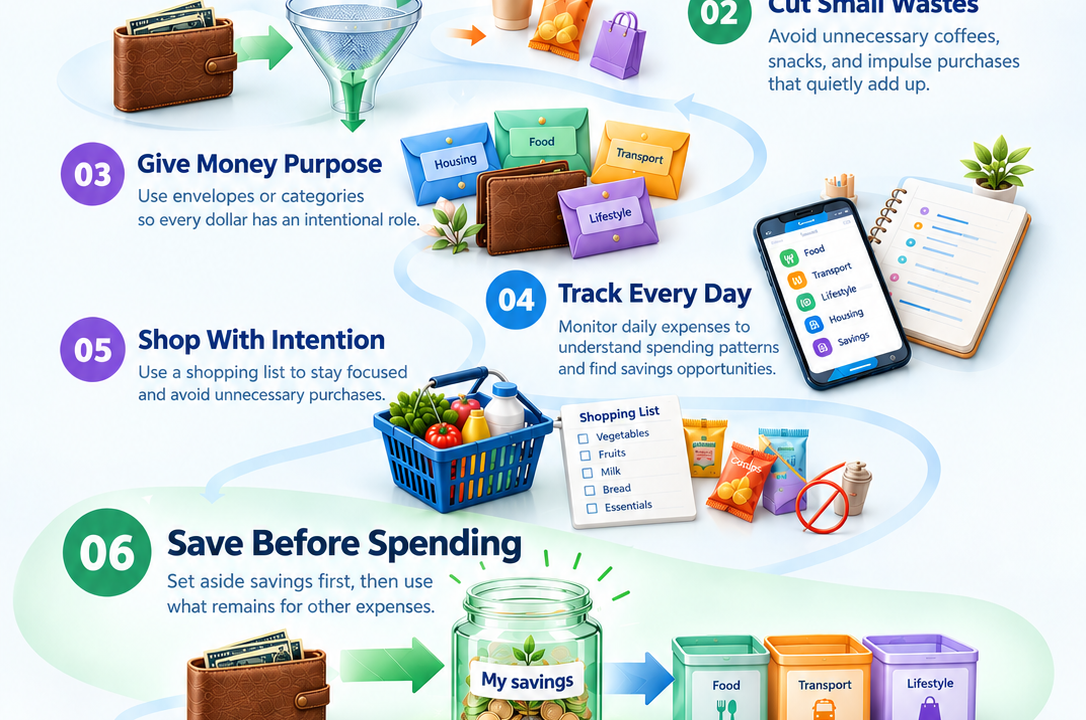
Skip the Small Wastes That Quietly Add Up ☕
Those daily coffees, impromptu snacks, and fleeting impulse buys might seem insignificant individually. However, these small expenses have a sneaky way of accumulating, silently eroding your budget. The aim isn’t to eliminate every enjoyable purchase but to develop the discernment to identify unnecessary small expenses and opt for more deliberate choices. 🧐
Give Every Dollar a Purpose With Categories 🏷️
Employing methods like envelopes or clear spending categories helps you assign a specific mission to each portion of your money. This practice provides a crystal-clear understanding of what each segment of your budget is designated to cover, fostering a more mindful and intentional approach to spending. 📊
Track Your Spending So You Know What Is Happening 📝
Make a habit of recording your expenses regularly, rather than relying on fallible memory. Daily tracking offers invaluable insight into where your money is actually going and highlights specific areas where spending could be thoughtfully reduced. Knowledge is power when it comes to your finances! 🗺️
Buy With a List and Keep Your Shopping Focused 🛒
Armed with a shopping list, you approach retail environments with a clear objective. This practice is a powerful antidote to impulse purchases, ensuring your spending remains precisely on track with the items you genuinely intended to buy. Stay focused, stay on budget! ✅
Set One No-Spend Day Each Week 🧘
Designate one day each week as a complete ‘no-spend’ day. This powerful practice not only gives your wallet a well-deserved respite but also encourages a deeper contemplation of which purchases are truly essential versus merely desirable. ✨
Save Before You Spend on Everything Else 🏦
Embrace the golden rule: ‘pay yourself first.’ Before allocating funds to other expenses, diligently set aside your savings. This intentional approach ensures that saving becomes a planned, prioritized component of your budget, rather than a forgotten afterthought. 🌟
Review and Adjust Your Budget Every Week 🛠️
Your budget is a living document, not a static decree. Implement a weekly review session to assess what strategies were effective, identify areas needing adjustment, and make necessary tweaks to your spending plan. This dynamic approach keeps your budget relevant and responsive. 📈
Embracing these small habits can transform budgeting from a perceived restriction into a powerful, consistent routine for making intentional, value-driven choices with your money. 💖
How These Habits Work Together as a Simple Money Routine 🔗
Each habit addresses a distinct facet of everyday money management, creating a robust framework for financial well-being. Planning empowers you to decide before you spend. Tracking illuminates what actually transpired with your money. Categorizing instills purpose into your financial resources, while a strategic shopping list and a dedicated no-spend day establish practical boundaries around discretionary spending. 🎯
The habit of saving before spending introduces another critical layer, making your financial priorities vividly apparent from the outset of your financial planning. Finally, the weekly review completes the cycle. Instead of demanding immediate perfection, you cultivate a regular opportunity to learn from your spending patterns, make informed adjustments, and continually refine your financial approach. 🔄
A Simple Daily Checklist for More Intentional Money Management ✅
The overarching wisdom of these habits can be distilled into five essential daily priorities. These serve as a straightforward mental checklist, eliminating the need for complex budgeting systems and empowering you with clarity. 🌟
- Plan my money: Know your intended spending before the day unfolds. 📅
- Spend wisely: Pause and question unnecessary or impulsive purchases. 🤔
- Save more: Prioritize savings before other expenditures. 🏦
- Avoid debt: Employ intentional spending habits to sidestep unnecessary financial strain. 🚫
- Invest in the future: Keep your long-term financial aspirations in focus as you manage today’s resources. 🚀
Key Takeaways for Building Better Budgeting Habits 🗝️
- Start with Awareness: Understanding precisely where your money is going is the foundational step towards making conscious, intentional spending decisions. 💡
- Give Spending Purpose: Utilizing categories, adhering to lists, and creating daily plans prevent spending from becoming a purely reactive activity. 🎯
- Make Saving Intentional: Allocating funds to savings before other expenses transforms saving into a deliberate and prioritized budget item. 🥇
- Employ Practical Boundaries: A well-crafted shopping list and a weekly no-spend day provide effective limits without resorting to overly complicated systems. 🛒
- Review Instead of Giving Up: Weekly adjustments allow your budget to dynamically respond to your actual spending patterns, fostering resilience and continuous improvement. 📈
FINAL PERSPECTIVE: A Better Budget Is Built Through Better Everyday Habits 🌱
Elevating your budget doesn’t necessitate a radical financial overhaul. It can commence with the simple actions you take today: intentionally planning your spending, thoughtfully questioning unnecessary small purchases, diligently tracking your expenditures, and integrating saving as a core part of the process. The most beneficial routine is one you can consistently return to. Small, repeated habits create invaluable opportunities to make more deliberate decisions, adapt when needed, and keep your financial aspirations firmly in sight. Small habits. Profound financial transformation. The discipline you exercise today can pave the way for greater financial freedom tomorrow. 🚀
YOUR NEXT STEP: Choose One Habit and Make It Part of Your Routine! 🚶♀️
Don’t feel pressured to change everything at once. Begin by selecting just one practical habit—perhaps planning your daily spending or diligently tracking your expenses—and make it a consistent part of your routine. Once that habit is firmly established, you can gradually incorporate others. A consistent, incremental approach will make your budget far more understandable and manageable. Start small, build momentum, and watch your financial future transform! ✨