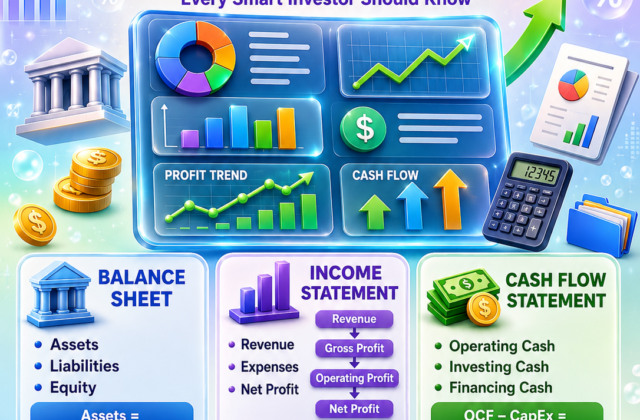

Embarking on the journey to financial prosperity isn’t about spotting the next unicorn stock or dreaming of overnight riches. 🦄✨ Instead, true wealth accumulation is built on a foundation of simple, disciplined practices that work harmoniously over time, blossoming into substantial financial security. This guide is your roadmap, unveiling five fundamental investing habits that pave the way to enduring financial independence. 🌱📊 We’ll explore the profound wisdom of patience over timing the market, the protective shield of diversification, the consistent rhythm of regular investing, the exponential power of reinvesting your gains, and the critical importance of keeping your investment expenses minimal. 🚀💵
You’ll gain insights into why a steady, long-term perspective often triumphs over trying to predict market peaks and troughs. Discover how spreading your investments across various assets can significantly mitigate risk, and understand the silent, yet substantial, impact that even small fees can have on your ultimate returns. We’ll also introduce a practical framework for wealth creation that champions unwavering discipline, consistent action, and a commitment to continuous learning. 🧠📚 Whether you’re just dipping your toes into the investment waters or you’re a seasoned pro, these time-tested principles are designed to fortify your portfolio, sharpen your financial decision-making, and steer you toward a more secure and prosperous future. 🌟
Cultivating Enduring Wealth: The Smart Investor’s Toolkit 🛠️
The path to building wealth through investing can sometimes appear daunting, shrouded in complex strategies and market jargon. Many believe that success hinges on possessing an uncanny ability to pick winning stocks or flawlessly forecast market shifts. However, the reality for most successful, long-term investors is far more grounded: it’s the product of consistent, disciplined habits cultivated over many years. 🕰️
Savvy investors recognize that attributes like steadfast patience, strategic diversification, and unwavering consistency often hold far greater sway than fleeting short-term gains. By consciously developing and adhering to the right set of habits, individuals can construct a robust financial bedrock that supports long-term financial freedom. 🏗️
Why Smart Investing Habits Are Your Financial Superpowers 💥
Financial success in investing is seldom a matter of sheer luck. The financial markets are inherently dynamic and often unpredictable, and decisions driven by emotion frequently lead to suboptimal outcomes. Cultivating good habits empowers investors to remain anchored to their long-term aspirations, rather than being swayed by the inevitable short-term market fluctuations. 👍
Consistent investment behaviors offer a multitude of benefits:
- ✨ Reduced Investment Risk: By employing smart strategies, you can shield your portfolio from excessive volatility.
- ✨ Enhanced Long-Term Returns: Disciplined investing, over time, tends to yield more favorable outcomes.
- ✨ Fostered Financial Discipline: Regular, thoughtful actions build a strong sense of financial control.
- ✨ Sustainable Wealth Accumulation: Habits are the building blocks of lasting financial security.
- ✨ Bolstered Financial Confidence: Seeing your wealth grow steadily instills a profound sense of assurance.
1. Taming the Emotional Rollercoaster: Steer Clear of Impulsive Decisions 🎢
One of the most significant hurdles that investors encounter is the challenge of managing their emotions, particularly when the markets experience turbulence. During periods of rapid market ascent, it’s easy for optimism to morph into euphoria, potentially leading to the purchase of assets at inflated prices. Conversely, when markets take a downturn, fear can grip investors, prompting them to sell their holdings in a panic, thereby solidifying losses. 😱
The Perils of Letting Emotions Drive Your Investments ⚠️
Allowing emotions to dictate investment choices can manifest in several detrimental ways:
- 🔹 Panic Selling During Dips: Exiting the market when prices are low means missing out on potential rebounds.
- 🔹 Chasing Hype: Jumping on bandwagons based on fleeting popularity often leads to buying high.
- 🔹 Acquiring Assets at Peaks: Emotional buying can result in overpaying for investments.
- 🔹 Abandoning Long-Term Plans: Short-term emotional reactions can derail well-thought-out financial strategies.
It’s crucial to remember that financial markets are cyclical, experiencing natural phases of growth and decline. Temporary market corrections are not anomalies; they are an intrinsic part of the investing landscape. 🌳➡️🍂
Strategies for Maintaining Emotional Fortitude 💪
To remain disciplined and composed, consider these practical approaches:
- 💡 Formulate a Clear Long-Term Strategy: Having a well-defined plan acts as your compass during turbulent times.
- 💡 Focus on Your Ultimate Goals: Keep your eye on the prize – your long-term financial objectives – rather than getting fixated on daily market fluctuations.
- 💡 Tune Out Sensational Headlines: Financial news can often be alarmist. Learn to filter out noise and focus on reliable information.
- 💡 Conduct Periodic Reviews: Instead of constantly monitoring your portfolio, schedule regular check-ins to assess performance and make necessary adjustments.
Maintaining a calm and rational demeanor, especially during periods of uncertainty, is a hallmark of successful long-term investing and often leads to superior outcomes. 🧘
2. The Power of Spreading Your Bets: Diversify Your Portfolio 🌍
Diversification stands out as one of the most potent risk management tools available to investors. Rather than concentrating all your capital into a single investment, diversification involves strategically allocating your funds across a variety of different assets, industries, and even geographical regions. 🗺️
Key Benefits of a Diversified Approach 🌟
- ✨ Mitigates Individual Investment Risk: If one investment falters, the impact on your overall portfolio is lessened.
- ✨ Enhances Portfolio Stability: A mix of assets tends to smooth out the ups and downs.
- ✨ Averages Out Investment Returns: Different asset classes perform well at different times, leading to a more consistent overall return profile.
- ✨ Unlocks Multiple Growth Avenues: You gain exposure to various sectors and opportunities for capital appreciation.
Building Blocks for Diversification 🏗️
Commonly utilized assets for creating a diversified portfolio include:
- 📈 Stocks: Represent ownership in publicly traded companies.
- 📊 Exchange-Traded Funds (ETFs): Baskets of securities that trade on an exchange like stocks.
- 🏦 Index Funds: Mutual funds designed to track a specific market index.
- 🏠 Real Estate Investments: Property ownership, either directly or through funds.
- 💵 Bonds: Loans made to governments or corporations, typically offering fixed income.
- 🌎 International Markets: Investments in companies and economies outside your home country.
- 🪙 Alternative Assets: Such as commodities, private equity, or cryptocurrencies (with caution).
It’s rare for any single asset class to consistently outperform all others. Diversification allows you to harness the potential growth from various market conditions while simultaneously reducing your overall exposure to risk. ⚖️
3. The Magic of Regular Contributions: Invest Consistently 🗓️
One of the most profoundly effective habits for wealth creation is the practice of investing on a regular, consistent basis. Many investors fall into the trap of trying to time the market – attempting to buy low and sell high – a feat that is notoriously difficult to achieve with any degree of accuracy over the long term. 🎯
Instead, successful investors often prioritize making consistent contributions to their investment accounts, irrespective of whether the market is soaring or dipping. This disciplined approach removes the guesswork and emotional turmoil associated with market timing. ⚙️
The Undeniable Advantages of Consistency 🏆
Regular investing offers a powerful set of benefits:
- ✨ Cultivates Financial Discipline: It instills a routine of saving and investing.
- ✨ Eliminates Emotional Decision-Making: You invest a set amount regardless of market sentiment.
- ✨ Capitalizes on Market Fluctuations: You automatically buy more shares when prices are low and fewer when they are high.
- ✨ Drives Long-Term Wealth Through Compounding: Consistent contributions fuel the growth engine of compound interest.
Understanding Dollar-Cost Averaging (DCA) 💵
Dollar-cost averaging is a strategy where you invest a fixed sum of money at regular intervals (e.g., monthly or bi-weekly). This means that when the market is down and asset prices are lower, your fixed amount buys more shares. Conversely, when the market is up and prices are higher, the same amount buys fewer shares. Over time, this systematic approach can significantly reduce the average cost per share and dampen the impact of market volatility on your investment. 📈➡️📉
Building a Habit of Consistency 🏗️
To embed consistency into your investment routine:
- 📅 Establish a Monthly Investment Schedule: Designate specific dates for your contributions.
- ⚙️ Automate Your Contributions: Set up automatic transfers from your bank account to your investment account.
- 🎯 Reinforce Your Long-Term Goals: Remind yourself why you are investing consistently.
- 📈 Maintain Investing During Market Declines: Resist the urge to stop investing when the market is down; this is often the most opportune time.
In the realm of investing, consistency frequently proves to be a more potent force than trying to pinpoint the perfect entry point. 💯
4. The Snowball Effect: Reinvest Your Earnings 🌨️
Compounding is arguably the most powerful concept in the world of finance. Albert Einstein is famously quoted as calling compound growth the “eighth wonder of the world” because it allows your investment gains to generate their own subsequent gains over time, creating a snowball effect. 🤯
What Exactly Is Reinvestment? 🔄
Reinvestment involves taking the income generated by your investments – such as dividends from stocks or interest from bonds – and using it to purchase more of the same or other assets, rather than withdrawing the profits as cash. This can include:
- 💰 Dividend Reinvestment: Using dividends paid by a company to buy more shares of that company’s stock.
- 🏦 Interest Reinvestment: Using interest earned from bonds or savings accounts to purchase additional bonds or increase your savings.
- 📊 Reinvesting Capital Gains: Using profits from selling an asset to buy another investment.
Why Reinvestment Magnifies Your Wealth 🚀
The magic of compounding lies in the fact that your returns begin to earn returns themselves. A portfolio that consistently reinvests its earnings will grow exponentially larger over several decades compared to a portfolio where profits are regularly withdrawn. This accelerated growth is the cornerstone of building substantial long-term wealth. 📈➡️🚀
The Transformative Benefits of Compounding ✨
- ✨ Accelerates Wealth Creation: Your money works harder for you.
- ✨ Maximizes Long-Term Portfolio Value: Growth becomes significantly more pronounced over extended periods.
- ✨ Enhances Investment Efficiency: Every dollar earned is put back to work.
- ✨ Facilitates Faster Achievement of Financial Goals: Compounding helps you reach your targets sooner.
Patience is paramount, as the true power of compounding becomes most evident over longer investment horizons. ⏳
5. Protecting Your Gains: Keep Investment Costs Low 🛡️
While the prospect of investment returns often captures our attention, the impact of investment costs is frequently underestimated. Even seemingly small fees can significantly erode your long-term returns, quietly chipping away at the wealth you’re diligently trying to build. Over the course of several decades, high fees can consume a substantial portion of your investment gains. 💸
Common Investment Costs to Be Aware Of 🧾
Be vigilant about these potential expenses:
- 📋 Fund Management Fees (Expense Ratios): Annual fees charged by mutual funds and ETFs to cover operating costs.
- 📋 Trading Commissions: Fees charged by brokers for buying or selling securities.
- 📋 Advisory Fees: Fees paid to financial advisors for their services.
- 📋 Tax Inefficiencies: Costs associated with unfavorable tax treatments of certain investments or trading strategies.
- 📋 Account Maintenance Costs: Fees charged by brokerage firms for holding an account.
The Significant Impact of Low Costs 💡
A small difference in annual fees, perhaps just 1% or 2%, can translate into tens or even hundreds of thousands of dollars in lost returns over a long investment horizon. By minimizing expenses, you allow more of your capital to remain invested and continue its compounding journey. 💰➡️🏦
Strategies for Reducing Investment Expenses 📉
- 💡 Opt for Low-Cost Index Funds and ETFs: These often have significantly lower expense ratios than actively managed funds.
- 💡 Minimize Excessive Trading: Frequent trading can rack up commission fees and may also incur higher taxes.
- 💡 Scrutinize Fee Structures: Understand all the fees associated with your investments and choose providers with transparent and competitive pricing.
- 💡 Prioritize Tax-Efficient Investing Strategies: Employ strategies that minimize your tax liability, such as utilizing tax-advantaged accounts (like IRAs or 401(k)s) and investing in tax-efficient funds.
Small savings today in the form of reduced fees can translate into substantial financial benefits far into the future. 🌟
Your Blueprint for Financial Success: The Wealth-Building Framework 🗺️
The most successful investors often adhere to a straightforward yet powerful framework that emphasizes unwavering discipline and a forward-thinking, long-term perspective. This approach is not about complex algorithms but about consistent, sensible actions.
The Seven Pillars of Wealth Creation 🏛️
Embrace these core principles to guide your investment journey:
- 🌱 Invest Regularly: Make consistent contributions a non-negotiable part of your financial life.
- 🌍 Diversify Wisely: Spread your investments across various asset classes and sectors to manage risk.
- 📈 Stay Invested for the Long Term: Resist the temptation to exit the market during downturns; time in the market matters most.
- 🔄 Reinvest Your Earnings: Harness the power of compounding by putting your gains back to work.
- 💰 Minimize Unnecessary Costs: Keep investment fees and expenses as low as possible.
- 🧠 Avoid Emotional Decisions: Let your long-term strategy, not fleeting emotions, guide your actions.
- 📚 Continuously Learn About Investing: Stay informed and refine your understanding of financial markets and strategies.
These principles offer a practical and actionable roadmap for building enduring financial security and achieving your long-term financial goals. 🎯
The Unbeatable Advantage: Why Patience is Your Greatest Ally in Investing ⏳
Many individuals drastically underestimate the immense value of patience in the investment process. The pursuit of substantial wealth is rarely an overnight phenomenon; it’s a marathon, not a sprint. Long-term investing rewards those who demonstrate unwavering discipline and steadfast commitment to their chosen strategy. 🏃♂️💨
Historical market data consistently illustrates a compelling pattern: investors who remain invested through the inevitable cycles of market ups and downs typically achieve superior results compared to those who frequently move in and out of the market. Trying to time the market perfectly is a futile endeavor for most. 🕰️
Ultimately, successful investing is less about identifying rare, perfect opportunities and more about diligently avoiding costly mistakes. ❌
Your Path to Financial Freedom Starts Today ✨
Achieving financial freedom is often the culmination of small, consistent actions that are diligently repeated over many years. By consciously choosing to avoid emotionally driven decisions, maintaining a well-diversified portfolio, investing with unwavering consistency, reinvesting your earnings to fuel compounding, and diligently keeping your investment costs to a minimum, you can significantly enhance your long-term investment outcomes. 🌟
The journey toward wealth creation is not about achieving flawless execution; it’s about embracing discipline, cultivating patience, and allowing the powerful forces of time and compounding to work in your favor. ⏳➡️📈
By adopting these smart investing habits starting today, you can build more resilient portfolios, increase your financial adaptability, and move steadily closer to achieving your ultimate goal of long-term financial independence. 🚀💰 Your future self will thank you! 🙏