
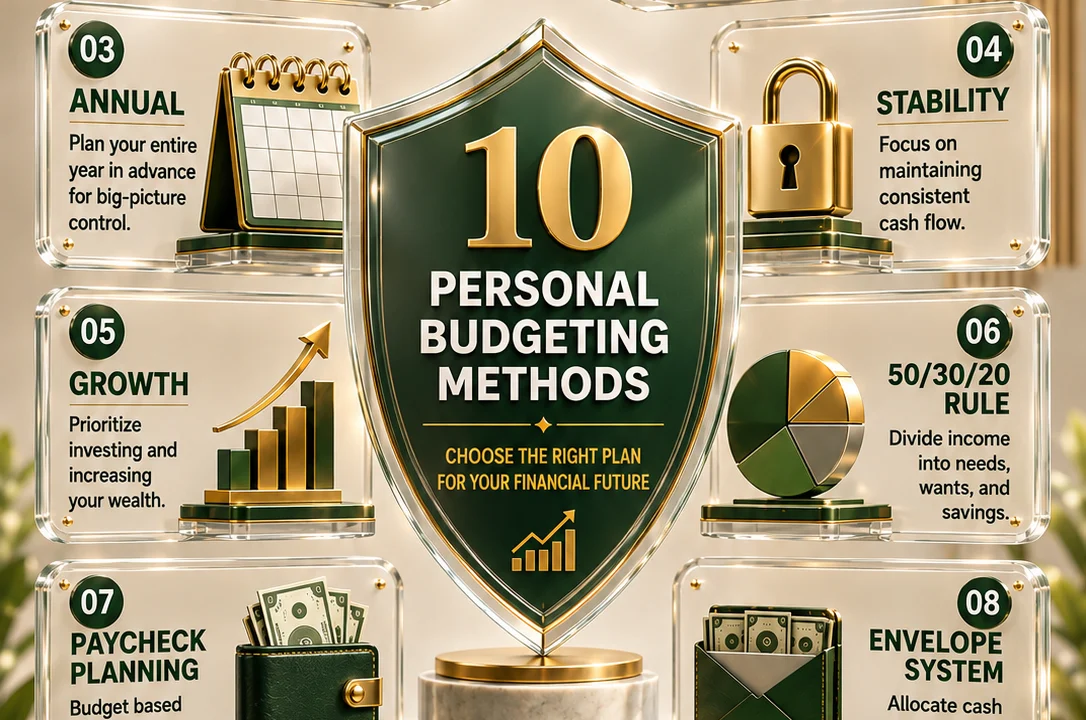
Embarking on a journey to financial mastery begins with a robust understanding of where your money goes. 🗺️ Effective budgeting isn’t just about restricting spending; it’s a strategic blueprint designed to align your daily financial actions with your loftiest long-term aspirations. At SmartSave.top, we believe that by implementing the right financial architecture, you can transform your habits, optimize every dollar, and pave the way for sustainable wealth accumulation. 💎
Many individuals approach personal finance with a vague sense of their incomings and outgoings, leading to missed opportunities and unnecessary financial stress. 😟 A well-defined budget acts as your financial compass, guiding you through the complexities of earning, saving, spending, and investing. It empowers you to make informed decisions, mitigate risks, and, most importantly, build a secure and prosperous future. This comprehensive guide will delve into ten powerful budgeting methodologies, offering a deep dive into their operational cores and primary benefits, ensuring you find the perfect fit for your unique financial landscape. 📊
Transform Your Finances with Proven Budgeting Methodologies 🌟
Choosing the right budgeting approach is paramount. It needs to resonate with your income patterns, your personal financial discipline, and the ultimate goals you aim to achieve. Whether you’re a meticulous planner who loves granular detail, or someone who prefers a more hands-off, goal-oriented approach, there’s a method tailored for you. Let’s explore the spectrum of options available:
Foundational Budgeting Frameworks for Absolute Control 🏗️
1. Historical Budgeting: Leveraging Past Data for Future Success 🕰️
Imagine having a clear picture of your financial past to confidently shape your future. Historical budgeting does exactly that. It involves meticulously examining your financial records from the preceding three to six months – think bank statements, credit card bills, and receipts – to establish a realistic baseline for your expenditures. This method is particularly beneficial for those with predictable income streams and a desire for a straightforward, data-driven approach. By understanding where your money has consistently gone, you can make more informed projections and adjustments for the upcoming financial periods, accounting for potential inflation or anticipated lifestyle changes. It’s about building a solid foundation based on proven patterns. 📈
- Best For: Individuals with stable, recurring income who seek a simple yet effective planning framework grounded in past financial behavior.
- How it Works: Analyze past spending habits to project future expenses. Adjust for inflation, seasonal fluctuations, or planned life events to refine your forecast for the next fiscal cycle.
2. Zero-Based Budgeting: Allocating Purpose to Every Single Dollar 🎯
This method is a game-changer for anyone seeking maximum control and a complete overhaul of wasteful spending habits. The core principle of zero-based budgeting is elegantly simple: your income minus your expenses must equal zero. 💯 Every single dollar earned is assigned a specific job – whether it’s for essential living costs, debt repayment, investments, or even a dedicated savings category. This forces a conscious and deliberate allocation of all available funds, leaving no room for unmonitived or frivolous spending. It’s about intentionality with every unit of currency. 💸
- Best For: Wealth-builders who demand absolute control over their cash flow, aim for meticulous expense optimization, and want to eliminate mindless spending entirely.
- How it Works: Assign every dollar of your net income to a specific category (e.g., rent, groceries, entertainment, savings, investments) until the total allocations exactly match your income.
3. Annual Budgeting: Strategizing for Long-Term Financial Horizons 🗓️
While monthly budgeting is essential, annual budgeting takes a broader, more strategic view, encompassing the entire year. This approach is vital for anticipating and managing irregular, high-impact expenses that can easily derail a typical monthly plan. Think annual insurance premiums, property taxes, significant holiday spending, or major home maintenance projects. By aggregating these costs and dividing them into manageable monthly savings goals, you ensure these larger expenditures don’t catch you off guard. It’s about proactive planning for the big financial milestones and seasonal shifts. 🏛️
- Best For: Individuals focused on ambitious long-term financial planning, managing seasonal income variations, and achieving significant life goals.
- How it Works: Sum up all expected annual expenses, including recurring bills, taxes, and anticipated large purchases. Divide this total into 12 equal (or appropriately allocated) monthly savings targets.
Dynamic and Structural Budgeting Frameworks 🔄
4. Rolling Budgeting: Continuous Adaptation for Changing Situations 🌊
In today’s dynamic economic climate, rigid financial plans can quickly become obsolete. Rolling budgets offer a refreshing alternative by continuously advancing. As each month concludes, a new month is added to the end of your planning horizon, ensuring you always maintain a consistent twelve-month financial outlook. This flexibility is invaluable for freelancers, contract workers, or anyone experiencing fluctuating income or rapidly changing living costs. It allows for real-time adjustments and keeps your financial plan relevant and responsive. 🤸
- Best For: Freelancers, contract workers, entrepreneurs, and individuals navigating highly volatile economic conditions or unpredictable cost-of-living increases.
- How it Works: At the end of each month or quarter, review and update your budget categories, incorporating new income projections and accounting for any shifts in expenses or financial priorities.
5. Top-Down Budgeting: Goal-First Financial Engineering ⬆️
This methodology flips the traditional budgeting process on its head. Top-down budgeting starts with your overarching financial objectives – your savings targets, investment goals, and debt reduction milestones. These non-negotiable figures are established first. Only after these high-level macro goals are secured is the remaining income allocated to cover your everyday living expenses. It’s a powerful strategy for high earners who want to automate wealth accumulation and make quick, decisive financial moves without getting bogged down in minute details. 🚀
- Best For: Individuals with high incomes who prioritize rapid financial decision-making and want to implement automated wealth accumulation strategies.
- How it Works: Set your essential savings and investment targets immediately upon receiving income. Then, allocate the remainder of your funds across your variable lifestyle expenses.
6. Bottom-Up Budgeting: Granular, Expense-Driven Planning ⬇️
Conversely, bottom-up budgeting begins at the most granular level. Every single expense, no matter how small, is meticulously tracked, analyzed, and then compiled upwards to form the complete monthly financial plan. This method appeals to individuals who thrive on detail and require highly accurate financial projections. By understanding the precise cost of every necessity and discretionary item, you gain unparalleled insight into your spending habits and can ensure your budget accurately reflects your actual financial reality. It’s about building your financial picture from the ground up. 🧐
- Best For: Analytical minds who need highly precise financial projections and want to understand and manage their baseline survival costs with utmost accuracy.
- How it Works: Document every essential and discretionary expense individually. Aggregate these figures to determine your total operational costs and then match this total against your incoming revenue.
Strategic Approaches for Risk Mitigation and Portfolio Growth 🛡️
7. Stability Budgeting: Prioritizing Capital Protection 🔒
In times of economic uncertainty or personal transition, safeguarding your capital becomes paramount. Stability budgeting focuses intensely on financial risk reduction and capital preservation. This framework champions the aggressive accumulation of emergency reserves, the securing of comprehensive insurance coverage, and the establishment of robust liquid safety nets. It’s designed to provide peace of mind, ensuring you can weather unexpected storms without jeopardizing your long-term financial well-being. ⛈️
- Best For: Individuals prioritizing risk mitigation, building substantial emergency funds, and navigating career transitions or periods of macroeconomic instability.
- Best Approach: Funnel any surplus cash flow directly into high-yield savings accounts or low-volatility liquid investment instruments. Capping discretionary spending is key to maintaining this safety cushion.
8. Growth Budgeting: Maximizing Future Opportunities 🚀
While stability is crucial, so is building for the future. Growth budgeting actively directs capital towards assets that have the potential for appreciation, educational pursuits that enhance earning potential, and income-generating ventures. Instead of solely focusing on cutting costs, this strategy prioritizes scaling your long-term revenue potential and maximizing your net worth. It’s an aggressive, forward-thinking approach for those who want their money to work harder for them. 🌱
- Best For: Early-stage investors, ambitious wealth builders, and career professionals aiming to harness the power of compounding wealth and increase their passive income streams.
- Best Approach: Allocate a significant percentage of your monthly income directly towards appreciating assets like stock market index funds, real estate, retirement portfolios, and investing in your own professional skill development.
Specialized Optimization Methodologies 🛠️
9. Activity-Based Budgeting: Finding and Eliminating Hidden Waste 🔍
Have you ever wondered what’s really driving your expenses? Activity-based budgeting delves into the specific actions and activities that incur costs. It prompts you to ask *why* money is being spent and whether the value derived from that expenditure justifies the financial capital invested. This method is incredibly effective for drastically reducing overhead, uncovering those sneaky subscription drains, and combating the insidious creep of lifestyle inflation. It’s about ensuring every dollar spent serves a purpose and provides tangible value. ✨
- Best For: Those looking to drastically reduce operational overhead, identify hidden recurring expenses (like unused subscriptions), and eliminate unnecessary lifestyle creep.
- How it Works: Break down all expenditures into their underlying activities. Analyze the utility and return on investment for each activity and aggressively prune or optimize those that don’t offer measurable value.
10. Incremental Budgeting: Simple, Easy-Maintenance Adjustments ➕
For individuals who prefer a low-maintenance approach without the need for complex, sweeping overhauls, incremental budgeting is ideal. This method uses your current budget as a baseline and makes minor percentage adjustments to accommodate factors like inflation or slight shifts in income. It’s a practical and efficient way to keep your budget relevant without demanding excessive time or effort. It’s about making smart, small changes that add up over time. 👍
- Best For: Individuals who desire ultra-low maintenance budgeting systems that require minimal structural overhauls and are easy to manage consistently.
- How it Works: Carry forward the budget lines from the previous period, making small, percentage-based adjustments (e.g., +2% for inflation) to reflect recent changes in income or spending habits.
Selecting Your Optimal Financial Management Strategy 🏆
The key to unlocking financial freedom lies in selecting a budgeting system that harmonizes with your personal lifestyle, your spending habits, and, most importantly, your financial objectives. To aid you in this crucial decision, consider this comparative matrix:
| Budgeting Methodology | Operational Core | Primary Financial Benefit |
|---|---|---|
| Historical Budgeting | Evaluates past financial statements | Provides a simple, established baseline for planning |
| Zero-Based Budgeting | Assigns a purpose to every single dollar | Offers maximum control and eliminates unassigned funds |
| Annual Budgeting | Plans expenditures and savings over a 12-month period | Secures long-term financial goals and manages large expenses |
| Rolling Budgeting | Continuously updates the budget monthly or quarterly | Adapts easily to fluctuating income and economic changes |
| Top-Down Budgeting | Sets high-level savings and investment goals first | Facilitates rapid financial decision-making and automated accumulation |
| Bottom-Up Budgeting | Builds the budget from the ground up, starting with micro-expenses | Guarantees highly accurate and detailed financial planning data |
| Stability Budgeting | Prioritizes building liquid safety reserves and capital protection | Reduces financial risk, especially during volatile periods |
| Growth Budgeting | Directs funds towards appreciating assets and income-producing opportunities | Drives long-term wealth compounding and net worth expansion |
| Activity-Based Budgeting | Analyzes the value and necessity of specific spending activities | Effectively identifies and eliminates hidden financial waste |
| Incremental Budgeting | Makes minor percentage adjustments to the previous budget period | Offers an easy, low-effort, and consistent maintenance approach |
Implementing a structured budgeting framework is, without a doubt, the most effective strategy for alleviating financial stress, optimizing your daily capital efficiency, and ensuring the sustainable growth of your wealth. 🌟 Choose the system that best aligns with your current circumstances and aspirations, automate your financial allocations wherever feasible, and then sit back as the power of compound interest works its magic. ✨ Your journey to financial prosperity starts with a plan.
Frequently Asked Questions about Budgeting Methods ❓
- What is Historical Budgeting?
- Historical budgeting is a financial planning method that uses past spending data to forecast future expenditures and plan ahead easily. It provides a realistic baseline based on your actual past financial behavior. 📊
- How does Zero-Based Budgeting work?
- Zero-Based Budgeting works by assigning every single dollar of income a specific purpose or category until the net balance equals zero. This meticulous allocation provides maximum control over your cash flow and eliminates unplanned spending. 🎯
- Who should use Annual Budgeting?
- Annual Budgeting is best suited for individuals focused on ambitious long-term goals and managing irregular, high-impact expenses that occur throughout the calendar year, ensuring these significant costs are adequately planned for. 🗓️
- What is the benefit of Rolling Budgeting?
- Rolling Budgeting continuously updates the budget every month or quarter, allowing individuals to adapt easily to changing economic situations and income volatility. This keeps your financial plan dynamic and relevant in uncertain times. 🌊
- What is the difference between Top-Down and Bottom-Up budgeting?
- Top-Down budgeting sets macro savings goals first and allocates remaining funds to expenses, prioritizing your big financial objectives. In contrast, Bottom-Up budgeting builds the budget from actual micro-expenses upward, ensuring a highly accurate and detailed financial plan. ⬆️⬇️
- What is Stability Budgeting?
- Stability Budgeting prioritizes building substantial savings, emergency reserves, and asset protection to effectively reduce financial risk and provide a secure financial cushion. 🛡️
- How does Growth Budgeting accelerate wealth?
- Growth Budgeting aggressively invests capital into future income-producing opportunities and appreciating assets, such as stocks and real estate, to expand overall wealth and accelerate long-term financial growth. 🚀
- What is Activity-Based Budgeting?
- Activity-Based Budgeting allocates funds based on specific activities and their perceived value, making it highly effective at identifying and eliminating hidden waste and unnecessary expenses. 🔍
- How does Incremental Budgeting work?
- Incremental Budgeting adjusts the previous period’s budget slightly by small percentage variations, offering a simple, low-effort maintenance approach that keeps the budget updated without complex changes. ➕
- How do I choose the right budgeting method?
- Choose a method by matching your income predictability, the level of analytical detail you desire, and your specific financial goals—whether they are for maximum control, risk reduction, quick decision-making, or long-term wealth accumulation. 🤔


