Achieving lasting financial prosperity is rarely the result of mere luck or impulsive reactions to breaking news. In the current economic landscape of 2026, the noise of digital media, volatile market trends, and an abundance of speculative assets can easily overwhelm even the most well-intentioned individual. True wealth creation requires a shift from reactive guessing to a structured, principles-based methodology.
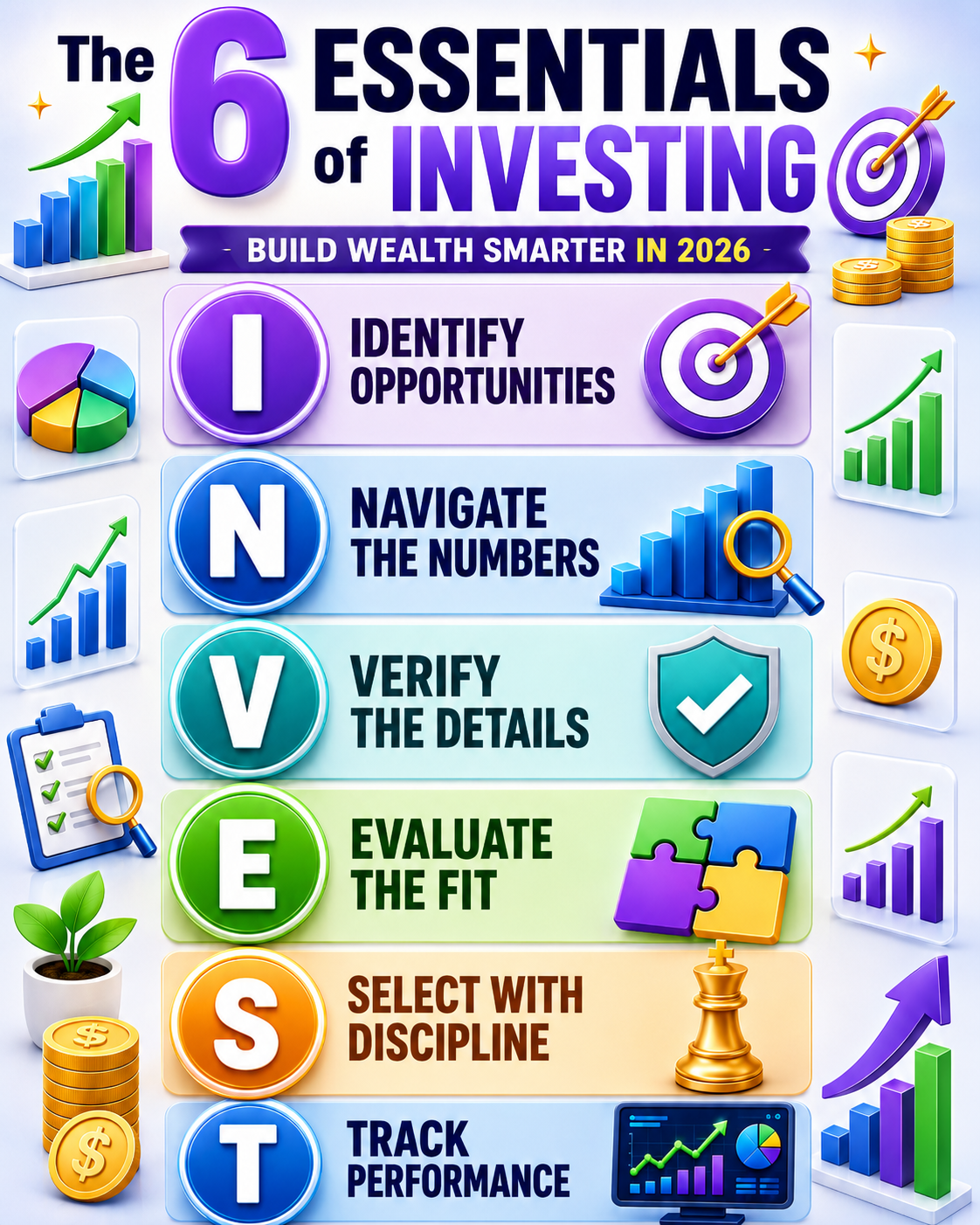
The INVEST method acts as a foundational framework, transforming the complex world of finance into a manageable, six-stage roadmap. By focusing on Identifying opportunities, Navigating numerical data, Verifying critical details, Evaluating strategic fit, Selecting with discipline, and Tracking performance, you can cultivate the composure and analytical rigor necessary to thrive in any market climate.
The Philosophy of Modern Investing
The days of ‘buy and hope’ are largely behind us. Modern wealth management necessitates an active, informed, and highly disciplined approach. When emotions dictate your portfolio decisions—such as panic-selling during a downturn or chasing an overhyped asset based on social media trends—you are statistically more likely to jeopardize your financial future. Adopting a framework like the INVEST method protects your capital and aligns your actions with your long-term objectives.
I — Identifying Opportunities
The first step in your journey is identifying investments that resonate with your personal financial blueprint. Not every asset class is built for every investor. Your unique risk tolerance, age, capital availability, and ultimate goals (such as retirement, wealth preservation, or immediate cash flow) dictate which opportunities deserve your attention.
Ask yourself: What is the primary purpose of this capital? Are you seeking an aggressive growth engine, such as AI-driven tech companies, or a steady income stream from REITs or dividend-growth stocks? By narrowing your focus to investments that mirror your objectives, you eliminate the paralyzing effect of ‘analysis paralysis’ caused by too many choices.
N — Navigating The Numbers
Quantitative analysis is the language of successful finance. Before you commit a single cent, you must peek behind the curtain of the company or fund you are eyeing. Relying on gut feelings is a recipe for failure; relying on data is the hallmark of a professional.
Focus your attention on key health indicators:
- Revenue Growth: Is the entity expanding, or is its market share eroding?
- Profitability Ratios: High revenue means little if profit margins are thin or non-existent.
- Leverage: In an era of shifting interest rates, high debt-to-equity ratios can signal a looming crisis for a firm.
- Valuation Multiples: Use P/E (Price-to-Earnings) and P/B (Price-to-Book) ratios to determine if you are paying a fair price or a premium fueled by speculation.
V — Verifying The Details
Information is abundant, but accuracy is scarce. In 2026, the rise of AI-generated misinformation and ‘pump-and-dump’ schemes requires an extra layer of skepticism. Verification involves diving into regulatory filings (such as 10-K reports), analyzing independent, reputable financial news sources, and cross-referencing claims made by corporate leadership.
Independent research acts as your insurance policy. If you cannot explain the business model or the competitive advantage of an investment to someone else, you haven’t verified it well enough to own it.
E — Evaluating The Fit
An excellent investment in isolation may be a terrible addition to your specific portfolio. Portfolio construction is an art of balance. You must evaluate how a new asset interacts with your existing holdings. Does adding this cryptocurrency or emerging market ETF introduce too much correlation to your current portfolio? Does it violate your desired asset allocation? Over-exposure to a single sector—even a high-performing one—is a common pitfall that exposes investors to unnecessary concentration risk.
S — Selecting With Discipline
Discipline is the bridge between a good strategy and a great outcome. Once you have identified, analyzed, verified, and checked the fit of an asset, the act of selecting (or buying) should be clinical. The most disciplined investors often utilize systematic buying strategies, such as Dollar-Cost Averaging (DCA), to smooth out market volatility over time. By removing the emotional urge to ‘time the market,’ you maintain consistency regardless of whether the index is up or down.
T — Tracking Performance
The job is not finished when you click ‘buy.’ The financial world is dynamic, and the reasons you invested in an asset today may change by next year. Tracking requires quarterly or annual audits of your investments. Compare your returns against relevant benchmarks, monitor the company’s ongoing health, and be prepared to rebalance. If an asset’s fundamental narrative has deteriorated, having the courage to sell is just as important as having the patience to hold.
The Compound Effect of the INVEST Method
The true power of this six-step framework lies in its compounding effect on your decision-making habits. Each time you run an opportunity through these filters, you become more adept at identifying red flags, understanding market cycles, and controlling your emotional impulses. You are not just building wealth; you are building the ‘investor mindset’ that is required to sustain wealth over decades.
Common Pitfalls to Avoid in 2026
Despite the clarity provided by structured methods, many investors still fall into classic traps:
- FOMO (Fear Of Missing Out): Chasing an asset simply because it is trending on social media.
- Ignoring Fees: In the long term, high management fees or transaction costs can significantly erode your compound returns.
- Over-Trading: Excessive buying and selling triggers tax events and transaction costs that rarely outweigh the potential gains.
- Neglecting Cash Reserves: Always ensure you maintain an emergency fund outside of your market investments.
Conclusion: Your Roadmap to Financial Stability
Investing in 2026 is undoubtedly different from the strategies employed a decade ago. The integration of technology and the speed of information flow necessitate a more sophisticated approach. However, the fundamental truths of investing remain unchanged: sound research, rigorous risk management, and the discipline to stick to your long-term plan will always outperform speculation.
By adopting the INVEST method, you equip yourself with the tools to navigate market noise with confidence. Whether you are building a retirement nest egg, saving for a major purchase, or aiming for long-term financial independence, remember that your greatest asset is your patience and your commitment to a repeatable, research-backed process. Start today by reviewing your current portfolio through the lens of the INVEST method, and move one step closer to your financial goals.
Frequently Asked Questions (FAQ)
1. What is the main benefit of using the INVEST method?
The primary benefit is the reduction of emotional bias, which allows for more rational, research-backed decisions that prioritize long-term growth over short-term hype.
2. How often should I rebalance my portfolio?
Most financial experts suggest reviewing and rebalancing your portfolio at least annually, or when your asset allocation deviates significantly from your target due to market fluctuations.
3. Can beginners use the INVEST method?
Absolutely. The INVEST framework is highly scalable and provides a logical structure that helps beginners learn how to analyze assets correctly from day one.
4. Why is diversification critical?
Diversification prevents the ‘all-eggs-in-one-basket’ scenario. By spreading risk across different asset classes, industries, and geographies, you minimize the impact of any single failure on your overall wealth.
5. Should I follow investment influencers?
Use influencers only for initial inspiration or market commentary, but never as the sole basis for your investment decisions. Always verify their claims using the ‘Verify’ pillar of the INVEST method.