Ever find yourself gazing at your bank balance at month’s end, utterly perplexed as to where all that hard-earned cash has vanished? 🧐 You’re not alone! In an era where online retailers make it effortless to complete a transaction with just a few clicks, mastering your spending habits is akin to possessing a financial superpower. Many individuals don’t struggle with earning money; their primary challenge lies in managing the money they do earn. To truly cultivate your wealth, it’s crucial to first plug the leaks. Financial independence isn’t solely about the size of your paycheck; it’s about the crucial difference between your income and your expenditures. By adopting a few strategic ‘do this, not that’ principles, you can transform your bank account from a leaky faucet into an impenetrable vault. Let’s dive deep into the psychology and practicalities of intelligent spending. 🧠✨
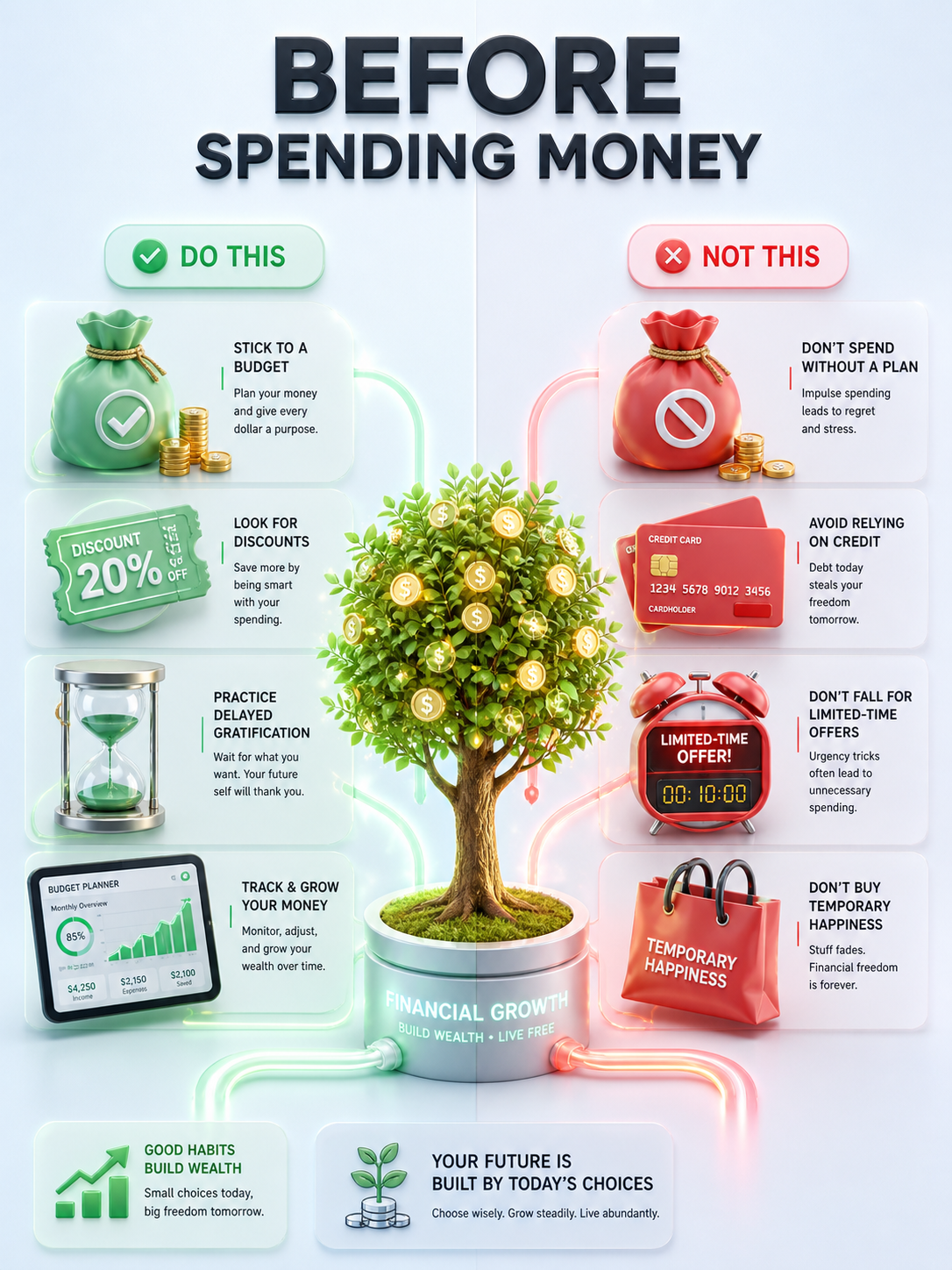
The Pillars of Prudent Purchasing: Your ‘Do This’ Manifesto 📝
Savvy spenders aren’t necessarily those who forgo all luxuries; rather, they are individuals who exercise deliberate intention. They place a premium on intrinsic value rather than mere quantity. Here’s your roadmap to commencing your journey as a sophisticated spender, starting today:
1. Embrace Your Budget: Your Financial Compass 🧭
You simply cannot effectively manage what you don’t meticulously track. Before any purchase leaves your account, you must possess a crystal-clear understanding of precisely how much discretionary income is truly available. This proactive step acts as an impenetrable shield against the ‘Ostrich Effect’ – the all-too-common tendency to bury your head in the sand and ignore financial realities out of apprehension. The ultimate objective is to integrate every single transaction seamlessly into your overarching monthly financial objectives. Whether you opt for a sophisticated budgeting app or a straightforward spreadsheet, consistency is key. Think of your budget as your trusted advisor, guiding every financial decision you make. 📊
2. Leverage Every Advantage: Discounts, Coupons, and the Art of Negotiation 💸
Paying the full sticker price is frequently an unnecessary extravagance. From meticulously applied promotional codes to engaging in direct negotiations for services, every dollar you manage to retain is a dollar that can be strategically reinvested. For recurring expenses such as internet subscriptions or insurance policies, a simple, polite phone call can often unlock significant savings on your monthly bills. Don’t underestimate the power of your voice! Furthermore, learn to ‘stack’ your savings. This involves combining store-specific sales with coupons for an amplified impact on your spending. It’s about being resourceful and making your money work harder for you. 🏷️🤝
3. Master the Art of Delayed Gratification: The Wealthy’s Secret Weapon ⏳
This is arguably the most profound and effective strategy employed by financially prosperous individuals. When a desire for a purchase arises, consciously impose a waiting period of at least 24 to 48 hours before committing. This deliberate ‘pause’ is crucial; it allows the initial, intense emotional surge – the dopamine rush associated with wanting something – to gradually subside. Once this initial excitement wanes, your rational mind can step in and assess the purchase with clarity and logic. The remarkable outcome? You’ll often discover that many of the items you felt were absolute necessities just yesterday have lost their urgency and importance. This habit cultivates discipline and ensures your spending aligns with your needs, not just fleeting whims. ✨
4. Become a Price Detective: Compare, Compare, Compare! 🕵️♀️
Never settle for the first price you encounter. In today’s interconnected world, a swift online search can empower you to compare prices across a multitude of retailers, both online and in brick-and-mortar stores, within mere seconds. Empower yourself with browser extensions that automatically scour the internet for the lowest prices on your desired items. But don’t overlook local establishments! Sometimes, a local vendor might offer a better overall value once you factor in shipping costs and the immediacy of receiving your purchase. Becoming adept at price comparison is a cornerstone of smart spending. 💻🛍️
Navigating the Spending Minefield: Pitfalls to Evade at All Costs 🚫
Our modern environment, heavily influenced by sophisticated marketing tactics and societal pressures, is meticulously designed to divert your hard-earned money. It’s imperative to recognize and actively avoid these common financial traps to maintain your upward trajectory towards financial prosperity:
1. The Credit Card Crutch: Avoid Over-Reliance 💳
Credit cards, while useful financial tools, should not become a default mechanism for every single transaction. When you habitually resort to credit for everyday necessities, you are essentially spending money you haven’t yet earned. This practice often comes with the insidious burden of high-interest charges. If you consistently fail to pay your credit card balance in full each month, even items that initially appeared to be ‘discounted’ can ultimately cost you double or more due to accumulating interest. This creates a self-perpetuating cycle of debt that significantly hinders wealth accumulation. 💔
2. The Trap of ‘Keeping Up with the Joneses’: Vanity Spending 🎭
Acquiring possessions solely to impress others – particularly individuals you may not even genuinely like – is a swift and guaranteed route to financial depletion. This form of ‘Vanity Spending’ offers zero tangible return on investment. In reality, most people are far too engrossed in their own lives to give your new possessions more than a fleeting glance. Focus on genuine value and personal satisfaction, not external validation. Your financial well-being is far more important than the fleeting admiration of others. 💸➡️😶
3. The Fleeting Fix: ‘Retail Therapy’ and Temporary Happiness 🛍️➡️😔
‘Retail therapy’ is often nothing more than a superficial plaster applied to deeper emotional needs. The temporary euphoria derived from a new purchase typically dissipates long before you even bring the item home. Instead of seeking solace in material goods, invest your money and energy in experiences and items that provide enduring utility and long-term joy. Think about hobbies, education, or durable goods that enhance your quality of life over time, rather than offering a momentary mood lift. True contentment stems from within, not from your shopping cart. 🌈
4. The Illusion of Urgency: ‘Limited-Time Offer’ Tactics ⏰
Marketers are masters at creating a sense of ‘False Urgency’ to prompt impulsive buying decisions. If an item wasn’t on your radar or a necessity five minutes ago, the fact that a sale is ending in an hour doesn’t magically make it a wise purchase. Recognize these psychological tactics for what they are. If you weren’t actively seeking the item, you aren’t truly ‘saving’ 50%; you are still choosing to spend 50% of your money on something you didn’t initially intend to buy. Be mindful of these manufactured pressures. 💡
Investing in Your Future Self, Not Just Your Immediate Desires 🌱
Achieving financial success is a journey built on consistent, positive habits, not sheer luck. Every time you choose to consult your budget instead of defaulting to a credit card swipe, you are making a profound decision to prioritize your future financial freedom over a fleeting moment of gratification. At SmartSave.top, we understand that every dollar you consciously save from impulsive or unnecessary spending is a dollar that can be strategically put to work – whether it’s investing in the stock market, nurturing your own business ventures, or bolstering your savings for a secure tomorrow. Cultivating wise spending habits is the foundational step in building a lasting legacy of wealth. True affluence isn’t measured by the quantity of your possessions, but by the abundance you manage to retain and, more importantly, grow. 🌟
Ready to Amplify Your Financial Growth? 🚀
Don’t let another month slip by without a concrete plan for your finances. Take decisive control of your spending today, paving the way for a more prosperous and secure tomorrow. Here’s your immediate action plan:
- Open your primary banking application and meticulously review your last five transactions. 🧐
- For each of these purchases, ask yourself honestly: Did I explore all available price comparisons? Did I actively seek out and utilize any applicable discounts or coupons? 🤔
- Embrace the 24-Hour Rule: Commit to delaying any non-essential purchase for a full day. This simple habit can drastically reduce impulsive spending. 🗓️
Let’s Engage! 👇
What is the single most impactful spending habit you commit to transforming this week? Share your resolutions in the comments below – let’s inspire and support each other on this journey to financial mastery! 💬💖
Q : How can I spend my money more wisely?
A : To spend money wisely, you should consistently review your budget to understand your available funds, actively seek and utilize discounts and coupons, and practice delayed gratification before making any non-essential purchases. Focusing on long-term value over immediate wants is key.
Q : What is the 24-hour rule in spending?
A : The 24-hour rule is a powerful technique of delayed gratification. It involves waiting at least one full day before purchasing a non-essential item. This waiting period allows the initial impulse to fade, giving your rational mind a chance to evaluate the necessity and true value of the purchase.
Q : Why should I avoid using credit cards for every purchase?
A : Over-reliance on credit cards can lead to spending money you don’t currently possess, often incurring significant interest charges. If balances aren’t paid off promptly, the cost of items, even those bought on sale, can dramatically increase, hindering your financial progress.
Q : How does regularly visiting my budget help me save money?
A : Consistently reviewing your budget prevents financial oversight and ensures that every expenditure aligns with your planned financial goals. It gives you a clear picture of your ‘free’ money, preventing overspending and helping you stay on track.
Q : What is ‘Vanity Spending’ and why should I avoid it?
A : Vanity spending refers to purchasing items primarily to impress others, rather than for genuine need or personal satisfaction. This habit provides no real return on investment and is a common reason why individuals struggle to build wealth, as their money is spent on external validation.
Q : What are effective ways to negotiate for better deals?
A : You can often negotiate better rates for recurring services like internet, cable, or insurance by simply contacting the provider and asking for a lower price. Many businesses are willing to work with loyal customers to retain their business.
Q : What are the dangers of shopping for temporary happiness?
A : Seeking happiness through shopping, often termed ‘Retail Therapy,’ offers only a brief emotional uplift. This temporary high usually fades quickly, leaving you with expenditures that didn’t address the underlying issue and potentially leading to buyer’s remorse.
Q : Why is comparing prices essential before making a purchase?
A : Comparing prices ensures you receive the best value for your money. Online tools and browser extensions can help identify lower prices, while considering local options can sometimes yield better deals when factoring in shipping and wait times.
Q : How do marketers use ‘Limited-Time’ offers to influence my spending?
A : Marketers employ ‘False Urgency’ tactics, such as limited-time sales, to pressure consumers into making impulsive purchases. If an item wasn’t already a planned purchase, buying it simply because it’s on sale doesn’t equate to saving money; it’s still an expenditure.
Q : What is the foundational step towards building a legacy of wealth?
A : The most crucial first step is developing and consistently practicing smart spending habits. By prioritizing your budget and avoiding common spending traps, you are actively choosing future financial freedom over immediate, often fleeting, gratification.
Q : Should I always use coupons and discounts, even for small items?
A : Absolutely. Diligently utilizing discounts and coupons across all possible purchases allows you to ‘stack’ savings effectively. This frees up more capital that can then be strategically allocated to investments, savings, or other wealth-building opportunities.
Q : What strategies can help me avoid impulsive buying online?
A : To curb impulsive online purchases, practice delayed gratification, utilize price comparison tools before buying, and maintain a clear focus on your pre-defined budget and financial objectives.
Q : What should I always do before deciding to spend money?
A : Before spending, consistently refer to your budget, check for any available discounts or promotions, and thoughtfully consider if the purchase aligns with your long-term needs and values rather than being driven by temporary desires.
Q : Is spending money to impress other people a worthwhile endeavor?
A : No, it’s generally not worthwhile. People are often preoccupied with their own concerns and may not notice your purchases. Spending for vanity often depletes your resources, preventing you from building true, sustainable wealth.
Q : What is the core message about smart spending promoted by SmartSave.top?
A : The central philosophy is that genuine wealth is not defined by what you buy, but by what you diligently save, manage, and grow for your future self. It’s about building a foundation for lasting financial security.