Imagine if you could reach your thirtieth birthday with financial security, zero bad debt, and a growing investment portfolio. While most people spend their early twenties learning through expensive mistakes, you have the opportunity to master the game of money early. Think of financial literacy as a high-level cheat code; it is the fundamental infrastructure upon which your future independence is built.
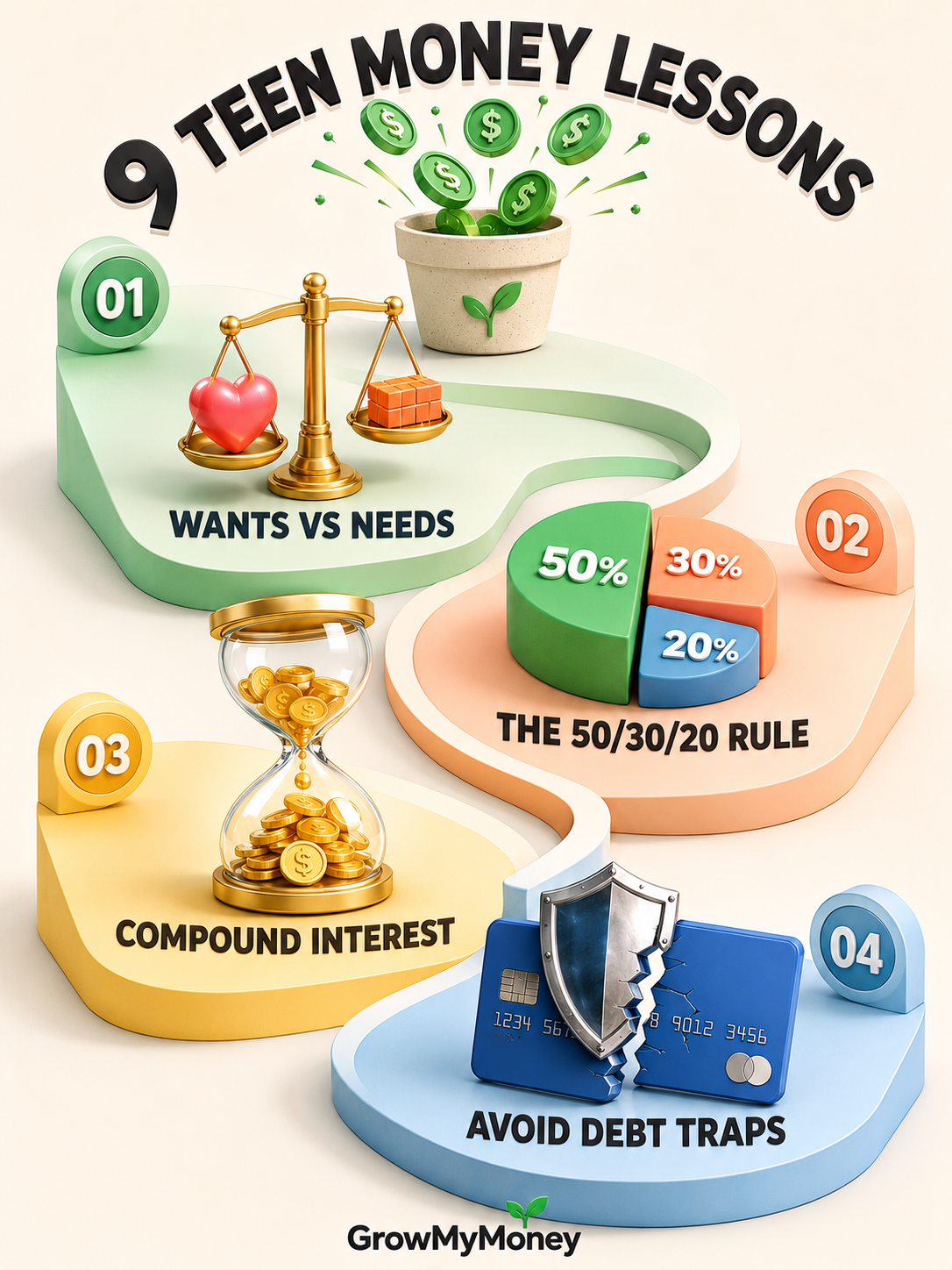
1. The Art of Distinguishing Wants from Needs
The first battleground for your wallet is in your own mind. In an era dominated by targeted ads and social media influencers, the pressure to spend is relentless. To master your money, you must first master your impulses. Every time you consider a purchase, run it through the “Necessity Filter.”
- True Needs: These are the pillars of your survival. Think nutrition, safe housing, educational resources, and essential hygiene.
- Lifestyle Wants: These are convenience items or status symbols. While they provide temporary pleasure, they are the primary reason many people stay broke.
Learning to delay gratification is a superpower. By stripping away non-essential spending, you redirect capital toward assets that grow over time rather than items that depreciate.
2. Implementing the 50/30/20 Budgeting Framework
Many teens view a budget as a restrictive cage. In reality, a budget is a map that guarantees your money reaches its destination. The most sustainable method is the 50/30/20 rule, which balances responsibility with enjoyment:
- 50% for Needs: Ensure your survival costs are covered first.
- 30% for Wants: This is your “fun money” for hobbies or hanging out with friends.
- 20% for Savings: This portion is for your future, whether that is a college fund, an emergency buffer, or early investments.
By automating this split, you stop wondering where your money went and start directing it toward your freedom.
3. Leveraging the Magic of Compound Interest
Albert Einstein famously called compound interest the “eighth wonder of the world.” As a teenager, you have the one asset that older adults would give anything to regain: time. When you invest early, your money earns interest, and then that interest earns its own interest. Over a decade or two, this creates a massive snowball effect.
Even if you start with just $50 a month, the long-term impact on your net worth will dwarf those who wait until their thirties to start investing significant sums. Start today, let the market work, and watch as time does the heavy lifting for you.
4. The Truth About Debt Traps
Debt is a double-edged sword. While some debt (like education loans or mortgages) can eventually pay off, high-interest consumer debt—specifically credit card debt—is a wealth killer. Credit cards are often marketed as a rite of passage, but they are financial tools that require extreme discipline.
The Golden Rule: If you cannot afford to pay off the full balance at the end of the month, do not swipe the card. Carrying a balance means you are paying exorbitant interest rates, essentially paying double or triple the price for a product that has likely lost its value.
5. Protecting Your Credit Score
Your credit score is like your financial reputation. It is a three-digit number that tells lenders whether you are a safe person to lend money to. A high score can save you thousands of dollars in interest rates when you eventually buy your first car or home. To build a great score early: keep your credit utilization low, pay your bills on time, and avoid opening too many accounts at once.
6. Investing in Your Greatest Asset: Your Mind
Stocks and savings accounts are great, but your highest return on investment (ROI) will always come from your own skills. The modern economy rewards those who can solve complex problems. Whether it is mastering coding, learning high-level video editing, or refining your communication skills, the time you spend learning pays dividends for the rest of your life.
7. Creating Multiple Streams of Income
Relying on a single source of income—like a standard after-school job—is risky. The most successful people create systems where they earn money in more than one way. Whether it’s starting a small side hustle, freelancing your digital skills, or selling products online, diversifying your income streams protects you against economic downturns and accelerates your savings.
8. Understanding the Value of an Emergency Fund
Life is unpredictable. A sudden car repair or a broken phone can derail a teenager’s financial plans instantly. An emergency fund is your safety net. Aim to save at least three months’ worth of basic expenses. Having this buffer prevents you from needing to rely on parents or high-interest debt when something inevitably goes wrong.
9. Cultivating a Long-Term Mindset
Wealth is not built overnight. It is built by making thousands of tiny, correct decisions over several years. Many teens fail because they chase “get rich quick” schemes or try to copy the lifestyles they see on social media. True financial masters play the long game. They stay consistent, they avoid unnecessary vanity spending, and they trust in their long-term growth systems.
Frequently Asked Questions (FAQ)
Why is financial literacy essential for teens?
Financial literacy allows you to control your life. Without it, you are a slave to your paychecks. With it, you are an architect of your own future.
How can I start investing with very little money?
Many modern platforms allow you to start with as little as $1 or $5. The key is consistency, not the total amount you start with.
Is saving money better than investing?
Saving is for safety (short term); investing is for growth (long term). You need both.
How do I avoid peer pressure to spend?
Surround yourself with like-minded friends who value their future as much as you do. Remind yourself that the person bragging about their new shoes today may be the same person struggling to pay rent in a few years.
Start your journey toward financial freedom today. By applying these nine lessons, you aren’t just saving money—you are buying your future freedom.