Have you ever sat through a conversation about stocks, savings, or retirement planning and felt like the speaker was using a secret, coded language? Terms like ‘burn rate’ or ‘bag holder’ can sound like they belong in a gritty corporate drama rather than in your personal banking dashboard. However, the world of finance—much like any specialized field—has its own lexicon. Understanding these terms isn’t just about sounding sophisticated at a networking event; it is a critical component of financial literacy that empowers you to take control of your economic future.
At its core, financial literacy is a craft that requires ongoing practice. By familiarizing yourself with the shorthand used by seasoned investors and financial experts, you can make more informed choices, avoid costly mistakes, and move closer to your long-term goals. Here are 10 essential financial slang terms that will help you navigate your journey toward wealth with confidence.
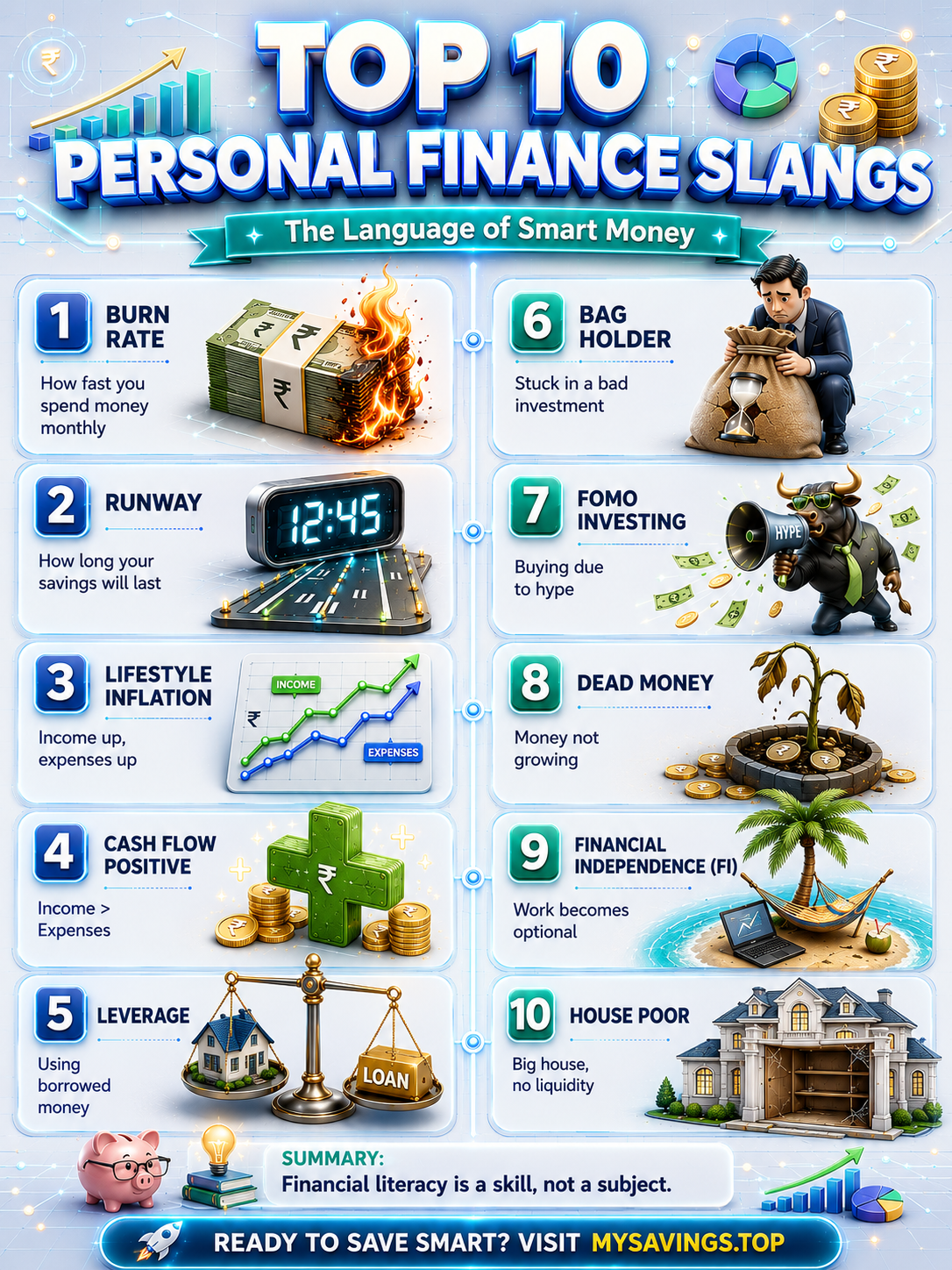
1. Burn Rate: Monitoring Your Monthly Outgo
In the startup world, ‘burn rate’ refers to the speed at which a business consumes its venture capital. In your personal finances, it functions the same way: it is the total amount of money you spend each month to maintain your current standard of living. If your monthly income is $4,000 and your essential and discretionary expenses total $3,500, your ‘burn rate’ is $3,500.
Why it matters: By calculating your burn rate, you gain a clear picture of your sustainability. If your burn rate is too close to your income, you are walking a tightrope. Reducing this number is often the most immediate lever you can pull to accelerate your savings rate.
2. Financial Runway: Measuring Your Safety Margin
Once you understand your burn rate, you can determine your ‘runway.’ This represents the length of time your existing savings could cover your expenses if your income stream were to disappear tomorrow. For instance, if you have $15,000 in liquid savings and a $3,000 monthly burn rate, you have a five-month runway.
Pro Tip: Aiming for a runway of three to six months is standard advice for creating a robust safety net. This buffer provides the peace of mind necessary to pivot careers or handle unexpected life events without resorting to high-interest debt.
3. Lifestyle Inflation: The Sneaky Wealth Destroyer
Lifestyle inflation is a psychological phenomenon that keeps many people stuck in a ‘middle-class trap.’ It occurs when an individual increases their spending in direct proportion to an increase in income. You get a salary bump, so you upgrade your apartment, lease a luxury vehicle, and increase your dining-out frequency. Consequently, your net worth growth remains flat because your spending has risen to match your new earnings.
How to win: When you receive a raise or a bonus, commit to keeping your living expenses static for a predetermined period while directing the surplus into investments.
4. Cash Flow Positive: The Foundation of Prosperity
Being ‘cash flow positive’ is the ultimate objective for any household. This simply means your total monthly inflows exceed your total monthly outflows. Unlike credit-reliant consumers who equate spending power with wealth, those who are cash flow positive understand that the surplus is where true wealth building begins.
5. Leverage: The Double-Edged Sword
Leverage refers to the use of borrowed capital to amplify the potential returns of an investment. The most classic example is a mortgage: you put down a fraction of the home’s value and use the bank’s money to control the entire asset. If the property appreciates, your return on your initial investment is significantly higher than if you had purchased the home entirely with your own cash.
Warning: Leverage magnifies both gains and losses. It is an excellent tool for those who understand risk management, but it can be devastating for those who overextend themselves.
6. Bag Holder: Avoiding the Trap of Hope
In the trading world, a ‘bag holder’ is someone who remains invested in an asset that has dropped significantly in value, often holding on out of hope or denial that it will eventually recover. They are ‘holding the bag’ while others have cut their losses and moved on to more viable opportunities.
Lesson: Avoid emotional attachment to your investments. Evaluate your portfolio based on performance and fundamentals, not sentimental ‘what-ifs.’
7. FOMO Investing: The Peril of the Crowd
FOMO, or the ‘Fear Of Missing Out,’ is one of the greatest destroyers of retail investor capital. It occurs when individuals rush into an investment—whether it be crypto, a trending tech stock, or a hyped-up commodity—simply because they see others profiting. Buying based on hype rather than analysis is a recipe for buying at the peak and selling at the bottom.
8. Dead Money: Unlocking Your Stagnant Capital
‘Dead money’ refers to funds that are sitting idle without generating a return, such as excess cash in a low-interest checking account. While this money is ‘safe’ from market volatility, it is losing purchasing power every single day due to the silent erosion of inflation.
Strategy: Ensure your emergency fund is in a high-yield savings account or money market fund, and deploy your excess capital into growth-oriented assets that align with your risk tolerance.
9. Financial Independence (FI): Your Ultimate Destination
Financial Independence is the point at which you have accumulated enough assets that the returns on those assets cover your burn rate indefinitely. At this stage, your income from investments (passive income) sustains your lifestyle. This does not necessarily mean you quit working; it means that working becomes a choice rather than a necessity.
10. House Poor: When Your Assets Own You
Being ‘house poor’ is a condition where a person directs so much of their income toward a mortgage, property taxes, maintenance, and insurance that they have no liquidity for anything else. They own a prestigious asset on paper, but they lack the cash flow to enjoy their lifestyle. Always calculate your ‘all-in’ costs before purchasing a home to ensure the asset improves your life rather than restricting it.
Frequently Asked Questions (FAQ)
What is the most effective way to lower my burn rate?
The best way to lower your burn rate is to conduct a monthly ‘subscription audit.’ Cancel unused services, negotiate your utility bills, and look for low-cost alternatives to your recurring expenses.
Can leverage be used for personal investments outside of real estate?
Yes, though it is much riskier. Margin trading or personal loans for investments are forms of leverage, but these carry significant risks of liquidation and should generally be avoided by beginner investors.
How can I avoid becoming a ‘bag holder’?
Use stop-loss orders to automatically exit a position if it drops below a certain price point, and always conduct your own research (DYOR) before entering a trade.
Is it possible to avoid lifestyle inflation entirely?
While difficult, it is possible by practicing ‘conscious spending.’ When your income increases, prioritize increasing your savings and investment contributions first, then allocate a smaller percentage to lifestyle improvements.
What is the best alternative to holding ‘dead money’?
Depending on your timeline, alternatives include High-Yield Savings Accounts (HYSA), Treasury bills, index funds, or diversified ETFs. Consult with a financial advisor to align your asset allocation with your specific goals.
By integrating these terms into your vocabulary, you aren’t just memorizing jargon; you are learning the framework of financial success. Whether you are aiming for early retirement or simply seeking better stability, these concepts provide the map for your journey. Stay curious, stay diligent, and keep growing your knowledge base.