Embarking on the journey of family budgeting is far more than just a chore; it’s a strategic blueprint for cultivating financial well-being and building a secure future for everyone under your roof. 🏡 Unlike individual financial management, a family budget is a dynamic, multifaceted organism designed to adapt to the evolving needs, dreams, and unexpected curveballs that life inevitably throws. It’s about creating a sustainable spending system that empowers your household, not restricts it. On SmartSave.top, we’re dedicated to equipping you with the knowledge to craft a budget that truly works, from establishing practical spending benchmarks to weaving in the unique demands of a growing family. Get ready to explore why family budgets stand apart, how to tailor them to your specific circumstances, and implement a step-by-step process that brings clarity and control to your shared finances. 🎯
Why a Family Budget is a Different Ballgame 🤸♀️
Managing the finances of a household is inherently more intricate than navigating personal finances. An individual might easily project their monthly outgoings. However, a family unit introduces a symphony of interconnected financial threads: dual incomes, the soaring costs associated with raising children, educational aspirations, medical necessities, diverse transportation requirements, and a kaleidoscope of competing savings ambitions. 💰
A successful family budget requires a delicate balance – robust enough to enforce financial discipline, yet agile enough to gracefully accommodate life’s inevitable shifts. Here’s why it’s unique:
- 🧩 Multiple Decision-Makers: Financial steering often involves two partners or even multiple adults, underscoring the critical importance of open communication and a shared vision for your financial future. Teamwork makes the dream work! ✨
- 🎈 Unpredictable Child-Related Expenses: Children bring joy, but also a fluctuating array of costs throughout the year. From school essentials, extracurricular pursuits, clothing that seems to shrink overnight, to healthcare needs, these expenses can be delightfully unpredictable. 🧸
- 💵 Income Complexity: Many households thrive on dual incomes, but others may navigate the waters of variable pay, freelance gigs, performance bonuses, or seasonal employment. Your budget must be resilient enough to absorb these fluctuations. 📊
- 🔄 Life-Stage Transitions: Major life events such as marriage, welcoming new children, career changes, relocating homes, pursuing further education, or planning for retirement all necessitate a recalibration of your household’s financial framework. ⏳
The ultimate aim isn’t to create an immutable, perfect budget that never sees change. Instead, the goal is to establish a foundational financial structure that can be thoughtfully reviewed and gracefully adjusted as your family’s circumstances evolve. Think of it as a living document, breathing and adapting with your life. 🍃
Family Budget Benchmarks: Guiding Your Income Allocation 🧭
To kickstart your budgeting journey, establishing monthly spending reference points is incredibly valuable. Rather than assigning every single dollar from the outset, let’s begin by dividing your household’s take-home income into key overarching categories. This provides a clear roadmap for where your money is generally headed.
Common categories for a family budget often include:
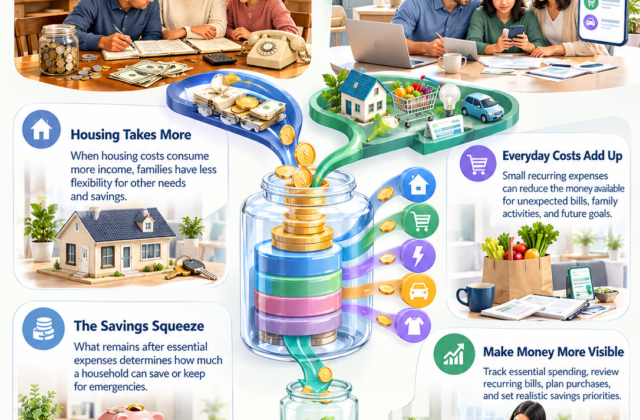
- 🏠 Housing: This encompasses your rent or mortgage payments, property taxes, homeowners’ insurance, essential maintenance, and general household running costs. Your sanctuary deserves prime billing! 💖
- 🛒 Food: Covering everything from your weekly grocery hauls and pantry staples to the occasional dining out experiences. Nourishing your family is fundamental. 🍎
- 🚗 Transportation: Think fuel for your vehicles, public transport fares, car insurance, routine maintenance, parking fees, and any outstanding car loan payments. Getting around efficiently is key. ⛽
- 🎒 Childcare and Schooling: This vital category includes daycare fees, school tuition, essential supplies, uniforms, participation in educational activities, and any other related child-focused educational expenses. Investing in their future! 🎓
- 💡 Utilities: The costs of electricity, gas, water, internet, and mobile phone plans that keep your home running smoothly. 💡
- 🩺 Healthcare: Medical insurance premiums, prescription costs, doctor’s visits, dental care, and other medical necessities. Your family’s health is paramount. ❤️🩹
- 👕 Clothing: Provisions for new outfits, footwear, seasonal apparel, and crucially, those inevitable replacements for children’s outgrown items. Keeping everyone comfortably dressed. 👚
- 🎬 Entertainment: Allocations for leisure activities, streaming subscriptions, family outings, hobbies, and shared recreational pursuits. Fun is an essential part of life! 🎉
- 🌱 Savings: Dedicated funds for your emergency reserve, retirement contributions, college education funds, and any other significant long-term financial aspirations. Building for tomorrow, today! 🌟
- 🛟 Buffer/Miscellaneous: A small cushion for unexpected small expenses or unforeseen needs that don’t fit neatly into other categories. A little breathing room is always good. 💨
It’s crucial to remember that the ideal percentage for each category is highly personal. It hinges on your household’s size, your geographical location, your income level, existing debt obligations, and your family’s unique priorities. Therefore, treat these percentages as flexible planning benchmarks, not rigid, unbreakable rules. Flexibility is your friend! 👍
Illustrative Family Budgets: A Look at Income Scenarios 📊
To offer a tangible perspective, let’s explore how a family budget might look across different annual income levels for a family of four. These examples highlight a core budgeting principle: a higher income doesn’t automatically mean every single spending category will escalate proportionally. Strategic allocation is key!
Scenario 1: $70,000 Annual Income (Approx. $4,600/month Take-Home) 💸
- 🏠 Housing: 26%
- 🛒 Groceries: 13%
- 🚗 Transportation: 14%
- 🎒 Childcare/School: 17%
- 💡 Utilities: 4%
- 🩺 Healthcare: 7%
- 👕 Clothing: 3%
- 🎬 Entertainment: 3%
- 🌱 Savings: 10%
- 🛟 Buffer: 2%
In this scenario, housing and childcare represent substantial portions of the budget. While savings remain a priority, the available financial flexibility is more constrained. Every dollar counts! 💯
Scenario 2: $100,000 Annual Income (Approx. $6,800/month Take-Home) 💰💰
- 🏠 Housing: 25%
- 🛒 Groceries: 11%
- 🚗 Transportation: 12%
- 🎒 Childcare/School: 15%
- 💡 Utilities: 4%
- 🩺 Healthcare: 6%
- 👕 Clothing: 3%
- 🎬 Entertainment/Dining: 4%
- 🌱 Savings: 15%
- 🛟 Buffer: 5%
With an increased income, this household can allocate a larger percentage towards savings and enhance financial flexibility, while keeping essential spending relatively controlled. Smart growth! 🌱
Scenario 3: $150,000 Annual Income (Approx. $9,400/month Take-Home) 🚀
- 🏠 Housing: 23%
- 🛒 Groceries: 10%
- 🚗 Transportation: 10%
- 🎒 Childcare/School: 14%
- 💡 Utilities: 3%
- 🩺 Healthcare: 5%
- 👕 Clothing/Kids: 3%
- 🎬 Entertainment/Dining: 5%
- 🌱 Savings: 20%
- 🛟 Buffer: 7%
At this income level, a significantly larger portion is directed towards savings and a robust financial buffer. This powerfully illustrates how income growth can be strategically leveraged to bolster financial resilience and achieve significant long-term goals, rather than simply indulging in increased lifestyle spending. Future-proofing your family! 🛡️
Your Seven-Step Family Budgeting System 🛠️
Implementing a consistent, reliable process transforms budget management from a daunting task into a manageable, recurring habit. Here’s a streamlined seven-step system to guide you:
- Calculate Your True Combined Take-Home Pay: This is the actual amount you have available after all deductions – taxes, insurance premiums, retirement contributions, and any other payroll withholdings. For those with fluctuating income, err on the side of caution by using a conservative, lower estimate rather than an optimistic peak. Accuracy is your foundation. ✅
- List Your Fixed Expenses: Differentiate between costs that are predictable and those that fluctuate. These are your non-negotiables, forming the bedrock of your budget. Common fixed expenses include:
- 🏠 Rent or mortgage payments
- 📱 Recurring utility bills (often averaged for consistency)
- 🚘 Vehicle payments or essential transportation commitments
- 🎓 Scheduled school or childcare payments
- 💳 Minimum debt payments (credit cards, loans)
- Estimate Your Variable Expenses: For costs that change month-to-month, review at least three months of past spending to create realistic estimates. This approach prevents wishful thinking and grounds your budget in actual behavior. Look at:
- 🛒 Grocery costs
- ⛽ Fuel and general transportation expenses
- 🩺 Medical and health-related spending
- 👕 Clothing purchases
- 🍽️ Dining out and takeaway costs
- 🎯 Entertainment and leisure activities
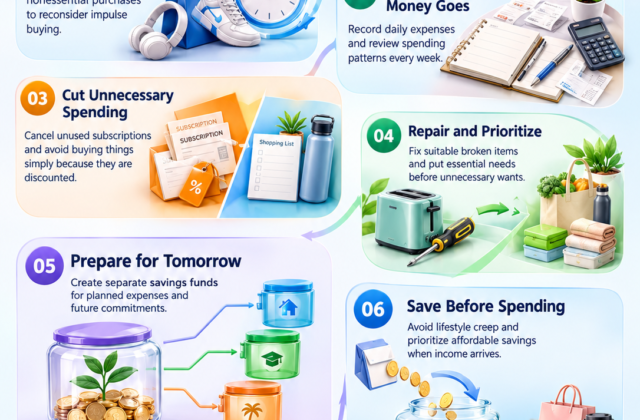
- Identify Discretionary Spending: Not all expenses carry the same weight of necessity. Clearly separate your essential needs from wants and optional spending. This distinction is invaluable when income dips or unexpected costs arise, allowing you to make informed cuts without jeopardizing core necessities. ✂️
- Set Your Savings Goals: Treat savings not as an afterthought, but as a proactive, planned financial category. Prioritize these goals from the outset. Consider setting targets for:
- 🌱 Emergency savings
- 🏦 Retirement contributions
- 🎓 College or educational savings for children
- ✈️ Funds for planned major purchases (e.g., a new car, home renovation)
- 🏠 Future housing goals (e.g., down payment on a new home)
Assigning savings targets early in the month makes consistent progress towards long-term financial objectives significantly more achievable. 🎯
- Close the Budget Gap: If your estimated expenses exceed your income, it’s time for adjustments. This often involves:
- ✂️ Reducing discretionary spending categories.
- 🔎 Scrutinizing recurring subscriptions and services for potential cancellations.
- 📉 Renegotiating or eliminating unnecessary recurring costs.
- 💰 Gradually increasing savings if income allows for greater flexibility.
- 📈 Exploring avenues to boost household income if expense reductions alone are insufficient.
A truly balanced budget should aim for zero net spending, meaning all income is accounted for, but not necessarily all spent. ⚖️
- Review and Adjust Monthly: A family budget is a dynamic tool, not a static decree. Regularly recalibrate your plan. Compare your planned expenditures against your actual spending, identify any surprising categories that emerged, and update your allocations for the upcoming month. This monthly ritual transforms budgeting from a one-time exercise into a powerful, ongoing system for financial stewardship. 🔄
Navigating Family-Specific Financial Challenges 🤔
Generic budgeting templates often fall short when it comes to acknowledging the unique financial pressures that families, especially those with children, encounter. Let’s shine a light on these common hurdles:
The Childcare Cliff 👶
Childcare costs can represent a monumental portion of a family’s income, particularly during the crucial early years. Your budget must dynamically account for potential shifts in childcare expenses, rather than assuming a static cost indefinitely. As children enter school or transition to different care arrangements, these costs will change. Factor these transitions in! 🗓️
The Kids’ Activities Creep ⚽️🎶
From sports leagues and music lessons to summer camps, school events, and the endless need for new equipment, extracurricular activities can subtly but surely inflate your annual expenses. Establishing a dedicated ‘Children’s Activities’ category can provide much-needed visibility and control over these enriching, but sometimes costly, pursuits. Keep an eye on this! 👀
The Two-Income Trap 🤝
While dual incomes often increase a household’s financial capacity, they can also inadvertently fuel lifestyle inflation – the tendency to spend more as income rises. A more strategic approach involves first defining your essential household spending needs, and then consciously allocating any additional income towards prioritized goals like debt reduction, investments, or specific savings objectives. Make your extra income work for you! 💼
College Savings Goals 📚
Education savings should be integrated thoughtfully alongside other vital long-term financial objectives. The appropriate contribution amount will depend on a confluence of factors: your household income, available financial resources, projected education costs, and any existing savings you’ve already accumulated. Start planning early for their future! 🎓
Building a Robust Family Emergency Fund ☔
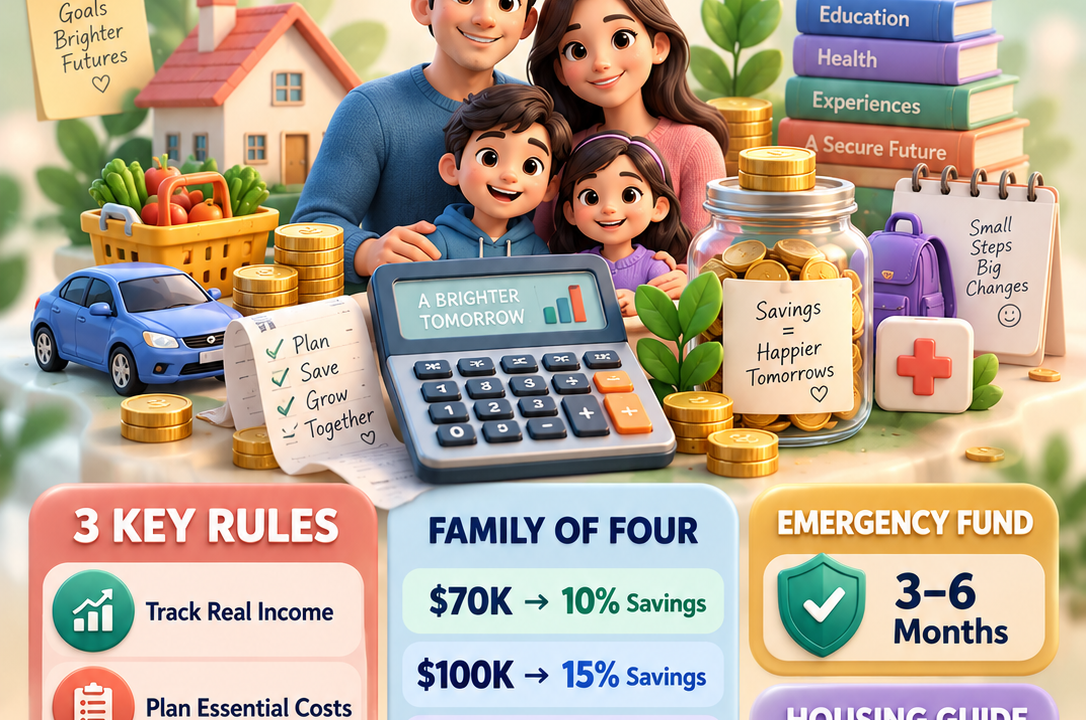
An emergency fund acts as a crucial financial shield, protecting your household from the impact of unexpected expenses or sudden income disruptions. A widely recommended long-term target is to accumulate savings equivalent to three to six months of your total family expenses. However, the ideal amount can vary significantly based on income stability, your debt load, employment security, insurance coverage, and overall household responsibilities. Don’t feel pressured to build it all at once; approach it in manageable stages:
- 🪙 Stage 1: Initial Reserve: Begin by building a small, accessible emergency cushion.
- 📦 Stage 2: One Month’s Essentials: Aim to save enough to cover approximately one month of essential living expenses.
- 🛡️ Stage 3: Three Months of Security: Continue diligently building your fund towards the three-month mark.
- 🏦 Stage 4: Extended Safety Net: Consider extending your reserve to six months if your household circumstances (e.g., variable income, significant debt) warrant a larger safety margin.
Crucially, this emergency fund should remain distinct from money earmarked for predictable, recurring annual expenses. Items like annual insurance premiums, property taxes, school fees, holiday spending, or yearly membership subscriptions are better managed through dedicated ‘sinking funds’ – where you save incrementally throughout the year to meet these obligations when they arise. Plan ahead for these predictable costs! 🗓️
How Budgeting Apps Empower Your Family Finances 📱
Leveraging technology can significantly simplify and enhance shared household budgeting. Modern budgeting apps offer a suite of features designed to bring clarity and collaboration to your financial planning:
- 👨👩👧👦 Multi-User Sharing: Enable partners or other designated household members to access, track, and update the shared financial plan in real-time.
- 🗂️ Custom Categories: Create personalized budget categories that perfectly reflect your family’s unique spending patterns, such as ‘Childcare,’ ‘Kids’ Activities,’ or ‘Pet Care.’
- 🎯 Goal Tracking: Monitor your progress towards critical financial milestones like building your emergency fund, saving for college, planning a vacation, or purchasing a home.
- 🏦 Bank Synchronization: Many apps can automatically import transactions directly from your bank accounts and credit cards, drastically reducing the need for manual data entry.
- 📊 Cost Comparisons and Insights: Utilize features that help you compare spending across different categories or identify recurring expenses where opportunities for savings may exist.
The most effective budgeting tool isn’t necessarily the one with the most bells and whistles. It’s the one that genuinely makes it easier for every individual responsible for the household’s finances to understand where the money is going and consistently adhere to the agreed-upon plan. Find the tool that fits your family best! 💯
Practical Rules of Thumb for Savvy Family Budgeting 💡
To help you establish a solid initial framework for your family’s financial plan, consider these broad, helpful guidelines:
- 🏠 Housing: As a general guideline, aim to allocate approximately 25–30% of your net take-home income towards housing costs. This can, of course, vary significantly based on local market conditions and your other financial obligations.
- ⚖️ The 50/30/20 Rule: While a popular starting point (50% for needs, 30% for wants, 20% for savings/debt repayment), families with children often need to adjust these percentages. The higher costs of childcare, education, and healthcare can necessitate a different distribution. Flexibility is paramount!
- 🔄 Adapt Regularly: Your family budget should be a living document. Be prepared to adjust it whenever significant changes occur in your income, childcare arrangements, housing situation, debt levels, or broader family circumstances. Circumstances change, and so should your budget.
- 💬 Budget Together: Effective household budgeting thrives on collective input. Ensure major financial priorities and decisions are discussed openly among all involved adults. Shared understanding fosters shared commitment.
The Cornerstone Principle of Family Budgeting 💎
There isn’t a single, universally perfect percentage allocation that fits every single household. A family earning $70,000 annually will, by necessity, dedicate a considerably larger proportion of their income to essential expenses compared to a family earning $150,000. Similarly, a household with toddlers will likely have vastly different financial priorities than one with teenagers or adult children. 👨👩👧👦
Therefore, the most resilient and effective family budget is one that is:
- ✅ Realistic: Grounded in your actual income and spending habits.
- 🎯 Measurable: Allows you to track progress towards your goals.
- 🔄 Flexible: Adaptable to life’s changes.
- 🌟 Goal-Oriented: Directly tied to your family’s specific financial aspirations.
Begin by understanding your actual take-home income. Diligently track your real spending patterns. Clearly distinguish between fixed and variable costs. Allocate a defined portion for savings. Prepare systematically for predictable annual expenses. Prioritize building a robust emergency fund. Then, commit to reviewing and refining your numbers every single month. This consistent effort is your pathway to financial peace of mind. 🕊️
Ultimately, a well-crafted family budget isn’t about deprivation; it’s not about eliminating every enjoyable expense. Its true purpose is to ensure that your everyday spending, your family’s responsibilities, and your long-term financial dreams can harmoniously coexist within the financial resources available to your household. Let’s build a brighter, more secure future together! 🌟