For many young adults navigating the economic landscape of 2026, the challenge isn’t just earning enough money—it’s keeping it. In an era defined by hyper-convenience, one-click shopping, and the pervasive culture of digital subscription services, the traditional definition of a budget has become increasingly difficult to maintain. While large purchases often grab the headlines, the real threat to financial stability for Gen Z lies in the “death by a thousand cuts” phenomenon—small, seemingly inconsequential expenses that aggregate into significant financial losses over time.
This guide dives deep into the most common financial pitfalls of the current year. We will explore how to identify these invisible leaks and implement sustainable strategies to boost your savings without sacrificing your quality of life.
1. The Subscription Stagnation
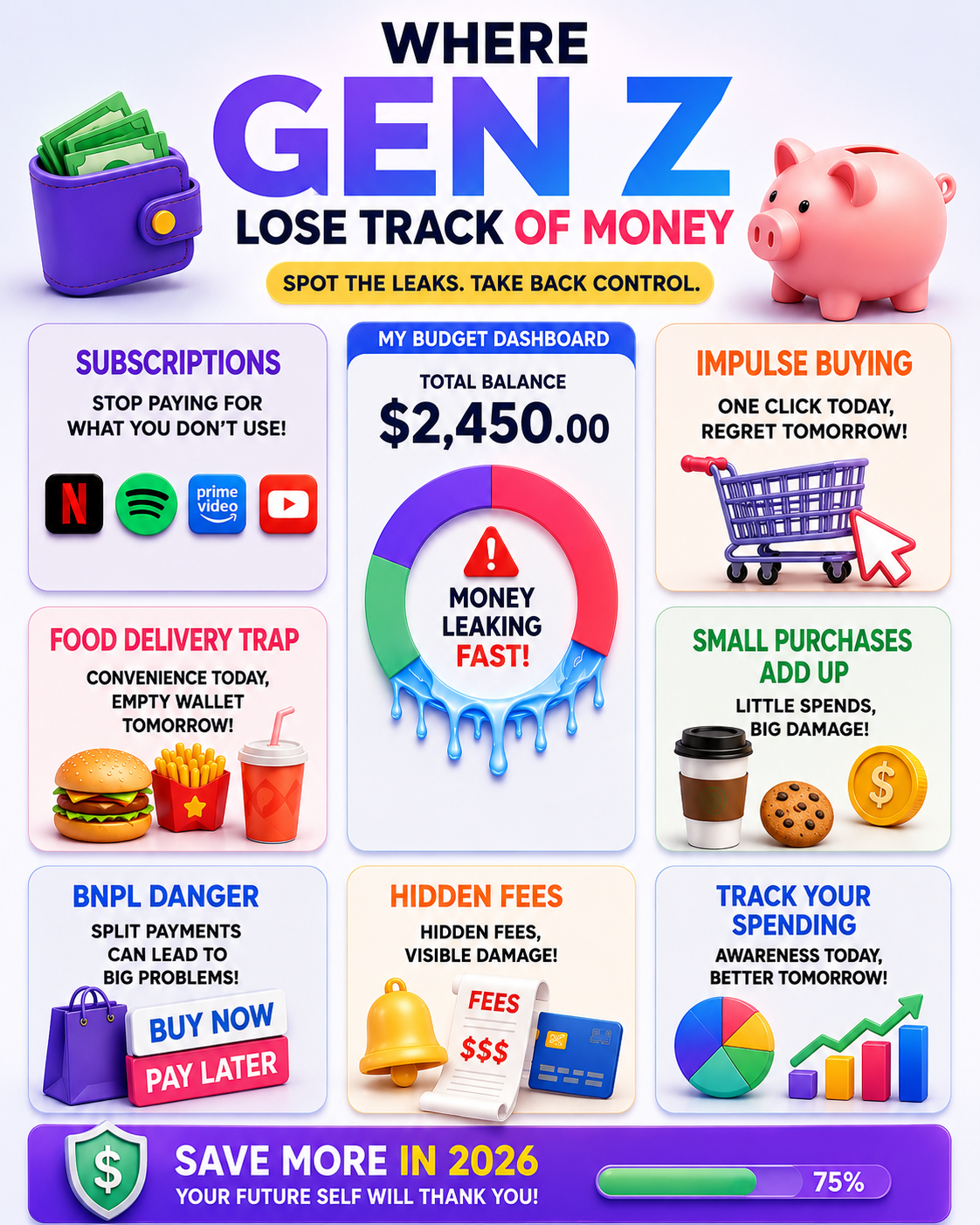
The modern economy is built on a subscription-first model. From streaming platforms and cloud storage to niche fitness apps and premium social media features, it is alarmingly easy to sign up for a service and simply forget about it. Because these charges are often automated, they bypass our conscious spending radar.
The Trap: You are likely paying for overlapping services—such as multiple streaming platforms offering similar content libraries—or paying for “zombie” subscriptions you haven’t touched in months. These small monthly fees act as a constant drain on your liquidity.
The Fix: Conduct a comprehensive “Subscription Audit.” Use a banking app or spreadsheet to list every recurring payment from the last 60 days. If you haven’t used a service in the last month, cancel it immediately. Set a quarterly calendar reminder to review your active memberships to ensure you aren’t paying for convenience you no longer utilize.
2. The Convenience Culture of Food Delivery
The rise of hyper-local delivery apps has turned convenience into a massive, hidden tax on our earnings. Between delivery fees, service charges, small-order surcharges, and the customary tip, a simple $15 meal can easily balloon into a $30 transaction.
The Trap: Treating delivery apps as a default rather than an occasional luxury. The emotional distance created by digital payment platforms makes it far too easy to ignore the cumulative impact of these daily orders.
The Fix: Implement a “delivery limit” of once per week. For those busy work-from-home days, prioritize batch cooking or simple meal prep. By keeping easy-to-assemble ingredients on hand, you eliminate the “I don’t know what to eat” impulse that leads to expensive delivery orders.
3. The Rideshare Reliance
Transportation is often a fixed cost, but the *method* of transport is a variable one. Frequent reliance on rideshare services for short distances is a classic example of paying a premium for minimal time savings. These costs mount up rapidly, especially when surge pricing is factored into the equation.
The Trap: Using rideshares as a primary mode of transit instead of an emergency or occasional convenience. Often, walking or utilizing public transit options costs a fraction of the price.
The Fix: Track your rideshare spending for just one week to see the raw data. You may be shocked to find you are spending hundreds of dollars a month on short trips. Whenever possible, plan your travel in advance to utilize public infrastructure or active transit like biking or walking.
4. The Frictionless Trap of Impulse Shopping
E-commerce platforms are masterfully designed to remove the “pain of paying.” With saved credit card information, biometric authentication, and one-click buying, there is no longer a physical or psychological pause to reconsider a purchase. Social media algorithms further complicate this by pushing targeted ads for items we didn’t know we wanted until five seconds ago.
The Trap: Shopping as a form of entertainment or stress relief. This leads to “buyer’s remorse” and a cluttered home filled with unused items.
The Fix: Reintroduce friction into your buying process. Remove saved payment details from your browser and apps so you have to physically get your wallet to make a purchase. Furthermore, adopt a mandatory 24-hour waiting period for any non-essential purchase. Often, the urge to buy vanishes overnight.
5. The Hidden Costs of Social Pressure
Maintaining a social life is essential, but it doesn’t have to be financially destructive. Fear of Missing Out (FOMO) often compels Gen Z adults to overspend on dinners, concerts, or group events to keep pace with their peers. When social spending is treated as an afterthought, it inevitably consumes the money intended for savings.
The Trap: Saying “yes” to every invitation without considering the financial footprint. Budgeting for social activities is rarely prioritized until the bank account is already depleted.
The Fix: Create a dedicated “fun fund” at the start of every month. Once that amount is gone, be transparent with friends about your budget—or suggest low-cost alternatives like game nights, park visits, or potluck dinners. Real friends will appreciate the honesty.
6. The Illusion of “Buy Now, Pay Later” (BNPL)
BNPL services are marketed as tools for financial flexibility, allowing users to split large payments into smaller, interest-free chunks. While this can be helpful for emergency needs, it often leads to “lifestyle creep,” where consumers purchase items they cannot actually afford in full.
The Trap: Treating debt as cash flow. When you have five different BNPL payments coming out of your account on different days, it becomes nearly impossible to track your true net worth or monthly disposable income.
The Fix: Adopt a rule: If you cannot afford to pay for the item in full today, you cannot afford it at all. Avoid using BNPL for anything other than essential needs, and maintain a strict list of your current installment plans to ensure you never miss a payment and trigger interest or late fees.
7. The Micro-Transaction Creep
It’s easy to dismiss a $4 coffee or a $2 vending machine snack as “negligible.” However, these micro-transactions are the silent killers of wealth. Over the course of a year, one daily $5 coffee habit amounts to over $1,800. That is a significant amount of money that could be invested in a high-yield savings account or an index fund.
The Trap: Viewing small expenses as “too small to matter.” In finance, every dollar counts, and small, repeated habits are the most powerful drivers of long-term wealth accumulation.
The Fix: Focus on one micro-spending category at a time. For example, commit to brewing coffee at home for 30 days. Redirect the money you would have spent at the café into your savings account. Once you see the impact of that shift, you will naturally be motivated to tackle other daily expenses.
8. The Silent Drain of Hidden Fees
Banks and service providers love late fees, overdraft charges, and automatic renewal penalties. These aren’t just unexpected costs; they are symptoms of a lack of financial organization. A single $35 overdraft fee is a harsh reminder that small oversights can create large financial burdens.
The Trap: Assuming that automatic payments will always be correct or failing to monitor bank statements for unauthorized or unexpected charges.
The Fix: Enable push notifications on your banking app for every transaction. Review your statements at the end of every week to catch potential errors or forgotten trials. By keeping a tight pulse on your accounts, you can avoid unnecessary penalties and stay aware of where your money is actually flowing.
Why Financial Awareness is Your Greatest Asset
In 2026, the financial playing field is tilted toward spending rather than saving. The technologies we use daily are designed to keep us in a cycle of consumption. By simply acknowledging these eight spending traps, you have already taken a massive step toward financial independence.
Financial health isn’t about extreme deprivation or living in misery. It is about intentionality. When you start tracking your spending, you aren’t just saving money—you are gaining the freedom to allocate your resources toward what actually brings you joy and security. Whether you are aiming to build an emergency fund, save for a home, or invest for the future, the small changes you make today will ripple into significant wealth by tomorrow.
Key Takeaways for a Healthier Financial Future:
- Audit Regularly: Check your subscriptions and bank statements at least once a month.
- Create Friction: Remove saved payment methods to force yourself to pause before buying.
- Plan for Fun: Budget for social activities so you don’t feel guilty about spending money on experiences.
- Prioritize Needs: Use BNPL sparingly and never as a way to extend your budget beyond your current means.
- Small Habits Matter: Never underestimate the power of saving a few dollars a day; it compounds into real wealth.
Regaining control over your wallet is a process, not a destination. By staying vigilant against these hidden traps, you can navigate the complexities of 2026 with confidence and build a financial foundation that lasts a lifetime.