
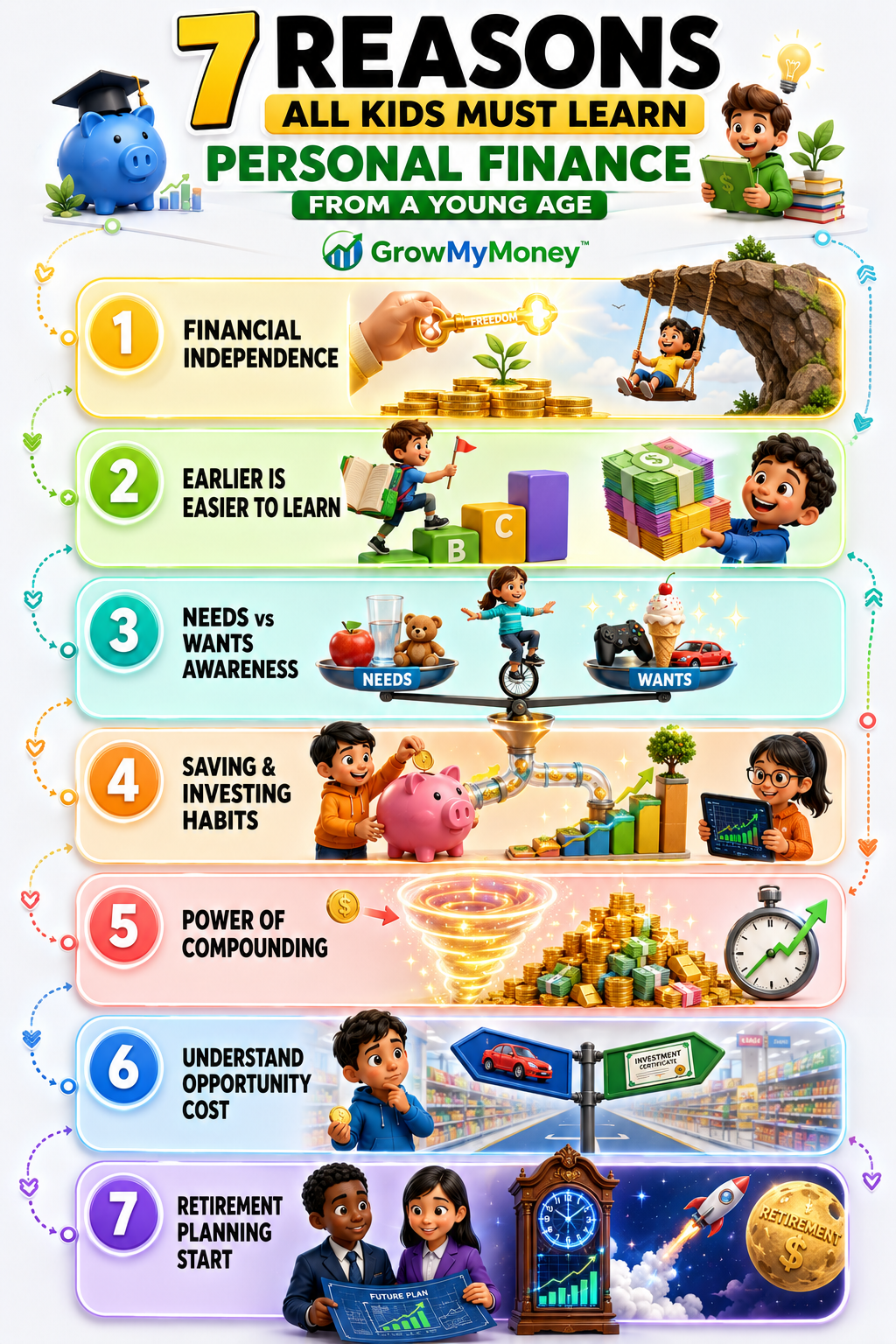
In our modern educational landscape, we emphasize the importance of literacy, numeracy, and physical health. We spend years guiding children through the complexities of literature, the precision of advanced mathematics, and the benefits of an active lifestyle. Yet, there is a glaring omission in most standard curricula: personal finance. We often treat money management as a subject that children will simply ‘pick up’ on their own once they become adults. This is a dangerous assumption that leaves the next generation vulnerable to a lifetime of financial stress.
Financial independence is not an accident; it is the result of intentional education and the development of healthy habits. By introducing core financial concepts early, you provide your children with the tools to navigate the complex economic world, avoid the trap of chronic debt, and maximize their potential for long-term wealth accumulation.
1. The Foundation of Independence
Financial independence is the ability to live life on one’s own terms, unburdened by debt or the stress of living paycheck to paycheck. When children are taught the basics of budgeting, saving, and asset management, they grow into adults who view money as a tool for freedom rather than a source of anxiety. Early education acts as a safeguard. A child who learns to distinguish between needs and wants at age seven is significantly less likely to succumb to predatory consumer debt in their twenties.
2. The Adaptability of Young Minds
Have you ever noticed how quickly children learn new languages or master complex game mechanics? Young brains are incredibly plastic, meaning they are exceptionally well-suited for absorbing new structural habits. Unlike adults, who often have to ‘unlearn’ years of bad spending patterns and debt-prone behaviors, children approach financial concepts with a blank slate. By teaching them about assets, dividends, and cash flow early, these ideas become second nature rather than intimidating academic hurdles.
3. Mastering the Art of Intentional Spending
We live in a culture driven by marketing and the promise of immediate gratification. From social media trends to store-front displays, the pressure to spend is constant. Teaching children to differentiate between needs and wants is the single most effective way to combat lifestyle inflation.
- The Need: Essential items for survival, health, and basic well-being.
- The Want: Desired items that provide entertainment or convenience but are not critical for survival.
When you involve your child in the budgeting process, you teach them that every dollar spent on a ‘want’ is a dollar diverted from their long-term goals. This develops emotional maturity and decision-making skills that are invaluable in adult life.
4. Demystifying the Stock Market
Many adults approach the stock market with fear and hesitation. They view it as a high-stakes gambling arena rather than a vehicle for building equity. By teaching your child about investing through simple, age-appropriate platforms or by explaining the ownership component of stocks, you demystify the process. Investing should be framed as a way to let their hard-earned money work for them, rather than a mysterious, complex obligation reserved for the elite.
5. The Unbeatable Power of Compounding
Perhaps the most compelling argument for early financial education is the concept of compounding. Time is the only resource that, once spent, cannot be recovered. When a child begins to save or invest at a young age, they harness the exponential growth potential that simply isn’t available to someone who starts later in life.
Consider the ‘snowball effect.’ Even a modest amount of money invested in childhood can grow into a substantial nest egg over several decades. When children see the tangible results of their money growing over time, they learn the value of patience—a virtue that is increasingly rare in our ‘on-demand’ culture.
6. Understanding Opportunity Cost
In economics, opportunity cost is the value of the next best alternative given up when a choice is made. For a child, this is a profound lesson in prioritization. If a child spends their entire allowance on a single, fleeting toy, they lose the ability to put that money toward a larger, more impactful goal. By consistently discussing trade-offs, you train your children to weigh the consequences of their actions, fostering a logical approach to money that prevents impulsive, regretful purchases.
7. Preparing for Retirement from Paycheck One
Retirement often feels like a concept that belongs to ‘old people,’ making it difficult for teens to relate to. However, the most successful investors are those who start contributing to their retirement funds as soon as they receive their first paycheck. By making retirement planning a celebrated milestone—much like getting a first job or a driver’s license—you set your child on a trajectory toward self-sufficiency. They won’t need to play ‘catch up’ in middle age; they will be building their foundation from the very start.
How to Begin the Journey
You don’t need a degree in finance to raise financially savvy children. It starts with simple, consistent actions:
- Use Physical Tools: Give children physical jars labeled ‘Spend,’ ‘Save,’ and ‘Invest’ to help them visualize their money flow.
- Transparent Conversations: Include your children in family budget discussions, explaining why the family chooses one item over another.
- Incentivize Responsibility: Connect allowance or earnings to chores or specific goals to show the link between effort and income.
- Celebrate Milestones: Track the growth of their savings or small investment accounts together and celebrate the progress.
Conclusion
Financial education is not just about counting coins or understanding interest rates; it is about equipping your children with the confidence to manage their own futures. When we give them the keys to financial literacy early, we grant them the greatest gift of all: the freedom to pursue their passions without the heavy weight of financial stress. Start the conversation today. Your child’s future self will thank you for it.
Frequently Asked Questions
Why is early financial literacy so critical for kids?
Early financial literacy creates a strong foundation that prevents common pitfalls like impulse spending and high-interest debt. It turns abstract concepts into intuitive habits that last a lifetime.
At what age should I start teaching my child about money?
You can begin as soon as they can count and understand the concept of ‘more’ vs. ‘less.’ Simple tasks like counting coins or using a piggy bank are great starting points for children as young as four or five.
How can I make investing interesting for a child?
Use visual tools or stock market games that allow them to ‘own’ parts of companies they recognize (like clothing brands or toy companies). Seeing the value fluctuate and grow over time creates real engagement.
How does teaching needs vs. wants help in the long run?
It acts as a mental filter. By questioning the necessity of a purchase, children learn to avoid lifestyle inflation, ensuring their future income is directed toward assets rather than liabilities.
What is the most important lesson I can teach my child?
The most important lesson is that money is a tool. It is neither good nor bad on its own; how we use it determines whether we achieve our goals or fall victim to financial stress.