Your twenties are often characterized as a decade of experimentation, professional growth, and lifestyle discovery. However, beneath the surface of career pivots and social outings lies a critical, underlying reality: this is the most influential decade of your financial life. Every decision you make between twenty and thirty creates a ripple effect that will either accelerate your journey toward autonomy or anchor you in a cycle of debt and uncertainty.
Many individuals believe that wealth is a byproduct of high income alone. The truth is far more nuanced. True financial success is the result of disciplined habits, strategic foresight, and an unshakable commitment to financial literacy. If you want to arrive at your thirtieth birthday with a solid foundation, you must move beyond basic saving and start mastering the fundamental mechanics of money.
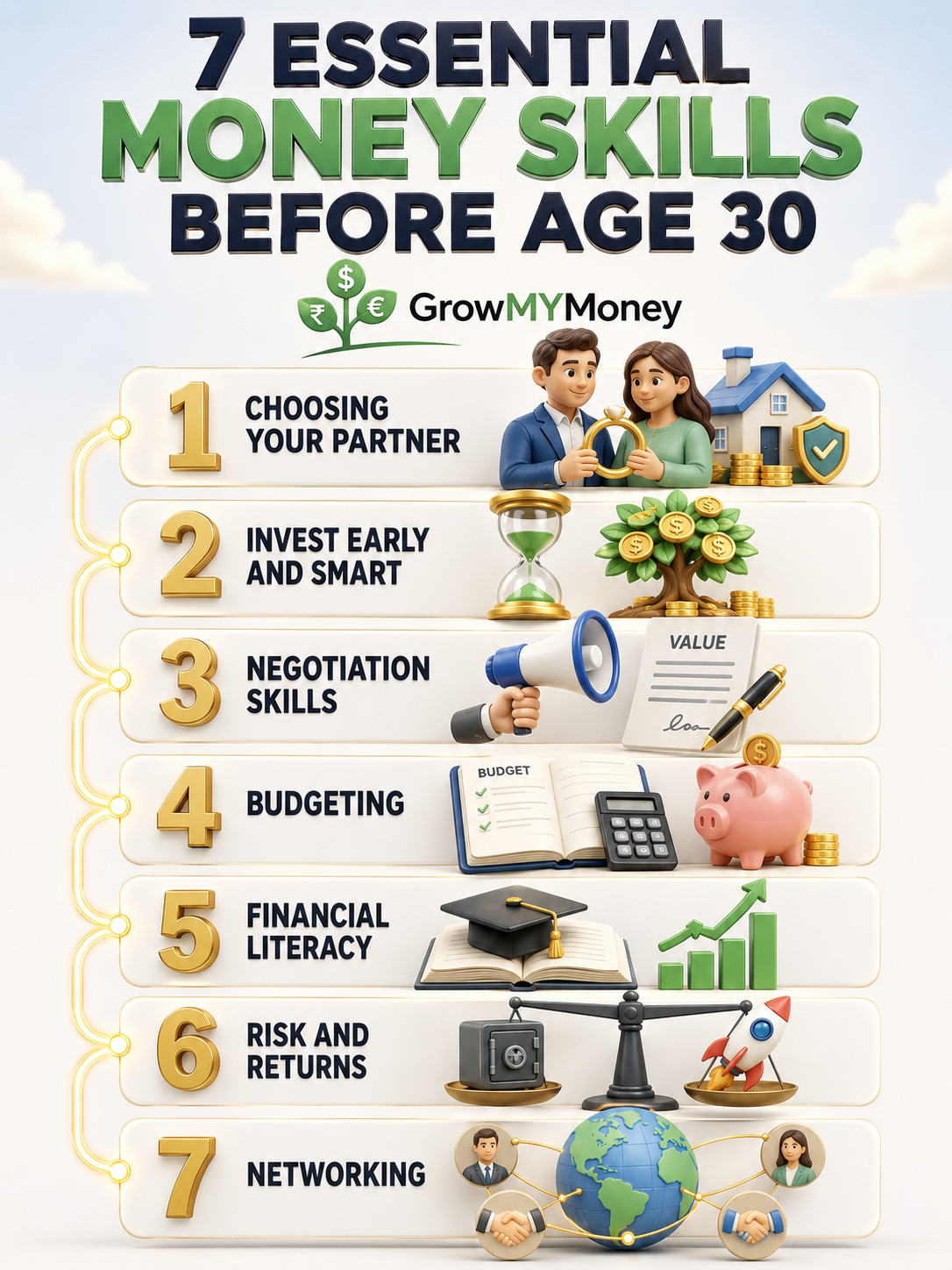
1. The Financial Impact of Partnership
One of the most overlooked aspects of personal finance is the influence of your life partner. Whether you are married or in a committed long-term relationship, your partner acts as either an engine for your wealth or a significant drag on your financial progress. Financial compatibility is not just about sharing the rent; it is about shared values.
Before making a life-long commitment, engage in transparent conversations regarding debt, spending triggers, and future ambitions. A partner who prioritizes long-term asset accumulation over instant gratification can help you reach your goals exponentially faster. Conversely, conflicting views on money management can lead to stress, arguments, and financial setbacks that take years to repair.
2. Harnessing the Mathematical Magic of Compounding
If there is a single “holy grail” in the world of finance, it is compound interest. Albert Einstein famously referred to it as the eighth wonder of the world, and for good reason. When you invest early, your capital works for you, and the interest earned on that capital begins to earn interest itself.
Many young professionals delay investing, believing they need a massive lump sum to get started. This is a detrimental myth. The benefit of starting at age 22, even with modest monthly contributions, far outweighs the benefits of starting at 32 with a larger investment. By making investing a non-negotiable habit—perhaps through automated deposits—you allow time to do the heavy lifting for you.
3. The Art of Professional Negotiation
In the workforce, you are rarely paid what you are “worth”; you are paid what you negotiate. From your very first job offer to your annual performance reviews, your ability to articulate your value is a skill that directly determines your lifetime earnings. Failing to advocate for a competitive salary early in your career creates a ‘gap’ that can cost you hundreds of thousands of dollars over the long term.
Effective negotiation requires data, confidence, and a clear understanding of market standards. Furthermore, this skill extends beyond your paycheck. Whether you are buying a vehicle or securing a contract for a business venture, knowing how to approach a deal with firmness and fairness will keep more money in your pocket—money that can be redirected into your investment portfolio.
4. Disciplined Budgeting: Tracking the Flow
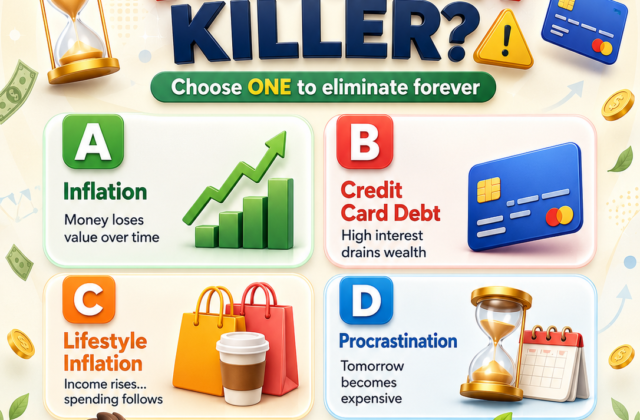
“Budgeting” often gets a bad reputation as being restrictive, but it is actually the opposite: budgeting is the tool that gives you permission to spend without guilt. If you do not know where your money is going, it will inevitably drift toward lifestyle inflation. As your salary increases in your late twenties, it is dangerously easy to let your expenses rise proportionally.
A proven strategy for managing cash flow is the 50/30/20 rule. Allocate 50% of your income toward essential needs (rent, utilities, groceries), 30% toward wants (socializing, entertainment), and a strict 20% toward savings and investments. By automating your tracking using modern financial technology, you remove the emotional labor from the process and ensure that your priorities are always reflected in your bank account.
5. Literacy: Understanding Macro-Economic Forces
To master your personal finances, you must understand the environment in which your money exists. Inflation, for example, is a silent tax that erodes the value of cash kept in traditional, low-yield savings accounts. To build lasting wealth, you must understand how to combat this devaluation.
True financial literacy involves studying asset classes, understanding how fiscal policies impact your investments, and learning to filter out market noise. When you understand the “why” behind economic movements, you are less likely to panic during market volatility or fall prey to get-rich-quick schemes that promise unrealistic returns.
6. Navigating Risk and Return
Every investment carries a degree of risk. A common mistake among young investors is either being too fearful of any loss—leading to stagnant cash savings—or taking on reckless risk in search of “moonshot” profits. A mature financial strategy involves understanding the relationship between risk and return.
Your portfolio should reflect your age and time horizon. While younger investors can afford to be more aggressive with a portion of their assets, they should balance this with stable, income-generating vehicles. Diversification is your primary hedge against disaster. By spreading your assets across different sectors, geographies, and risk profiles, you create a structure that can weather economic storms while still capturing long-term growth.
7. Networking: Investing in Social Capital
The adage “your network is your net worth” holds significant weight. The people you spend time with dictate your habits, your beliefs, and your opportunities. If your inner circle only discusses consumption, you will likely fall into the trap of status-driven spending. If, however, you surround yourself with mentors, entrepreneurs, and forward-thinking peers, your mindset will shift toward growth.
Professional networking is not about using people; it is about building mutually beneficial relationships. When you contribute value to others, you open doors to unique investment opportunities, professional growth, and knowledge that simply isn’t available in textbooks. Build your tribe carefully.
Taking Ownership of Your Financial Destiny
Turning thirty is not a deadline for having everything figured out, but it is an ideal milestone for having established a trajectory. The skills discussed here—negotiating effectively, investing early, maintaining a strict budget, and fostering a growth-oriented network—are the pillars of financial freedom. They are not innate talents; they are muscles you develop through consistent, deliberate practice.
As you navigate your twenties, remember that you are building more than just a bank account. You are building the foundation for your future life. Whether your goal is to achieve early retirement, start a business, or simply enjoy the peace of mind that comes with security, these skills are your roadmap. Start today, stay the course, and watch as your small, consistent actions compound into a life of genuine abundance.
Frequently Asked Questions
Is it really necessary to start investing in my early 20s?
Yes. Due to the compounding nature of interest, money invested at 22 has significantly more “runway” to multiply than money invested later. Even small amounts can grow substantially over several decades.
How do I prevent ‘lifestyle creep’?
The most effective way is to maintain a fixed percentage for savings. Regardless of your income level, commit to saving at least 20% of your earnings. By treating savings as a non-negotiable “bill,” you ensure your lifestyle remains grounded.
How can I learn about macro-economics without a finance degree?
There are countless accessible resources, including reputable books on investing, high-quality podcasts, and educational platforms dedicated to personal finance. The goal is to build a basic understanding of how money works globally so you can make informed decisions.
Does a partner’s financial habit really affect mine?
Absolutely. Financial tension is one of the primary causes of stress in long-term relationships. Aligning on major goals and spending philosophies early on will prevent significant friction as you build your future together.
How do I know what my ‘risk tolerance’ is?
Risk tolerance is a combination of your capacity for risk (how much you can afford to lose) and your emotional tolerance (how you react to market fluctuations). A balanced portfolio generally starts with a core of lower-risk assets, allowing you to gradually increase exposure to higher-growth assets as your knowledge and net worth grow.