
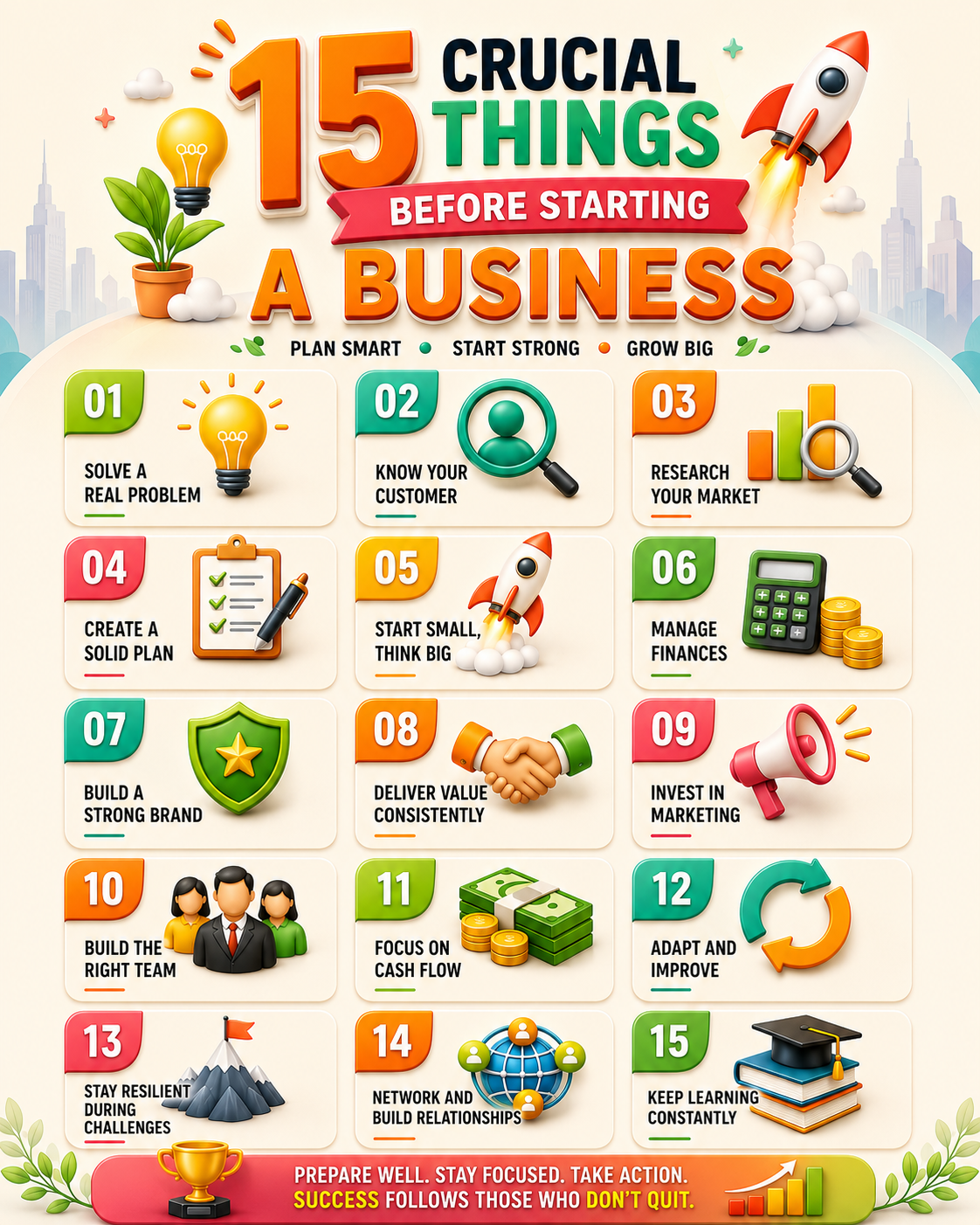
Embarking on the entrepreneurial journey is one of the most exhilarating professional leaps an individual can take. While the promise of autonomy, financial freedom, and the chance to bring an innovative vision to life is incredibly compelling, the path is rarely straightforward. Many founders enter the marketplace fueled by passion alone, only to find that enthusiasm is not a replacement for a sound strategic foundation.
Success in the modern economy is rarely accidental. It is the result of meticulous preparation, calculated risk-taking, and an unwavering commitment to operational excellence. Whether you are launching a digital storefront, a local service-based business, or a high-growth tech startup, the principles of longevity remain largely the same. Below, we explore 15 critical considerations that every aspiring entrepreneur must master before opening their doors.
1. Solve a Tangible Problem
At the heart of every sustainable business lies a clear, identifiable solution to a real-world struggle. A common pitfall is falling in love with a product idea without verifying that it serves a genuine market need. A viable business must do one of three things: eliminate friction, save the customer time or money, or significantly enhance an existing experience. If your value proposition cannot be articulated in a single, compelling sentence, you may need to reconsider your core offering.
2. Cultivate a Deep Understanding of Your Audience
You cannot effectively sell to someone you do not understand. Beyond basic demographic data like age and location, successful founders develop detailed customer personas. What are their primary pain points? Where do they hang out online? What keeps them up at night? When you master the psychology of your customer, your marketing becomes less about “selling” and more about providing a needed bridge between their current struggle and your solution.
3. Execute Rigorous Market Intelligence
Never rely on intuition alone. Comprehensive market research involves investigating the competitive landscape to identify where your rivals are falling short. Are they slow to innovate? Is their customer service lacking? Is their pricing model inaccessible? Use these gaps as your entry point into the market. By validating your business model against industry trends and consumer behavior, you significantly mitigate the risk of entering a saturated or dying niche.
4. Design a Strategic Roadmap
A business plan is not just a document for investors; it is a tactical manual for the business owner. It should outline your operational structure, your revenue streams, and your long-term goals. While flexibility is crucial in the early stages, having a roadmap prevents you from drifting off course when obstacles arise. A well-constructed plan keeps your team aligned and ensures every action you take moves the needle toward your stated objectives.
5. Think Big, Start Lean
The “lean startup” methodology is a gold standard for a reason. Instead of dumping your life savings into a perfect product launch, consider the Minimal Viable Product (MVP) approach. This allows you to test your concept, gather authentic feedback from early adopters, and refine your offering with minimal financial exposure. You want to scale based on proven traction, not on speculative projections.
6. Master the Art of Financial Stewardship
Cash flow is the lifeblood of any enterprise. Many profitable companies fail simply because they run out of liquid capital due to poor expense tracking or delayed payments. Develop a habit of stringent budgeting, separate your personal and business finances, and maintain an emergency reserve to act as a buffer against unforeseen market volatility or operational emergencies.
7. Forge a Distinctive Brand Identity
A brand is much more than a logo or a color palette; it is the emotional resonance you create with your customer base. It encompasses your business name, your tone of voice, and the reliability of your service. Consistency is key here. Every touchpoint, from your social media posts to your email support, should reflect the same core values. A coherent brand builds trust, and trust is the precursor to long-term customer loyalty.
8. Prioritize Consistent Value Delivery
In a world of infinite choices, your competitive edge is the consistent value you deliver. Never let quality slide, even as you grow. If your product is excellent today, it must be even better tomorrow. Excellent customer service, proactive communication, and an ease of doing business will turn first-time buyers into lifelong brand advocates who do your marketing for you through word-of-mouth.
9. Deploy Integrated Marketing Tactics
You may have the greatest product in the world, but if no one knows it exists, your business will fail. A balanced marketing strategy leverages multiple channels: SEO to capture organic search traffic, content marketing to build authority, and targeted social media campaigns to engage your community. Don’t rely on a single channel; diversify your efforts to ensure a steady stream of leads.
10. Curate a High-Performing Team
As you scale, you will eventually reach a point where you cannot wear every hat yourself. The people you hire—or the freelancers you partner with—will define the company culture. Look for individuals who are not only skilled but are also aligned with your company’s vision. A team that collaborates effectively can solve problems faster and innovate more creatively than any individual ever could.
11. Obsess Over Cash Flow Cycles
It is important to reiterate that profit on paper is not the same as cash in the bank. You must understand your cash conversion cycle: how long it takes to pay for inventory or services compared to how long it takes to collect revenue. Regularly monitoring your income vs. expenses ensures that you aren’t caught in a liquidity trap that threatens your solvency during expansion phases.
12. Embrace Agility and Constant Evolution
The market is a living organism that evolves based on new technology and shifting consumer needs. If you are rigid, you will eventually become obsolete. Cultivate a culture of continuous improvement. Analyze your performance data, listen to what your customers are telling you, and be willing to pivot if the evidence dictates that a change in direction is necessary for survival.
13. Build Psychological Resilience
The entrepreneurial path is paved with rejection, technical failures, and unexpected hurdles. Resilience is not the absence of stress, but the ability to process setbacks and keep moving forward. Cultivate a mindset that views failure as a data point rather than a defeat. The founders who succeed are the ones who stay in the game long enough to find their breakthrough.
14. Expand Your Professional Network
Entrepreneurship can be a lonely endeavor, but it doesn’t have to be. Your network is a valuable source of mentorship, partnership, and referrals. Attend industry events, participate in digital forums, and actively seek out peers who have walked the path before you. Often, the solution to a complex business problem is just one introduction away.
15. Commit to Lifelong Learning
The moment you think you know everything is the moment your business begins to stagnate. The most successful founders are voracious learners who stay updated on technological advancements, shifting economic landscapes, and emerging marketing strategies. Whether it’s through formal education, books, or coaching, keeping your skills sharp keeps your business relevant.
Final Reflections
Launching a business is a monumental undertaking that demands discipline, strategic foresight, and an unshakable commitment to your core mission. By grounding your efforts in these 15 pillars, you are doing more than just starting a company; you are building an engine for long-term growth and sustainable impact. Remember that greatness is not an overnight occurrence—it is the cumulative effect of consistent, smart decisions made day after day, year after year. Start today, stay the course, and watch your vision become a reality.