Have you ever reached the end of the month, checked your bank balance, and felt that sinking sensation of confusion? You work hard, you earn a salary, yet the money seems to evaporate into thin air. You aren’t alone. For many individuals, financial instability isn’t caused by a single catastrophic event, but by a collection of silent, microscopic habits that gradually dismantle your net worth.
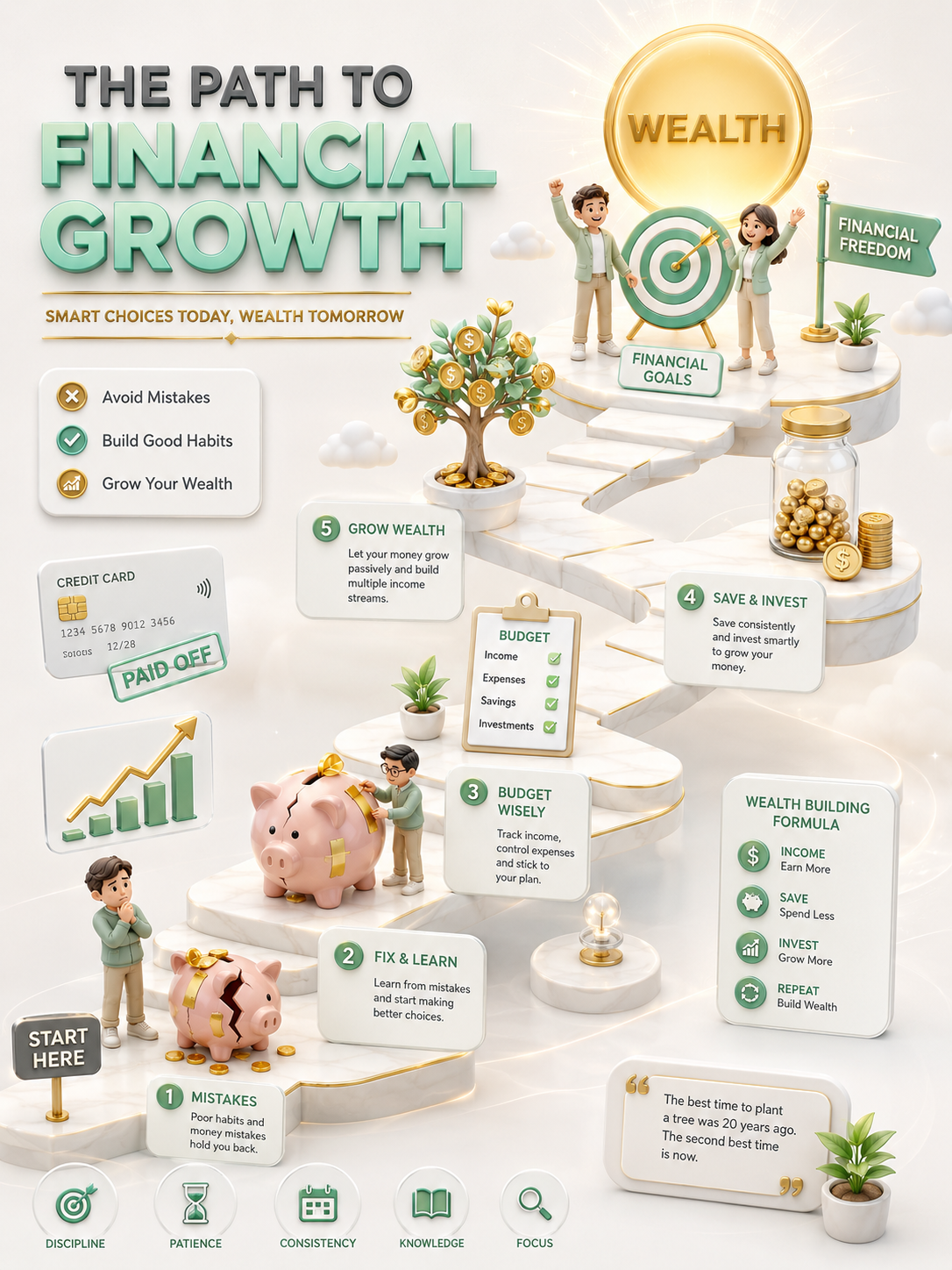
Wealth accumulation is less about how much income you generate and more about how much of that income you successfully retain and grow. To secure your future, you must stop viewing your finances as a passive activity and start treating them with the strategic precision of a business. Below, we explore the 15 most common money mistakes that are quietly sabotaging your financial success and provide actionable strategies to reverse the damage.
Part 1: The Foundations of Financial Planning
Managing money without a strategy is akin to steering a ship blindfolded. If you don’t dictate where your money goes, it will inevitably find its way to places you didn’t authorize.
1. Navigating Life Without a Budget
The most pervasive error is failing to maintain a formal budget. A budget is frequently misunderstood as a restriction, but in reality, it is a roadmap. It grants you the clarity to prioritize your spending on the things that truly provide value while highlighting the areas where you are bleeding cash unnecessarily.
2. The Trap of Chronic Overspending
It is a fundamental law of finance: if your outgoings exceed your incomings, your downfall is certain. In an era of digital wallets and one-click purchasing, it has never been easier to spend more than you earn. Breaking this cycle requires a radical shift toward delayed gratification.
3. Operating Without an Emergency Reserve
Life is inherently volatile. Unexpected events—an urgent car repair, a sudden medical expense, or a brief period of unemployment—are inevitable. If you lack an emergency fund, these common life occurrences force you to rely on high-interest credit cards or loans, trapping you in a cycle of debt that can take years to escape.
Part 2: The Silent Wealth Killers
Some financial errors act like a slow leak in a tire; they don’t cause an immediate explosion, but they ensure you never reach your destination.
4. Allowing High-Interest Debt to Accumulate
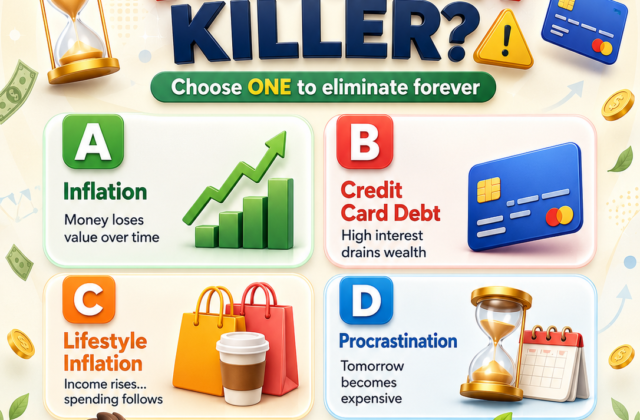
Carrying credit card balances is perhaps the fastest way to destroy your financial future. The exorbitant interest rates effectively act as a negative compounding machine, eroding your wealth before you even have a chance to invest it.
5. Ignoring “Micro-Leaks”
We often focus on big-ticket items while ignoring the “latte factor.” Small, recurring expenses like unused streaming subscriptions, frequent dining out, or daily premium coffee orders seem negligible individually. When calculated annually, however, these small leaks often total thousands of dollars that could have been invested in your future.
6. Neglecting the “Pay Yourself First” Strategy
If you wait until the end of the month to save what remains of your paycheck, you will find that there is rarely anything left. You must treat your savings as a non-negotiable “bill” that you pay to yourself the moment your income arrives.
Part 3: Mindset and Behavioral Traps
Often, the greatest barrier to wealth is not the market, but the person making the financial decisions. Your psychological approach to money defines your long-term outcome.
7. Failing to Define Clear Financial Objectives
Without specific, time-bound targets, it is impossible to measure progress. Whether you are aiming for a down payment, an early retirement, or a debt-free lifestyle, your money needs a job to do. Vague intentions rarely result in tangible results.
8. The Perils of Lifestyle Inflation
As your career progresses and your salary rises, there is a natural human inclination to upgrade your standard of living—a larger apartment, a newer car, or more expensive vacations. If your expenses inflate in direct proportion to your income, you remain on the “hedonic treadmill,” effectively nullifying any gains in your earning potential.
9. Underestimating the Necessity of Investing
Savings accounts are essential for liquidity, but they are not the engine of wealth. If you allow your money to sit stagnant in a low-interest checking account, inflation will gradually decrease its purchasing power. Investing in diversified assets is the only way to harness the power of compound interest.
10. Excessive Caution and the Cash-Only Fallacy
While debt avoidance is virtuous, being strictly cash-only can result in missed opportunities. Modern financial tools offer rewards, credit history building, and automated tracking that can optimize your financial efficiency if used with discipline.
Part 4: Emotional and Social Influences
Our financial decisions are rarely purely logical; they are deeply tied to our emotions and our social environment.
11. Succumbing to Emotional Spending
Many people treat shopping as a form of therapy. When you spend money to alleviate stress or boost your mood, you are trading long-term security for a fleeting dopamine hit. Recognizing the emotional triggers behind your spending is vital to regaining control.
12. Being Influenced by the Wrong Crowd
Humans are social creatures who mirror the habits of their peers. If your inner circle prioritizes luxury consumption and status-seeking, you are statistically more likely to adopt those same habits. Surrounding yourself with people who value financial responsibility can transform your own outlook.
13. Falling for Trends and “Get-Rich-Quick” Hype
The pursuit of shortcuts often leads to losses. Chasing the latest speculative investment trend or high-risk scheme rather than focusing on proven, long-term wealth-building strategies is a common path to financial regret.
Part 5: The Power of Consistency
The final stage of wealth management requires persistence and a commitment to the long game.
14. Neglecting Regular Progress Reviews
Financial management is not a task you complete once and abandon. You must audit your accounts, review your investments, and adjust your budget periodically to ensure you remain on track toward your long-term goals.
15. Quitting Too Early
Building wealth is a marathon, not a sprint. The most significant gains from compound interest and consistent habits occur in the later stages of the journey. Many individuals give up just before the momentum of their efforts begins to pay off in a meaningful way.
Conclusion: Start Your Transformation Today
Financial independence is not granted to the lucky; it is constructed by the intentional. By identifying and eliminating these 15 destructive mistakes, you take back control of your financial narrative. You do not need to overhaul your life overnight—start by automating your savings, cutting one unnecessary subscription, and establishing a clear goal. The small decisions you make today are the seeds of your future financial freedom. Begin your journey toward prosperity now, and ensure that every dollar you earn is working toward your ultimate success.
Frequently Asked Questions
- What are the most common money mistakes that destroy savings? The most frequent errors include lack of budgeting, uncontrolled spending, failing to invest, and ignoring small, recurring costs.
- Why is having an emergency fund important? It acts as a financial shock absorber, preventing you from needing high-interest loans when unexpected life expenses arise.
- How does high-interest debt affect my future? High-interest debt consumes your capital through interest payments, preventing you from putting that same money toward investments or savings.
- What is lifestyle inflation? It is the tendency to increase your living expenses as your income grows, which prevents you from saving or investing the surplus income.
- What does ‘pay yourself first’ mean? It means prioritizing savings by moving money into an investment or savings account immediately upon receiving your income, before paying other bills.
- Why is emotional spending dangerous? It creates a cycle where spending is used to manage feelings, often leading to impulsive purchases that do not align with your long-term financial goals.
- Do small spending leaks really matter? Yes, small, daily, or monthly expenses compound significantly over years and can represent thousands of dollars in lost wealth.
- Should I avoid all credit? Not necessarily; used responsibly, credit can help build a credit score, but it should never be used to fund a lifestyle you cannot afford.
- How often should I check my budget? Reviewing your financial status monthly allows you to course-correct before small issues become systemic problems.
- Why is chasing trends bad? Financial fads often prioritize speed over substance, leading to high-risk situations that frequently result in losses rather than steady growth.
- Can my social circle affect my net worth? Yes, your environment significantly influences your spending habits; being around financially conscious people can reinforce healthy habits.
- Why is investing critical? Without investing, your money loses value due to inflation; investing allows your capital to grow over time through compound returns.
- What happens if I have no financial goals? You risk drifting through your financial life, lacking the motivation to save or the direction to make smart spending decisions.
- Why is consistency key? Financial success is the result of compounding, which only happens when you maintain your strategy over a long period.
- How can I start protecting my future today? By acknowledging your current mistakes, setting a budget, and committing to small, consistent, daily financial improvements.