
Imagine a sudden, unexpected deposit hitting your bank account: $10 Million! 🤩 The clock is ticking, and you have until midnight to decide how to allocate every single rupee. ⏳ Where does your mind immediately wander? Are you picturing a gleaming new car 🚗, a dream vacation ✈️, or perhaps a confident transfer into the world of mutual funds? 📈
This playful thought experiment is more than just a fun mental diversion; it’s a profound diagnostic tool for your personal financial compass. 🧭 Money, especially in a sudden influx, rarely transforms your core personality. Instead, it acts as a powerful amplifier 📢, magnifying your underlying values, deeply held fears, and your current life stage. Understanding your instinctive reaction to a windfall is a direct window into your readiness for genuine, lasting financial freedom. 🛡️
What Your $10 Million Windfall Choice Reveals About Your Financial DNA 🧬
Your immediate inclination when faced with an unexpected ₹10 Lakh sum speaks volumes about your primary financial drivers. It might point towards a desire for an immediate lifestyle upgrade (like a car), a drive for passive wealth generation (via mutual funds), a deep-seated need for economic security (perhaps through gold 🥇), an entrepreneurial spirit aiming for income acceleration (a new business venture 💼), a yearning for foundational stability (real estate 🏡), or a pursuit of enriching experiences that build lasting memories (travel 🌍).
The beauty of this exercise lies in self-awareness. By understanding your natural leanings, you can begin to construct a financial strategy that harmonizes immediate gratification with long-term prosperity. At SmartSave.top, we empower you to transform fleeting opportunities into enduring financial security. Let’s delve into the six distinct personas that emerge when capital is deployed, and explore how our insights can guide your journey. 🚀
The Six Windfall Personas: Decoding Your Inner Financial Instincts 🧭
Each individual perceives and interacts with money through a unique lens, shaped by a tapestry of past experiences, current aspirations, and future dreams. When presented with a substantial lump sum, people tend to gravitate towards one of six prevalent behavioral patterns. 📊
It’s crucial to understand that no single choice is inherently superior or flawed. ⚖️ However, recognizing your default response offers invaluable insight, enabling you to strike a wise balance between fulfilling your desires today and cultivating substantial wealth for tomorrow. 💎
- 🚗 Option A: The Luxury Car Enthusiast (Lifestyle Focus): If your mind immediately goes to a high-end vehicle, you likely place a high value on status, personal comfort, and the daily conveniences that a premium car offers. You enjoy savoring the rewards of your hard work in the present moment.
- 📈 Option B: The Wealth Creator (Mutual Funds & Investments): For those drawn to mutual funds, your priority is passive compounding and future independence. You champion long-term asset growth, placing it above the allure of short-term indulgences.
- 🥇 Option C: The Guardian of Safety (Gold & Tangible Assets): Choosing gold signifies a strong desire for protection against economic volatility. You value tangible assets and prioritize downside security, seeking a hedge against uncertainty.
- 💼 Option D: The Entrepreneurial Spirit (Business & Startup): If you envision launching or investing in a business, you possess an innate entrepreneurial drive. You are willing to embrace calculated risks in pursuit of active revenue scaling and income acceleration.
- 🏡 Option E: The Foundation Builder (Real Estate): A preference for real estate indicates a desire for enduring stability. You value putting down permanent roots, seeking physical security, and building long-term, albeit illiquid, equity.
- ✈️ Option F: The Experience Seeker (Travel & Memories): Prioritizing travel and experiences suggests a focus on personal growth, expanding your global perspective, and accumulating life-enriching memories over material possessions.
Reflect for a moment: which of these options immediately resonated with you? Identifying that initial, gut-level impulse provides profound self-awareness regarding your financial habits and priorities. 🧠
✨ Key Insight: Money as an Amplifier 🌟
It’s a fundamental truth: money doesn’t change who you are; it amplifies your existing traits and tendencies. If you struggle with financial discipline when managing ₹1,000, possessing ₹1 Lakh will simply magnify those same spending leaks on a grander scale. 🌊 Understanding this amplification effect is the first step towards mastery.
⚖️ The Great Debate: Lifestyle Upgrades Versus Asset Compounding 📊
At the heart of personal finance lies the eternal tension between immediate gratification and the power of future compounding. 🥊 Spending ₹10 Lakhs on a depreciating asset, such as a car, offers instant satisfaction. However, its monetary value steadily declines year after year. 📉
Conversely, allocating that same sum to well-chosen index funds or other productive investment vehicles harnesses the immense power of time. ⏳ Over a decade or two, this initial capital can blossom into a formidable financial safety net, providing security and opportunity. 🏰
A 10-Year Trajectory: Visualizing Your ₹10 Lakh Windfall Decision 📈
Let’s visualize the potential long-term impact of different allocation choices:
| Windfall Choice | Immediate Result | 10-Year Value Trend (Estimated) | Primary Benefit |
|---|---|---|---|
| Luxury Car 🏎️ | New car, immediate prestige, driving pleasure | Depreciates significantly (e.g., to ₹2–3 Lakhs) 📉 | Comfort, status, daily convenience |
| Mutual Funds 📈 | Acquisition of paper assets, portfolio growth | Grows substantially (e.g., to ₹25–30+ Lakhs) 🚀 (assuming average market returns) | Compounded passive wealth, financial independence |
| Physical Gold 🥇 | Tangible asset, hedge against inflation/crisis | Maintains purchasing power, keeps pace with inflation 🛡️ | Capital preservation, security during economic downturns |
| Travel & Experiences ✈️ | Unforgettable trips, new perspectives, personal growth | Zero direct cash value (but immense ‘memory dividends’) 📖 | Personal development, cultural enrichment, lasting memories |
| Business/Startup 💼 | Investment in a venture, potential for high returns | Highly variable; potential for exponential growth or significant loss 🎢 | Active income generation, wealth creation, entrepreneurial fulfillment |
| Real Estate 🏡 | Acquisition of property, tangible asset | Potential for appreciation, rental income, illiquid equity 🏦 | Stability, long-term asset growth, potential passive income |
Seeing the long-term financial implications laid out so clearly can significantly influence your decision-making process, helping you strike a better balance between your present desires and future aspirations. Remember, you don’t have to choose an extreme! 🎯
💡 Smart Tip: Embrace the 80/20 Rule for Windfalls! 🎉
A practical approach to managing unexpected capital is the 80/20 rule. Allocate 80% of the windfall towards robust investment vehicles, emergency funds, or debt reduction. Then, guilt-free, spend the remaining 20% on enriching experiences or personal rewards. This strategy balances future security with present enjoyment. ✨
🛠️ Strategically Deploying Unexpected Capital in the Real World 🌍
When real-life windfalls materialize – perhaps through annual bonuses, inheritances, property sales, or business exits – the temptation for emotional spending can quickly erode your gains. 🌊 A clear, pre-defined execution plan is your best defense against impulsive decisions. 📋
At SmartSave.top, we advocate for a structured pipeline to maximize the impact of any unexpected capital. Protecting your financial well-being hinges on methodical execution and disciplined decision-making. ⚙️
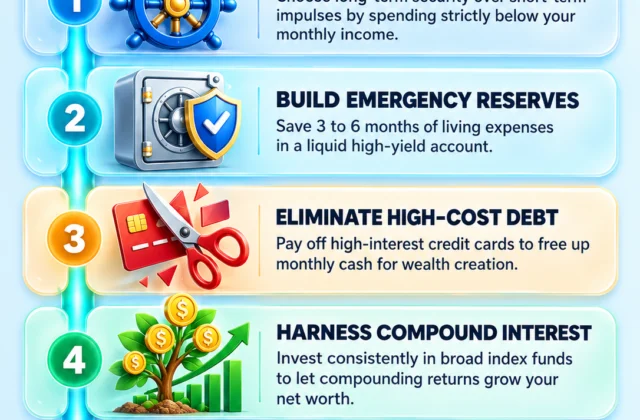
- 🛑 Step 1: Implement a Cooling-Off Buffer
Park the entire lump sum in a high-yield, liquid savings account for a minimum of 30 days. This buffer period allows emotions to subside, fostering rational decision-making for significant purchases or investments. - 💳 Step 2: Eradicate High-Interest Debt
Prioritize paying off toxic debts, such as credit card balances or high-interest personal loans. This offers a guaranteed, risk-free return equivalent to the interest rate saved, immediately boosting your financial health. - 🏰 Step 3: Fortify Your Emergency Fund
Ensure you have a robust emergency reserve covering at least 12 months of living expenses. This provides unparalleled confidence and flexibility to navigate life’s inevitable changes and challenges. - 🌐 Step 4: Employ Dollar-Cost Averaging (DCA) into Growth Assets
Spread your remaining investment capital across several months into diversified index funds or equity portfolios. DCA mitigates the risk of investing the entire sum at a market peak, smoothing out volatility.
Adopting a systematic approach effectively removes emotional stress from the financial equation. It enables you to build genuine wealth quietly and steadily, all while continuing to enjoy your life. 🕊️
🧠 Expert Perspective: The Value of Experiential Dividends 💖
While purchases like travel offer invaluable ‘memory dividends’ and significant personal growth, they should ideally be funded by the cash flow generated from your existing assets, rather than by depleting your core capital. This ensures your primary wealth-building engine remains intact and continues to grow. 🌳
📖 Mini Summary: Aligning Your Actions with Your Aspirations 🎯
This money experiment illuminates your deepest financial priorities. The ultimate goal is to structure your budget so that your growth assets automatically contribute to funding your desired lifestyle choices over time.
📝 Key Takeaways from the Windfall Experiment 📊
- 🪞 Money Amplifies Priorities: Capital doesn’t change your fundamental nature; it magnifies your existing habits and values.
- ⚖️ Balance Wealth and Living: Integrate wealth-building vehicles (like mutual funds or businesses) with meaningful life experiences (like travel) through a structured, balanced approach.
- 📉 Be Wary of Depreciating Assets: Avoid allocating substantial lump sums to assets that rapidly lose market value, such as high-end cars, without careful consideration of their long-term financial impact.
- 🧊 Utilize a Cooling-Off Buffer: Always allow a 30-day waiting period before deploying sudden lump sums to bypass emotional impulses and ensure rational decision-making.
- 🚀 Fund Your Lifestyle Through Assets: Build an income-generating investment portfolio first. The dividends and cash flow generated by these assets should then sustainably fund your lifestyle choices.
🏁 Final Thoughts: Align Your Capital with Your Life’s Grand Purpose 💫
Achieving financial freedom isn’t about austere deprivation or never enjoying your hard-earned money. It’s about deploying your resources with intention and purpose, ensuring your capital works tirelessly for you, 24/7. 💎
Whether your inherent inclination is to invest in robust mutual funds, launch an ambitious business venture, or explore the wonders of the world through travel, the key lies in constructing a diversified portfolio that sustainably supports these aspirations. Transforming sudden capital into enduring assets grants you invaluable options and lasting security throughout your life. 🌲
Take a proactive step today to evaluate your personal financial priorities and chart a course meticulously tailored to your unique life goals. Explore the actionable guides and resources available at SmartSave.top to learn how to transform every rupee into a dedicated, lifelong contributor to your portfolio’s growth! 🚀👇
Frequently Asked Questions (FAQs)
❓ What does your choice in a ₹10 Lakh windfall reveal about your finances?
Your immediate choice in a sudden ₹10 Lakh windfall reflects your primary financial priority. It could highlight a desire for lifestyle upgrades (like a car), a focus on passive wealth creation (mutual funds), a need for economic safety (gold), an ambition for income acceleration (business), a preference for foundational stability (real estate), or a drive for experiential growth (travel). Essentially, sudden money amplifies your underlying values rather than changing them.
❓ What does choosing a luxury car with a windfall signify?
Opting for a luxury car signifies a strong lifestyle focus. It indicates that you value personal comfort, daily convenience, and immediate social prestige. However, it also means committing a substantial sum to a depreciating asset.
❓ Why do some people immediately invest a windfall into mutual funds?
Individuals who gravitate towards mutual funds exhibit a wealth-creation persona. This choice underscores a prioritization of passive compounding, future financial independence, and long-term asset growth over immediate, short-term gratification.
❓ What is the significance of choosing gold during a financial windfall?
Allocating windfall capital to gold signals a safety-oriented and hedging mindset. It reveals a preference for risk aversion, a desire for downside protection against economic uncertainty, and a value placed on tangible security.
❓ How does investing a windfall into a business reflect your money persona?
Using sudden funds to launch or invest in a business demonstrates an active income growth mindset. This choice highlights an entrepreneurial spirit and a significant willingness to accept calculated risks in pursuit of potentially higher returns.
❓ Why is real estate chosen as a priority during a windfall?
Selecting real estate as a windfall allocation indicates a stability-focused persona. It shows that establishing permanent roots, ensuring physical security, and building long-term, albeit illiquid, equity are your primary financial drivers.
❓ What does spending windfall money on travel reveal about your values?
Prioritizing travel with windfall money signifies a focus on experiential wealth. It suggests that personal growth, broadening your global perspective, and accumulating lasting memories are valued more highly than acquiring physical material assets.
❓ What is the 80/20 rule for managing a sudden financial windfall?
The 80/20 rule is a balanced approach that suggests investing 80% of a windfall directly into growth assets, emergency reserves, or debt reduction. The remaining 20% can then be spent on personal rewards or experiences without guilt.
❓ Why is a 30-day cooling-off buffer recommended before spending sudden capital?
Parking sudden cash in a high-yield liquid account for 30 days serves to mitigate emotional impulses. This allows for rational, long-term decision-making and prevents regrettable impulse purchases.
❓ How does money act as an amplifier of personal habits?
Money amplifies your existing money habits and priorities rather than fundamentally changing your personality. For instance, uncontrolled spending habits at a lower income level simply scale up to larger spending leaks when a windfall is received.
❓ Why should high-cost debt be cleared before investing a windfall?
Eliminating high-interest debt offers a guaranteed, risk-free return equivalent to the interest rate you avoid paying. This immediately protects your monthly cash flow and improves your overall financial health.
❓ How do memory dividends from travel differ from traditional asset returns?
Travel yields no direct financial balance growth but provides lifelong psychological dividends and personal enrichment. Traditional assets, on the other hand, offer financial compounding and wealth accumulation.
❓ What is the best way to fund a luxury lifestyle sustainably?
The most sustainable strategy involves first investing your core capital into income-generating assets. Subsequently, the dividends and cash flow generated by these assets can be used to fund your luxury choices.
❓ Why is dollar-cost averaging recommended for investing a large lump sum?
Spreading a lump-sum investment across several months using dollar-cost averaging helps to reduce the psychological risk of investing your entire amount right before a potential short-term market downturn.
❓ How does SmartSave.top recommend approaching financial priority alignment?
SmartSave.top recommends identifying your dominant financial driver, establishing a robust liquid safety net, and systematically building an asset portfolio designed to naturally fund your lifestyle aspirations over time.