The quest for financial freedom has evolved significantly as we move deeper into 2026. The traditional “9-to-5” career model is increasingly being supplemented—or even replaced—by sophisticated passive income systems. In today’s digital-first global economy, building wealth while you sleep is no longer a pipe dream reserved for the ultra-wealthy; it is a tangible goal achievable through strategic planning and the leverage of modern technology.
Understanding the Essence of Passive Income
At its core, passive income refers to earnings derived from ventures that require minimal ongoing effort once the foundational work is complete. While no business or investment is truly ‘set-it-and-forget-it,’ the objective is to create systems that decouple your income from your time. By focusing on scalability and automation, you can transition from trading hours for dollars to building assets that work for you around the clock.
The Economic Imperative for Diversified Income
In 2026, the volatility of global markets, coupled with persistent inflation, has made relying on a single stream of income a high-risk strategy. Establishing multiple, non-correlated income streams provides a vital hedge against economic uncertainty. Whether it is through capital markets, digital properties, or entrepreneurial ventures, building a diversified portfolio ensures that your financial stability is resilient.
1. The Power of Dividend Investing
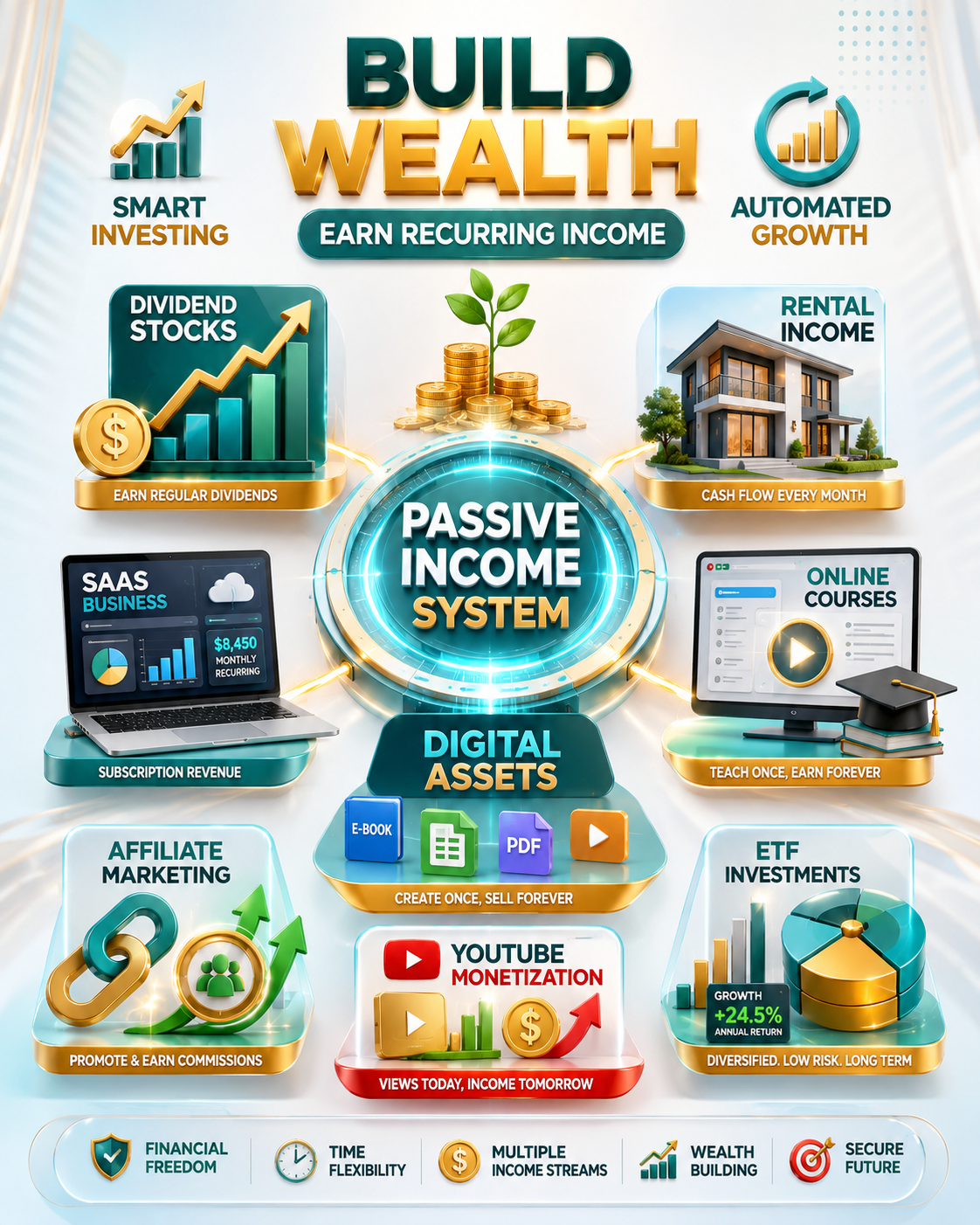
Dividend-paying stocks remain the gold standard for long-term wealth accumulation. By investing in established companies that distribute a portion of their profits back to shareholders, you create a reliable cash flow. Over time, the magic of compound interest—especially when dividends are automatically reinvested—can transform a modest portfolio into a significant retirement fund. For those seeking lower volatility, Dividend ETFs offer a broader exposure to stable, income-generating companies.
2. Real Estate: Physical and Digital REITs
Real estate has been the historical cornerstone of wealth creation. While buying physical property involves significant capital and maintenance, Real Estate Investment Trusts (REITs) have democratized this asset class. REITs allow you to invest in large-scale commercial and residential properties through the stock market, providing the benefits of rental income without the headache of fixing leaky faucets or managing tenants. It is an accessible entry point into property wealth for any investor.
3. The Digital Product Revolution
The creator economy is booming. Digital products—such as e-books, specialized templates, stock photography, and AI-driven prompt libraries—represent one of the most scalable business models today. Once you invest the time to create a high-quality digital asset, you can sell it an infinite number of times without worrying about shipping, inventory, or physical supply chains. The overhead is minimal, and the potential reach is global.
4. Scaling Through Online Education
Knowledge is a high-value commodity in 2026. If you possess expertise in a specific domain—whether it be coding, financial literacy, or digital marketing—you can package that knowledge into comprehensive online courses. Platforms like Udemy, Teachable, or self-hosted membership communities allow you to deliver value to thousands of students simultaneously. Because the content is pre-recorded, your income potential is limited only by your marketing efforts, not your schedule.
5. SaaS and AI-Driven Automation
Software-as-a-Service (SaaS) businesses operate on recurring subscription models, providing the ultimate form of passive income. In 2026, the barrier to entry for developers has dropped significantly due to AI-assisted coding and low-code platforms. Whether it’s a simple productivity plug-in or a complex automation tool for small businesses, software products generate continuous revenue as long as customers find value in the service.
6. Affiliate Marketing and Content Monetization
Content remains king. By building an audience through YouTube, blogs, or newsletters, you can tap into affiliate marketing, where you earn commissions by recommending products you trust. When combined with ad revenue and brand sponsorships, a well-managed content platform can turn into a consistent revenue engine. The key here is trust; as you build authority in your niche, the conversion rates of your recommendations increase, leading to more predictable income.
Developing the Passive Income Mindset
It is crucial to be realistic about the work involved. True passive income is usually the result of intense active effort at the start. To succeed, you must adopt a long-term perspective:
- Skill Acquisition: Focus on learning high-value skills such as copywriting, data analysis, or financial management.
- Automation First: Always look for ways to use software, AI, and delegation to streamline your processes.
- Asset Focus: Prioritize building things that hold value or generate cash rather than chasing short-term trends.
Comparison: Starting Your Journey
If you are unsure where to begin, evaluate your current resources. If you have capital but little time, dividend stocks and REITs are excellent starting points. If you have time and creativity but limited capital, focus on content creation, digital products, or affiliate marketing. Starting small and reinvesting your earnings is the fastest path to significant, sustainable growth.
Conclusion: Your Path to Financial Freedom
Building wealth in 2026 requires a shift in how you view work. By transitioning from an employee mindset to an investor and entrepreneur mindset, you can utilize technology to build assets that serve you indefinitely. The strategies outlined—from dividend investing to SaaS development—are not mutually exclusive. Many successful individuals layer these income streams, creating a robust, multi-faceted financial foundation that offers true freedom.
Start today by identifying one strategy that aligns with your strengths. Consistency is the primary factor that separates those who dream of passive income from those who successfully generate it.