
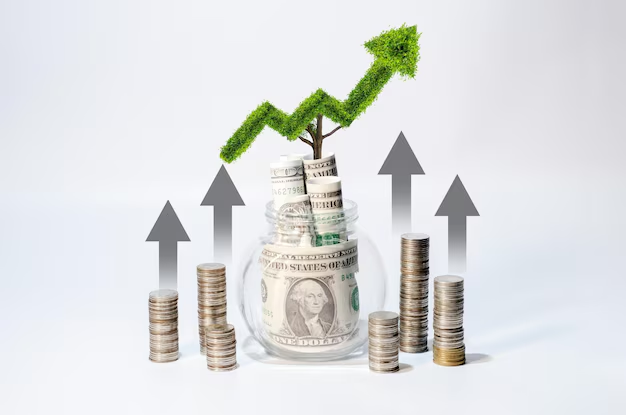

Understanding the Importance of Saving
Saving money is a cornerstone of financial stability and is a fundamental step toward achieving long-term financial goals, including a secure retirement. The significance of having a savings plan cannot be overstated; it serves as a buffer against unforeseen circumstances and provides the resources necessary for investment opportunities that can further bolster financial growth. According to a recent study by the Federal Reserve, nearly 40% of Americans would struggle to cover an unexpected expense of $400. This statistic underscores the critical need for savings as a means to ensure financial security during emergencies.
Establishing a consistent saving habit contributes to building a resilient financial foundation. By allocating funds to a savings account regularly, individuals cultivate a sense of security that can mitigate the stress associated with financial uncertainties. The ability to access emergency funds can prevent further complications, such as debt accumulation due to unexpected expenditures. As a result, a well-structured savings plan not only shields individuals from immediate financial crises but also acts as a vital instrument for future investments that drive wealth accumulation.
Moreover, the importance of saving for retirement cannot be overstated. The earlier individuals start saving for their retirement, the greater their potential for financial growth due to the effects of compound interest. Financial experts advocate for beginning these savings as soon as possible, emphasizing that even small contributions can lead to substantial financial resources over time. A report from the National Institute on Retirement Security reveals that nearly 66% of working-age Americans have saved less than the total amount needed for a comfortable retirement. This alarming statistic reinforces the urgency of embracing a saving mindset.
Thus, prioritizing savings not only enhances personal financial security but also contributes to the overall readiness for a comfortable retirement, demonstrating that the practice of saving is indispensable for financial well-being.
Assessing Your Current Financial Situation
Before embarking on a journey towards saving money for future growth and retirement, it is crucial to conduct a thorough assessment of your current financial situation. This evaluation serves as a foundation for informed decision-making regarding your finances.
Start by determining your total income. This includes not only your salary but also any additional sources such as bonuses, rental income, or freelance work. Document these amounts carefully as they provide the baseline from which you will measure your financial health.
Next, analyze your monthly expenses. Categorize them into fixed and variable expenses. Fixed expenses include rent or mortgage payments, insurance, and utility bills, which generally remain constant. Variable expenses, on the other hand, can fluctuate monthly, such as groceries, entertainment, and discretionary spending. Understanding these categories will allow you to identify spending patterns and areas where cost reductions may be feasible.
Additionally, it is essential to review your debts. Compile a list of outstanding debts, including credit card balances, student loans, and personal loans, noting the interest rates and monthly payments associated with each. This overview will help you prioritize debt repayment strategies, thus freeing up more resources for saving.
Lastly, consider your savings. Calculate the total amount you have saved and assess whether it aligns with your short-term and long-term financial goals. Creating a budget can greatly assist in visualizing your cash flow. By tracking your income and expenses over a month, you can better understand where your money goes and make necessary adjustments to enhance your savings potential.
In conclusion, assessing your current financial situation is a vital step before establishing a savings plan. By understanding your income, expenses, debts, and savings, you will be equipped with the insights needed to take proactive measures towards financial stability and growth.
Setting Clear Financial Goals
Establishing clear financial goals is a fundamental step in your journey towards effective saving for future growth and retirement. To ensure that these goals are both actionable and achievable, they should adhere to the SMART criteria: Specific, Measurable, Achievable, Relevant, and Time-bound.
First, specificity is crucial. Instead of stating, “I want to save money for retirement,” refine this goal to “I want to save $500,000 for retirement by age 65.” This clarity provides a focused target, making it easier to devise a strategy to achieve it.
Measurability is equally important; setting benchmarks enables you to track your progress. For instance, you could set a goal to save $300 per month, and at the end of each month, assess how much you’ve managed to save. Achievement of these benchmarks can serve as motivational milestones along your journey.
Next, ensure that your goals are achievable. Setting pension savings that require significant sacrifices may lead to discouragement. Instead, consider setting more manageable targets that align with your current income and savings, subsequently scaling up as your financial situation improves.
Additionally, relevance is a key aspect when setting goals. Ensure that your financial goals align with your personal values and life plans. For instance, if starting a family is important to you, consider saving for educational expenses along with retirement funds.
Finally, your goals should be time-bound. Allocate a specific timeline for achieving your savings targets. This not only creates a sense of urgency but also helps facilitate better planning of your savings strategy. Having an endpoint encourages you to take action sooner rather than later.
By setting clear financial goals using the SMART framework, you can systematically approach saving for retirement and other future financial needs, thereby enhancing your prospects for financial security.
Creating a Monthly Savings Plan
Establishing a monthly savings plan is a critical step towards achieving long-term financial growth and securing a comfortable retirement. The first strategy worth considering is the 50/30/20 budget rule, which allocates 50% of your income to needs, 30% to wants, and 20% to savings and debt repayment. By adhering to this framework, individuals can effectively manage their spending while ensuring a portion of their earnings is consistently directed towards savings.
Incorporating automatic transfers into your financial routine is another effective strategy. Set up an automatic transfer from your checking account to your savings account each month right after receiving your income. This method not only simplifies the savings process but also reduces the temptation to spend money that is earmarked for future growth. It is often recommended to start with an amount that feels manageable, gradually increasing it as you become more comfortable with saving.
Prioritizing savings within your budget is crucial. Treat your savings goals with the same significance as monthly bills. This mindset shift can fundamentally alter your approach to finances, making savings a non-negotiable aspect of your financial strategy. Furthermore, regularly reviewing and adjusting your budget based on changing priorities or financial goals can lead to improved outcomes. By monitoring your spending patterns and modifying your budget accordingly, you position yourself to reach your savings objectives more effectively.
Ultimately, being proactive and intentional about creating a savings plan can lead to significant financial stability. Establishing a solid foundation that incorporates the 50/30/20 rule, automating savings, and prioritizing these efforts will pave the way for a secure future and a well-funded retirement.
Choosing the Right Savings Accounts and Investment Options
When it comes to saving and investing for future growth and retirement, selecting the appropriate accounts is crucial. Various options exist, each with unique advantages that cater to different financial goals and risk tolerances. High-yield savings accounts, for instance, are an excellent choice for individuals seeking to earn a competitive interest rate without the complexities associated with investment accounts. These accounts typically offer higher returns than standard savings accounts, making them suitable for short-term savings goals.
Certificates of Deposit (CDs) represent another low-risk savings option. They require depositing money for a fixed period during which the funds earn interest. While they provide higher interest rates than regular savings accounts, access to funds before the term ends may incur penalties. Therefore, CDs are best suited for those who can commit funds for a specific period without needing immediate access.
For those looking toward long-term growth, retirement accounts like 401(k)s and Individual Retirement Accounts (IRAs) are essential vehicles for saving. 401(k) plans, often sponsored by employers, allow employees to contribute a portion of their salary before taxes, which not only reduces taxable income but also enables tax-deferred investment growth. On the other hand, IRAs offer individuals the ability to save independently, with tax advantages that encourage retirement savings.
Understanding interest rates is fundamental when choosing these accounts. The higher the interest rate, the faster savings can grow through the benefits of compound interest. Compound interest represents the key to wealth accumulation; even small regular contributions can result in substantial growth over time. However, it is imperative to consider investment risk. Diversifying investments across various asset classes can help manage risk while still seeking growth. Each individual should carefully evaluate their financial situation and goals to choose the savings accounts and investment options that align with their future needs.
Establishing an Emergency Fund
Establishing an emergency fund is a crucial financial strategy that provides a safety net during unforeseen circumstances. Before delving into long-term savings or investments, it is essential to prioritize the creation of this fund. An emergency fund typically covers essential expenses in situations such as unexpected job loss, medical emergencies, or urgent home repairs. The recommended baseline is saving three to six months’ worth of living expenses. This guideline serves as a foundational target allowing individuals to weather financial storms without resorting to debt.
Determining the appropriate amount for your emergency fund depends on personal circumstances, including job stability, health status, and individual expenses. Therefore, evaluate your monthly costs meticulously, factoring in essentials such as housing, utilities, food, and transportation. Once you have a clear understanding of your monthly expenditures, you can assess the total amount necessary for your fund.
When it comes to selecting the best place to maintain this fund, high-yield savings accounts are often recommended. These accounts provide accessibility while also offering interest rates that outpace traditional savings accounts. Some individuals may also consider money market accounts or short-term certificates of deposit (CDs) for slightly higher returns, although it is crucial to ensure that these options remain liquid enough for immediate access in case of emergencies.
Building your emergency fund quickly requires discipline and commitment. Start by setting up automatic transfers to your savings account, paying yourself first each month. Additionally, consider practical measures such as cutting unnecessary expenses, taking on freelance work, or selling items that no longer serve you. Implementing these strategies can expedite reaching your emergency fund target, establishing a secure financial foundation for future growth and retirement planning.
Cutting Unnecessary Expenses
Managing personal finances effectively is crucial for anyone looking to save money for future growth and retirement. One of the most impactful strategies to achieve this goal is through the identification and reduction of unnecessary expenses in one’s monthly budget.
To begin with, it is essential to evaluate your spending habits critically. Start by tracking every expense for at least a month. This will help you identify which expenditures are essential and which ones are indulgent or unnecessary. Once you have a clear picture of your spending, categorize your expenses into fixed, variable, and discretionary costs. Understanding where your money goes allows you to pinpoint areas for potential cuts.
Next, consider lifestyle changes that could lead to significant savings. For instance, minimizing eating out and focusing on home-cooked meals can drastically reduce monthly food expenses. Another common area where individuals overspend is entertainment. By looking for free or low-cost alternatives, such as exploring local parks or community events, you can still enjoy leisure activities without incurring substantial costs.
Additionally, negotiating bills can lead to considerable savings. Contact your service providers, such as internet, cable, or insurance companies, and inquire about better rates or plans. It is not uncommon for companies to offer promotional rates to retain customers. Taking the time to ask can yield substantial savings. Furthermore, consider switching to less expensive options for regular purchases; generic brands often provide similar quality to name brands at a fraction of the cost.
Finally, scrutinize subscriptions and memberships you may no longer use. Cancel any unused gym memberships or streaming services. Every small change can contribute to a more sustainable budget, ultimately allowing you to allocate more funds toward savings for your future and retirement.
Increasing income through side hustles has gained popularity as a viable way to enhance financial stability and save for future growth and retirement. A side hustle refers to any additional work, such as part-time jobs or freelance projects, that individuals can undertake alongside their primary employment. This approach not only diversifies income sources but also provides opportunities to pursue personal passions, develop new skills, and achieve long-term financial goals.
There are numerous avenues for generating extra income through side hustles. Freelancing, for instance, allows individuals to leverage their existing skills in writing, graphic design, programming, or consulting. A variety of platforms, such as Upwork and Fiverr, enable freelancers to connect with clients seeking specific talents. Likewise, part-time jobs, such as driving for ride-sharing services like Uber or delivering food through apps like DoorDash, offer flexibility and are often easily manageable alongside a full-time job.
Additionally, selling handmade crafts, vintage items, or even reselling thrift store finds on platforms like Etsy or eBay can turn a creative hobby into a profitable side venture. For those interested in education, tutoring students in subjects like math or languages can be both rewarding and lucrative. Alternatively, teaching skills online through platforms like Skillshare or creating an online course can result in passive income over time.
When contemplating a side hustle, it is crucial to select an option that aligns with your interests and daily schedule. This ensures sustainability and enjoyment while building extra income. Setting realistic income targets and establishing a structured plan to allocate funds towards savings can further enhance the effectiveness of side hustles in saving for future growth and retirement.
Reviewing and Adjusting Your Savings Strategy Regularly
A well-structured savings strategy is not a static plan; it requires ongoing reassessment and adjustments. As time passes, individual circumstances, market conditions, and financial goals may change, necessitating a thorough review of your savings approach. Regularly evaluating your savings strategy ensures you remain aligned with your financial objectives and can adapt to any unforeseen challenges.
To effectively review your savings plan, it is advisable to establish a routine, such as conducting a financial check-up quarterly or biannually. During this review process, assess your progress toward your savings goals. Look at how much you have saved compared to your targets, and evaluate the effectiveness of the existing savings instruments you are using. This could include savings accounts, investments, or retirement funds.
In addition to assessing what you have achieved, consider your current financial situation. Are there any significant changes in your income, expenses, or financial dependencies that could impact your ability to save? Addressing these variables is crucial, as it may warrant an adjustment in your savings strategy. For example, if you receive a promotion resulting in increased income, it may be time to increase your savings contributions.
Furthermore, keeping an eye on economic factors, such as interest rates and inflation, can help you make informed decisions about where to allocate your savings most effectively. Financial products are subject to changes that can significantly affect their performance, and staying educated about such changes will aid you in optimizing your savings strategy.
Ultimately, revisiting and refining your savings plan helps maintain momentum towards your financial goals. By consistently monitoring your progress and making adjustments as necessary, you can ensure that your savings strategy remains effective and aligned with your future growth and retirement aspirations.